
Congressional Dems Blame AI Data Centers for High Electric Prices
 MDN was among the first to tell readers that so-called environmental groups were quickly morphing from anti-fracking to anti-data center. Over the past several months, we’ve observed in various posts how opposition to data centers (from the same people who oppose fracking and shale energy) has gone from local and regional anti groups (see More Evidence that PA’s Anti-Frackers are Now Anti-Data Center and Antis in Ohio Join the Chorus Bashing AI Data Centers) to national groups (see 200 Enviro Groups Want Freeze on Building ALL New Data Centers). And now, the usual suspects in Congress have joined the cause, blaming data centers for high electricity costs and calling for the construction of all-new data centers to be blocked. Read More “Congressional Dems Blame AI Data Centers for High Electric Prices”
 In October, we told you that completion of Ohio State University’s Combined Heat and Power Plant (powered with Utica Shale gas) would be delayed until April 2026 (see
  In June, Duke Energy announced that it plans to apply to the Public Service Commission of South Carolina (PSCSC) to build a 1,400 megawatt gas-fired power plant in Anderson County (see
  In early April, MDN brought you the exciting news that pipeline giant Williams, via its newly-minted subsidiary, Will-Power, is planning to build two Utica/Marcellus gas-fired power plants in the New Albany International Business Park in Licking County, Ohio, near Columbus, to power a massive new Meta (Facebook) data center complex (see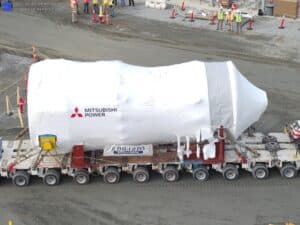
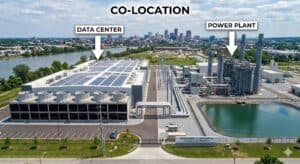 Earlier this year, the Federal Energy Regulatory Commission (FERC) and PJM Interconnection, the country’s largest electric grid operator (covering PA, WV, and OH, among other states), began to grapple with the issue of co-locating power plants with data centers (see
  U.S. natural gas production and demand reached record highs in 2025, with the U.S. Energy Information Administration (EIA) projecting continued growth in output and LNG exports through 2026. Driven by surging international demand in Europe and Asia, the U.S. has become the world’s largest LNG exporter. This natural gas resurgence is bolstered by the Trump administration’s support and significant investments from major energy firms prioritizing gas as a so-called transition fuel (it’s actually a destination fuel). Consequently, U.S. natural gas pipeline capacity is set for its biggest one-year expansion since 2008. Surging demand from LNG exporters, data centers, and manufacturing is driving a $50 billion investment boom.
  Sometimes politics is a game of “chicken” whereby you must keep fighting and wait out the other side when you *know* you are in the right. Such was the case with Pennsylvania Democrats’ insistence that the state join the Regional Greenhouse Gas Initiative (RGGI) carbon tax scheme. RGGI aims to force coal- and gas-fired power plants to shut down by making them super expensive to operate. Tax them out of existence on the theory that unreliable renewables like wind and solar would replace them. But Republicans in the PA Senate kept fighting—for seven long years—and finally won (see
  It’s always one step forward and two steps back here in the “Empire” State of New York. Recent actions by New York Governor Kathy Hochul regarding the energy sector have been encouraging. She horse-traded with President Trump to allow two natural gas pipelines to get built in the state (see
  Pennsylvania has a big problem. The state is retiring older coal- and gas-fired power plants faster than it can add new plants. Plus, the state needs to *grow* its electric generation capacity to meet new demand from AI data centers. PA State Senator Gene Yaw has a solution: modify the existing 1971 Economic Development for a Growing Economy (EDGE) tax credit program by adding a provision granting a tax credit for any $400+ million investment in “baseload power generation” (i.e., gas-fired power generation). Yaw wants to make it a no-brainer for power plant builders to make the Keystone State their destination for new projects.
  A new RBN article takes a stab at distinguishing between the hype of future data center power demand and the reality of current grid consumption. Despite projections of massive energy usage, verifying actual draw is difficult due to utility confidentiality and behind-the-meter generation. RBN’s analysis reveals that today’s largest consumers are long-established campuses rather than new builds; specifically, Google’s Council Bluffs and Microsoft’s Quincy facilities top the list with estimated loads of 500–600 MW. The article concludes that because substantial capacity takes over a decade to scale, the market should remain skeptical of new facilities claiming immediate, massive power consumption.
  The rapid expansion of data centers, driven by AI and cloud computing, is creating a surge in energy demand that exceeds renewable capabilities, forcing a shift toward natural gas. Good news for the Marcellus/Utica. However, building new pipelines to handle the extra gas needed is not an overnight process. Industry experts at the recent LDC Gas Forums’ Nat Gas to Power event proposed an ingenious solution that uses existing pipelines to move more gas to new data center customers.
 In January, Constellation Energy (a huge power-generating company) announced a deal to buy out and merge with Calpine (another huge power-generating company). Calpine owns 79 energy facilities across the country, generating some 27 gigawatts (GW) of electricity, with a significant number located in the eastern U.S. Many of Calpine’s facilities use natural gas to produce electricity. The two companies combined would own almost 60 GW of nuclear, natural gas, geothermal, hydro, wind, solar, cogeneration, and battery storage. The Federal Energy Regulatory Commission (FERC) signed off on the deal in July, with conditions (see
 There have been a number of new reports recently released predicting how new AI data center projects will affect (a) demand for electric power, and (b) demand for natural gas to generate that power. We spotted what at first glance appears to be contradictory predictions in two new reports issued this week. On Monday, BloombergNEF (the research arm of Bloomberg) issued a report predicting data center power demand will hit 106 gigawatts (GW) by 2035, a 36% jump from its previous outlook. Two days later, Enverus Intelligence® Research (EIR), a subsidiary of Enverus, issued a report that predicts 30 GW of new U.S. data center capacity will be needed over the next five years (by 2030)—significantly below the 50 GW forecasted by major grid operators. One report is wildly optimistic, the other pessimistic. What gives?