
PA DEP Notifies Shell of “Technical Deficiencies” with Ethane Pipe
 Shell delivered some good news at last week’s Northeast U.S. Petrochemical conference in Pittsburgh: The Falcon ethane pipeline will get built next year (see Shell Says Falcon Ethane Pipeline to Get Built in 2019). The pipeline won’t actually flow ethane to the Shell cracker in Monaca until 2020 at the earliest, because the cracker plant itself won’t go online until 2020 at the earliest. The 97-mile consists of “two legs,” with about half of the pipeline located in PA, the other half in OH. The Pennsylvania Dept. of Environmental Protection (DEP) conducted three public hearings on the project earlier this year, in preparation for issuing permits. Antis came out in force and behaved badly, as they typically do (see More of the Same at Final DEP Hearing for Shell Ethane Pipeline). No matter. The pipeline will get built. But not without jumping some hurdles first. On June 1, the DEP issued three letters identifying what it calls “serious technical deficiencies” in Shell’s pipeline plan, for townships in three different counties along the pipeline’s PA route. Shell maintains this type of notification is “common” in the permitting process, and is committed to working with the DEP to address any issues of concern…
Read More “PA DEP Notifies Shell of “Technical Deficiencies” with Ethane Pipe”
 A recent article in the left-leaning Roll Call (official publication for Washington, D.C. swamp dwellers) attempts to paint the Trump Administration as out of step with the people he wants to help in West Virginia. The article says Trump’s strategy to prop up failing coal and nuclear plants is an attempt to boost coal mining jobs in WV, but is running counter to the state’s strategy of embracing the natural gas industry. Perhaps they have a point. However, what’s most interesting about the article is not the ginned up conflict between Trump and WV, but how the article spotlights WV’s two U.S. Senators–Republican Shelley Moore Capito and Democrat Joe Manchin–and their continuing role in trying to make a $10 billion NGL (mostly ethane) storage hub facility become a reality. The storage hub will be a jobs magnet with some estimates that it will create more than 100,000 new jobs in the state. The storage hub will also draw manufacturers looking to locate near ethane crackers, as a source for plastics used in their manufacturing process. Capito, in her comments, attempts to gloss over the rivalry between coal and natural gas, saying “all those rivalries have gone by the wayside.” Er, a, we beg to differ. But leaving aside the coal v. natgas focus of the article, we found two very interesting items. (1) The Dept. of Energy loan guarantee that would cover $1.9 billion of the estimated $10 billion cost to build it is a much bigger deal that we had realized. Why? Because any project that wins such a guarantee has gone through a rigorous review process. Winning such a guarantee is like conferring a triple A rating on the project for others who will consider investing in the project. It gives them confidence that the project has been thoroughly vetted and is low risk. (2) Manchin, in speaking with DOE Sec. Rick Perry, is using an interesting and novel argument to convince Perry the storage hub is a good thing to do. Manchin said when hurricanes hit the Gulf Coast, it knocks out petrochemical industry there, with a cascading effect across the U.S. Cracker plants (fed by the storage hub) in the northeast, are not susceptible to hurricanes. So Manchin’s pitch to Perry is this: Keep the Gulf Coast crackers cooking for products to export to other countries, but let’s build the storage hub (and crackers) in the northeast, so our country’s petchem industry isn’t adversely affected by a major hurricane…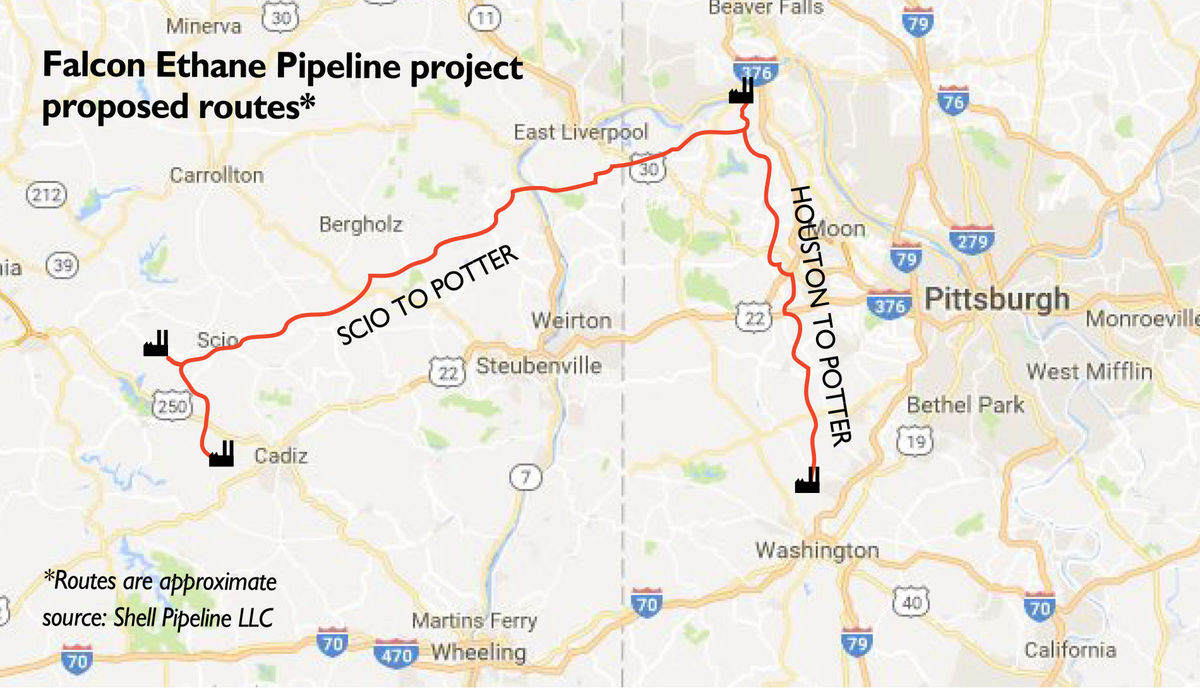
 It increasingly looks like LyondellBasell Industries, one of the largest plastics, chemicals and refining companies in the world, will buy out/take over Braskem, the largest petrochemical company in Latin America (headquartered in Brazil). Braskem and its parent company Odebrecht, as you may recall, was hot-to-trot to build a multi-billion dollar ethane cracker near Parkersburg, WV–four years ago. Odebrecht got mired in scandal in Brazil and that put things on hold in 2015 (see
  One more item to share with you from last week’s second annual Appalachian Storage Hub Conference convened at the Hilton Garden Inn Pittsburgh/Southpointe. As we previously highlighted, most of the event revolved around the proposed plan to build a $10 billion ethane storage hub (see
  PTT has awarded the contract to build the Belmont, OH ethane cracker to Bechtel. At least, that’s the rumor swirling around. We have to say right up front, this information has not yet been announced and therefore is not 100% verified–but we’ve talked to a highly placed industry source and we believe it to be accurate. Below we offer insight into why we believe this information is accurate, and why PTT has not yet made their official final investment decision (FID) announcement, and when they might do so…
 Last week the second annual Appalachian Storage Hub Conference convened at the Hilton Garden Inn Pittsburgh/Southpointe. As we pointed out in a post last week, the main topic of discussion was the $10 billion NGL/ethane storage hub (see
  If you’ve read MDN for any length of time, you know about a $6 billion ethane cracker plant being built by Shell in Monaca (Beaver County), PA–near Pittsburgh. The plant will chemically “crack” ethane, an abundant natural gas liquid (NGL) that comes out of the ground along with methane, creating polyethylene from the ethane. Polyethylene is, in essence, raw plastic. Manufacturers in the region and beyond will use the plastic pellets Shell will produce at the plant to create an unlimited variety products. Shell is a smart company. They’re as much a marketing company as they are an oil and gas producer and petrochemical manufacturer. They know the value of positioning and mind share. We hadn’t thought about it previously, but we always just thought of and called the project the “Shell cracker plant.” The plant now has a name: Shell Polymers. The name Shell Polymers has been around for a long time but had fallen out of use when Shell largely exited the plastics business. With the new cracker coming online in the next few years, it’s time to revive the Shell Polymers name/brand and apply it to the cracker plant, which is how the project was being pitched at the last week’s NPE2018 (formerly called the National Plastics Exposition) in Orlando, Florida…
 In yet another very good sign that the proposed PTT Global Chemical ethane cracker plant in Belmont County, OH is headed for a positive final investment decision (FID), PTT has just purchased another 300+ acres to go along with the previous acreage they purchased as the site for the future cracker/petrochemical project. Last July MDN reported PTT had spent $13.8 million to buy 168 acres at the proposed site for a second Appalachia ethane cracker, in Belmont County, OH (see
  Homeowners who live near the location of a possible ethane cracker plant in Belmont County, OH are running out of time to negotiate a deal to sell their properties. Living next door to a cracker plant is not anyone’s idea of paradise. There will be noise, and smells and (yes) some air pollution coming from the plant. Best to sell now before the plant begins construction. However, representatives for PTT Global Chemical which will build the plant (IF it gets built), say they already have all the land they need for the facility (see
  The Penn State campus in Erie County (called Penn State Behrend) has been tapped by the PA Dept. of Community and Economic Development (DCED) to be the “lead partner” for developing business and market opportunities for the state related to the mighty $6 billion Shell ethane cracker–currently under construction in Beaver County. Erie County where Behrend is located is certainly not next door to the cracker, not nearly as close as some other Penn State campuses. So why was Behrend selected? In a word, plastics. “The strength of Erie’s plastics industry and the success of Penn State Behrend’s School of Engineering, which offers one of only six accredited U.S. plastics undergraduate programs, makes Erie of particular interest to DCED.” According to DCED’s Denise Brinley, senior energy adviser, “Penn State Behrend can provide critical connections to research support, materials testing and a talent pipeline that will add value to this large-scale petrochemical investment and associated growth in the plastics sector.” Penn State is kicking in a $250,000 grant to their Energy University Partnership for oil and gas strategies, to help prime the pump…
 Tom Gellrich, founder of Top Line Analytics–a consultancy focusing on downstream shale gas development like ethane crackers–spoke Wednesday at Kallanish Energy’s “Crackers, Storage & Pipelines 2018” event at Southpointe. He had some interesting things to say. Among them: The Marcellus/Utica region has enough ethane to easily support up to eight ethane cracker plants–plants the size of the massive Shell cracker being built now in Monaca (Beaver County), PA. So far only Shell has pulled the trigger and begun to build such a plant. PTT Global Chemical, based in Thailand, is actively considering (and likely) to build a second regional cracker plant in Belmont County. So the multi-billion question is this: Why aren’t more companies building crackers in our region, given the abundance of cheap ethane? Gellrich had some thoughts on that…
 With much fanfare, yesterday a press event was held in Columbus, OH to make an official announcement of what we already know: that South Korea’s Daelim Chemical, a subsidiary of Daelim Industrial, is now a partner with PTT Global Chemical in the Belmont County ethane cracker project. We previously brought you that news on Feb. 1 (see