
Poor Prospects for Moving Marcellus/Utica Ethane to Gulf Coast
 According to the energy experts at RBN Energy, ethane production in the Marcellus/Utica region will go from 470,000 barrels per day now to 800,000 barrels per day by 2022–a 70% increase. Ethane, which is sometimes up to 10% of the hydrocarbons coming out of Marcellus/Utica wells (from wet gas and oil wells), can be an important revenue stream. However, you have to have someplace to sell it. Right now, many Marcellus/Utica producers have to mix in the ethane with the methane stream in order to get rid of it. In other words, it costs them money. It’s a waste product. However, when the Shell cracker plant in Beaver County, PA and (possibly) the PTT Global cracker plant in Belmont County, OH go online, important new markets will open up. But even two huge crackers won’t be able to buy all of the available ethane. There are a slew of new cracker plants coming online in the Gulf Coast over the next five years that could use Marcellus/Utica ethane. But will they? The problem, as always, is pipelines. According to an analysis by RBN, the prospects for moving more of our ethane to the Gulf Coast do not look good…
Read More “Poor Prospects for Moving Marcellus/Utica Ethane to Gulf Coast”
 For some time we’ve had our eye on a project to store ethane in underground caverns in Ohio. Mountaineer NGL Storage wants to build a new underground NGL storage facility in Monroe County, Ohio, near Clarington, along the Ohio River (see
  Yesterday Utica Summit V was held in North Canton, OH. MDN could not, unfortunately, attend. But others did and the reports we’re reading indicate it was another great event. Two major news items of interest came from the event. The first was the results of a recent economic study that show an amazing $54.7 billion has been invested in the Utica Shale play from 2012-2016, across upstream ($42.7 billion), midstream ($8.6 billion) and downstream ($3.4 billion). In a surprise statement, the report’s author said, “the biggest impact of the Utica may be the development of gas-fired power plants in Ohio and surrounding states.” The second news item was a big emphasis at the event on the downstream–on the really big deal the petrochemical industry is and will be for Ohio and surrounding states. Presenters made the point that some manufacturers in Ohio were cut off from plastics supplies from the Gulf Coast after the recent hurricanes to hit that area–and that with the Shell and potentially PTT Global cracker plants coming along, manufacturers in the region change where they source their supply of raw plastics. In fact, the petchem industry will explode in Appalachia. All thanks to the Utica (and Marcellus) and the ethane produced. Here’s a pair of reports from yesterday’s event…
 A decade ago the petrochemical industry in the U.S. was in the toilet–in the midst of a downturn. Plants were leaving our shores, heading to other countries. And then the shale revolution hit full force–and changed everything. Petrochemical plants and investment is now skyrocketing here at home, because of shale. Petrochemicals are chemical products derived from petroleum (i.e. oil) and natural gas. The entire plastics industry comes from oil and gas–you knew that, right? Ethylene (which comes from ethane) and propylene (which comes from propane) are used to make polyethylene and polypropylene respectively–that is, plastics. And plastics are used in just about everything you touch, live in, ride in, etc. Plastics make modern life possible. Without plastics, we’d be back in the Stone Ages–living short, brutish lives. Ten years ago our petrochemical industry was flailing, but today it’s thriving. According to an expert speaking last week at Pittsburgh Chemical Day (an annual event), the Shell ethane cracker now under construction is in the “the second wave” of ethane crackers. According to the same expert, we are witnessing the “biggest buildup in the U.S. petrochemical industry we have ever seen.” And it’s all because of shale…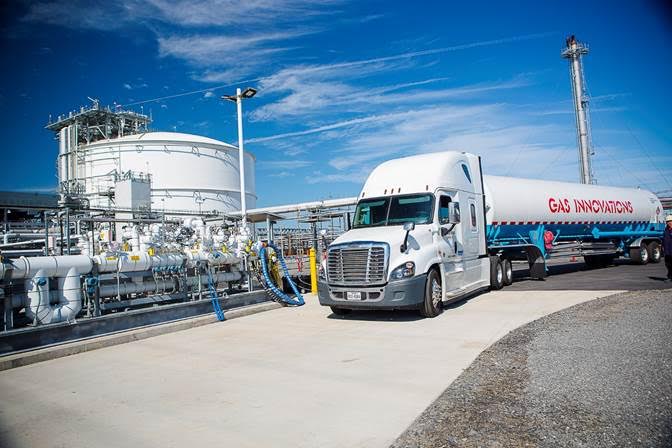
 While the Teamsters are holding a job fair today and tomorrow in Harrisburg to recruit for pipeline workers (see today’s lead story), next week Shell and the Community College of Beaver County (CCBC) will hold two back-to-back career expos on the other side of the state, in the Pittsburgh region, to “inform residents about all the current and emerging job opportunities” at Shell’s ethane cracker plant. On Thursday, Oct. 12, Shell will host the Pennsylvania Chemicals Military Petrochemical Day from 8am to 2pm–for former military service members. The event will be held in room 9103 of CCBC’s Learning Resources Center. Then at 6pm on the 12th, a free career expo will be held at the CCBC Dome–open to the public. Preregistration is not required, but is encouraged. This is your chance to meet with folks face-to-face who can help you land a job working on (or in) the mighty Shell ethane cracker. Don’t miss it!…
 Last week the radicals at Big Green group PennFuture launched an advertising campaign that targets both U.S. Steel Corp. and the might Shell ethane cracker. The ad campaign, called “Your Toxic Neighbor” includes big ads on the sides of buses and on billboards in the Pittsburgh region. From the beginning of PA Gov. Tom Wolf’s administration, PennFuture radicals have populated his administration. Two PennFuture radicals previously in the Wolf cabinet are now gone: former Secretary of Policy, John Hanger (now gone, supposedly to spend more time with his wife and daughter in Massachusetts) and former Secretary of the Dept. of Environmental Protection, John Quigley (fired for conspiring with Big Green groups and getting caught doing it). The one remaining PennFuture radical still in the Wolf cabinet is Secretary of the Dept. of Conservation and Natural Resources (DCNR), Cindy Dunn. Time for Wolf to show her the door too (see
  On Monday, Mr. Supattanapong Punmeechaow, president and CEO of PTT Global Chemical (Thailand’s largest petrochemical company) signed a Memorandum of Understanding (MOU) with JobsOhio regarding PTT’s proposed ethane cracker plant. The MOU pledges to “enhance the well-being and quality of life” for those living in the area near the proposed cracker plant. PTT announced in April 2015 they are interested in building a $5 billion ethane cracker plant complex in Belmont County, OH (see
  One of the major themes at last week’s Shale Insight conference was NGLs (natural gas liquids), in particular ethane–and how the petrochemical industry that uses those NGLs will revolutionize the economic landscape of western PA, eastern OH, and northern WV–the tri-state area. One of the hottest of the hot topics is ethane storage. As we reported in early September, a research team from West Virginia University spent the past year studying geologic regions in 50 counties in the Marcellus/Utica Shale region to see if our region would support a proposed $10 billion ethane storage hub (see
  Shale Insight 2017 is now in the books. Another year, another great show. MDN editor Jim Willis is back in the office, chained to his computer. Next week Jim will share notes he took at the conference. For now, below are highlights from other news source from Day Two of the event. Unfortunately Jim had to leave before the closing keynote, given by former Trump White House Press Secretary Sean Spicer. But others were there to hear what Spicer had to say. Day Two began with a focus on the Shell ethane cracker. Members of the Shell team were on hand to describe how this critical project affects the region, and where it fits in the Marcellus/Utica landscape. One of the Shell team members said the skyline at the Beaver County site will change dramatically over the next 12 months as the buildings housing the various components are built. It was a fascinating talk with lots of information. Below is a roundup from Day Two…
 Last week MDN told you that Community College of Beaver County (CCBC) is operating a program in process technology that leads to an associate’s degree as preparation for a job at Shell’s $6 billion ethane cracker plant, being built now in Beaver County (see
  Looking to land a job at Shell’s $6 billion ethane cracker plant when it’s up and running in a few years? A new program set up by Shell with the Community College of Beaver County (CCBC) may give you a leg up. CCBC offers a program in process technology that leads to an associate’s degree. As of this spring, 45 people were enrolled. CCBC expects 70 people to enroll this fall. CCBC’s process technology degree is just one part of their effort to train people for advanced manufacturing careers with Shell and other petrochemical companies. CCBC is partnering with businesses, nonprofits, other colleges to form the Tri-State Advanced Manufacturing Consortium which will help prepare students and retrain workers to meet the needs of energy and manufacturing companies throughout the region. More deets on getting trained for a future cracker job…
 A research team from West Virginia University spent the past year studying geologic regions in 50 counties in the Marcellus/Utica Shale region to see if our region would support a proposed $10 billion ethane storage hub. The conclusion was delivered last week at a meeting in Southpointe, PA: Heck yeah! Some 100 geologists, chemical engineers, oil and gas people members of academia gathered to hear about the results. WVU researchers released their findings in a published 181-page report titled “A Geologic Study to Determine the Potential to Create an Appalachian Storage Hub for Natural Gas Liquids” (full copy below). Among the study’s findings: A shale ethane storage hub could help create $36 billion in investment and more than 100,000 permanent jobs. It’s HUGE! Our region currently produces three times the amount of ethane that can be used by the mighty Shell ethane cracker, pointing out the need for more cracker plants. Here’s the exciting news that we need an ethane storage hub, and we need it bad…