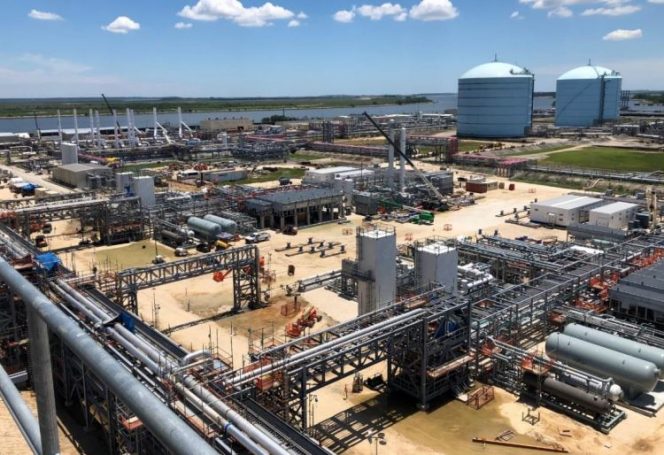
Banpu Ponders Entering U.S. LNG Export Market
 Banpu, Thailand’s largest coal mining company, loves American shale gas. Over the past several years Banpu has invested ~$500 million in the PA Marcellus, going as far as building a new regional office in northeastern PA (see Banpu Opens New $5M Marcellus Operations Office in NEPA). Recently the company announced a deal to buy Devon Energy’s Barnett Shale assets in Texas (see Banpu Invests Another $770M in Shale – but Not in PA Marcellus). It seems Banpu is not yet done with American shale energy.
Read More “Banpu Ponders Entering U.S. LNG Export Market”
 For many years the U.S. has imported natural gas. When you look at how much natural gas we import versus how much we now export, via LNG and pipelines, the difference is a number called “net exports.” The U.S. now exports more natural gas than it imports. The U.S. Energy Information Administration is fresh out with a report that says our “net export” number is set to *double* in the next two years.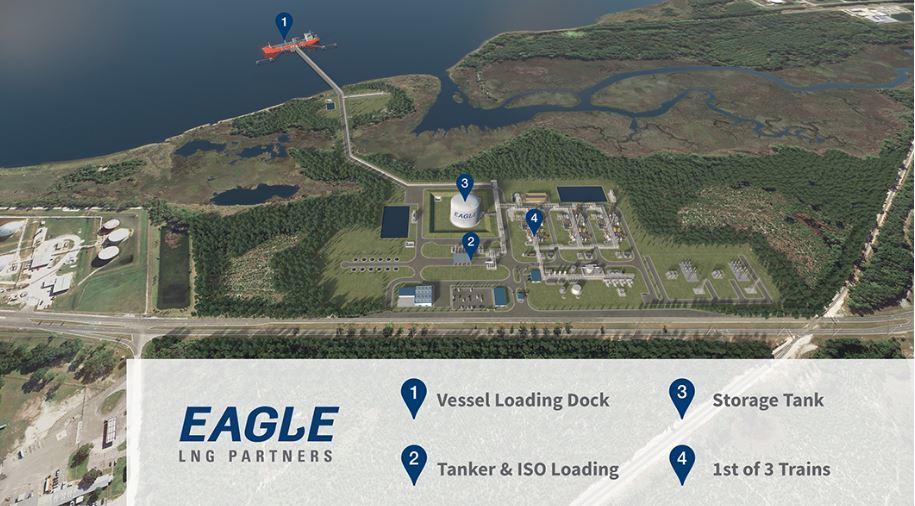
 A slight tweak and correction to a story we ran last week in which we speculated that the first four mini-trains at Kinder Morgan’s Elba Island LNG export facility are now up and running (see
  MDN previously reported in mid-December the very first load of Marcellus molecules liquefied at the Elba Island, Georgia LNG export facility was loaded onto a ship and headed to Pakistan (see
  Last June Philadelphia City Council voted to approve a $60 million Marcellus LNG export facility, to be built on property owned by Philadelphia Gas Works (see
 Our favorite government agency, the U.S. Energy Information Administration, brings us news that (so far) the lamestream press refuses to share. In September the United States exported 89,000 barrels per day (b/d) more petroleum (crude oil and petroleum products) than it imported. That’s the first month this has happened since monthly records began in 1973! The first time in recorded history! But not a peep from the press or their Big Green overlords. This is ALL due to the miracle of shale drilling.
 For some time we’ve been concerned about competition for Marcellus/Utica gas coming from western Canada being piped to Canada’s East Coast (see

 While on the surface the liquefied natural gas (LNG) marketplace may seem simple and straightforward, when you dig down you’ll find it is complex. There are different kinds of contracts between those who sell the gas, those who liquefy and ship it, and those who buy it. The LNG marketplace is, with the entrance of the U.S., changing rapidly. Our friends at RBN Energy recently posted an explanation for how it all works.
 Quick, when we ask you how natural gas gets exported from the U.S. to other countries, what do you think of? LNG, right? That’s true. Yet while LNG grabs all the headlines, more than twice as much natural gas is exported to Canada and Mexico via pipeline every day than is exported to other countries via LNG ships. LNG is expanding and catching up–but it has a ways to go. According to the U.S. Energy Information Administration, during the first half of 2019 natural gas exports from the U.S. to other countries doubled–largely because of LNG.