
Key Issue for Shell PA Cracker: What Constitutes Emissions Data?
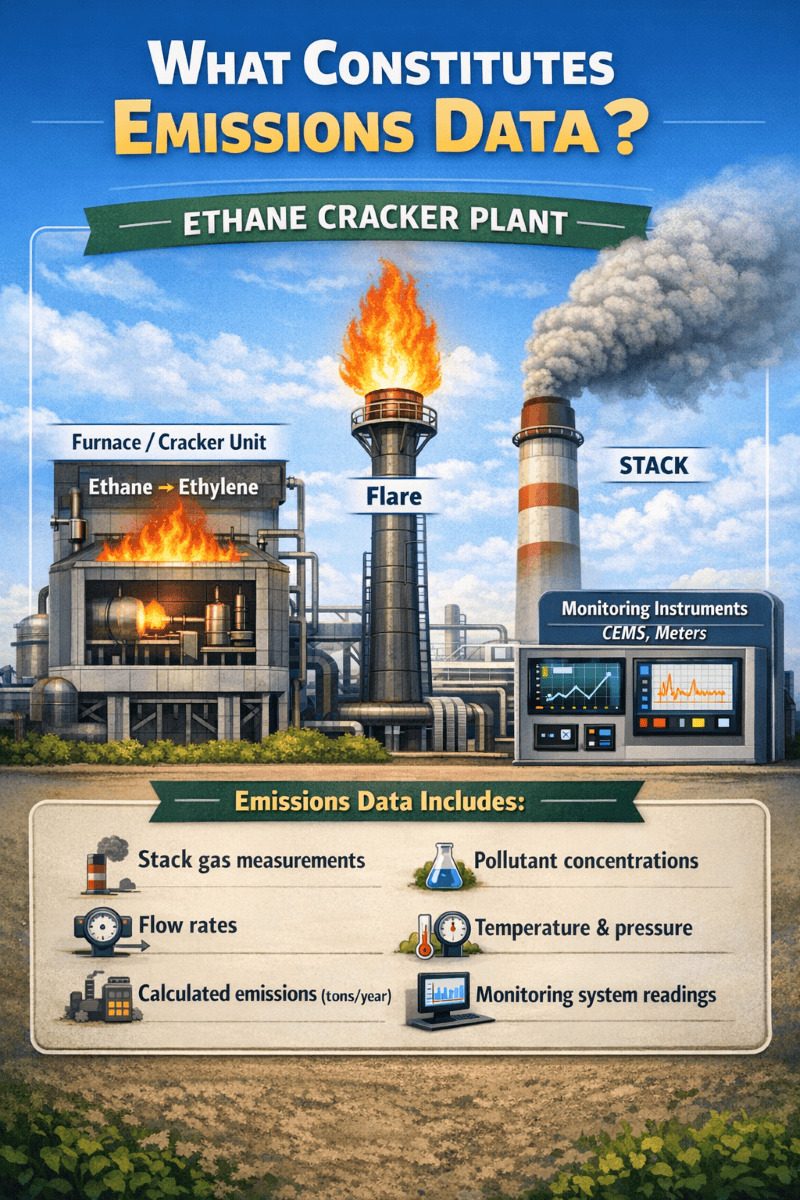
Shell’s $15 billion petrochemical complex in Beaver County faces intense scrutiny following new emissions data highlighting persistent operational problems. Since opening, the facility has received 80 malfunction reports and 43 state violation notices. From 2020 to 2024, the plant emitted 17.9 billion pounds of “pollutants,” including nearly 400 million pounds of unexpected emissions during malfunctions involving hazardous chemicals like benzene and naphthalene. Despite Shell’s efforts, ongoing issues such as flaring, equipment breakdowns, and a 2025 fire continue to concern regulators and residents, while the local economy has unexpectedly shrunk since the plant’s inception. Read More “Key Issue for Shell PA Cracker: What Constitutes Emissions Data?”
 Venture Global’s Calcasieu Pass (CP) LNG export facility in Louisiana began operations in March 2022 (see
  Olympus Energy (now owned by EQT) drills in the Greater Pittsburgh region, in Allegheny and Westmoreland counties. In 2021, Olympus applied to build a new well pad in a rural part of Allegheny County, in West Deer Township. So-called “concerned citizens” got amped up to oppose the project. They succeeded when town supervisors rejected the Dionysus well pad (see
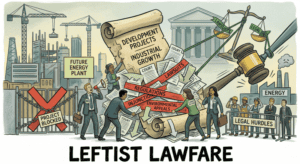 Several Big Green groups, including the Sierra Club, Wild Virginia, Appalachian Voices, and the Center for Biological Diversity, have filed a legal challenge against a permit issued by Virginia for the Mountain Valley Pipeline (MVP) Southgate extension. The Virginia Department of Environmental Quality (DEQ) approved a water permit for the project in January 2026. Big Green radicals argue that the pipeline “threatens” 138 streams, wetlands, and regional drinking water supplies. It’s the typical lawfare tactic used by the left to stall work on projects, hoping to delay them long enough that the builder (EQT in this case) gives up. Or if the builder won’t give up, they have to pay double or triple the price to construct it. That’s the game the radicals are playing.
  West Virginia Attorney General JB McCuskey is leading a 21-state coalition urging the U.S. Supreme Court to overturn Department of Energy efficiency standards adopted during the dark Biden years that effectively ban many natural gas furnaces and water heaters. Challenging a D.C. Circuit ruling, the states argue the mandate violates federal law by eliminating appliances with protected performance characteristics. McCuskey emphasizes that the rule would disproportionately burden low-income and rural families, forcing expensive structural renovations in older homes incompatible with new condensing technology.
  The far-left Southern Environmental Law Center, representing three radical nonprofits, has appealed the Virginia State Corporation Commission’s (SCC) approval of Dominion Energy’s $1.47 billion natural gas plant in Chesterfield County. The challenge is the first under both the Virginia Environmental Justice Act and the Virginia Clean Economy Act. Antis argue the 1,000-megawatt facility would disproportionately “harm” marginalized communities through increased pollution and significant health risks, including premature deaths. Critics maintain that Dominion failed to prioritize renewable alternatives or demonstrate a genuine threat to grid reliability, potentially placing unnecessary financial and health burdens on the public.
  On February 3, 2026, Pennsylvania’s Environmental Hearing Board (EHB) denied a motion by CNX to dismiss an appeal from James and Barbara Ullom regarding significant water loss on their Washington County property. The Ulloms allege that fracking operations at CNX’s NV110 well pad, located approximately 890 feet from their well, caused their water supply to fail (loss of water). Although the Department of Environmental Protection (DEP) initially found no link, the EHB, a special court that hears appeals of DEP decisions, ruled that the Ulloms had established a prima facie case. A central legal issue remains: whether the Oil and Gas Act’s “rebuttable presumption” of liability applies to water loss or strictly to contamination.
  In January 2023, New York Gov. Kathy Hochul, a leftist Democrat, floated a plan to ban natural gas hookups in every single new home and business across the “Empire” State (see
  About six years ago, Dominion Energy announced the River Neck to Kingsburg project, a short 15-mile 16-inch natural gas transmission main line that would run in an existing right-of-way alongside another pipeline along Old River Road near Pamplico in Florence County, SC. It was supposed to be built and flowing in 2022. Dominion still hasn’t built a square inch, thanks to the lawfare launched by the anti-fossil fuelers of the Blue Ridge Environmental Defense League (see
 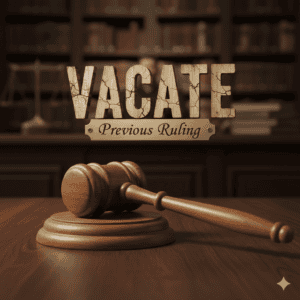 The Intermediate Court of Appeals of West Virginia vacated an order combining 58 oil and gas tracts into a Harrison County drilling unit, ruling that the state’s Oil and Gas Conservation Commission failed to provide sufficient findings of fact. The case involves the “JOsborn 213 Unit” operated by Arsenal Resources, which mineral rights owners claim failed to negotiate in good faith as required by law. The court found the Commission ignored conflicting testimony and provided only summary conclusions rather than a detailed analysis. Consequently, the case was remanded for further proceedings, requiring the Commission to properly evaluate all evidence and issue a new order.
 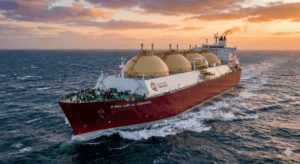 Venture Global’s Calcasieu Pass (CP) LNG export facility in Louisiana began operations in March 2022 (see