
Chester County | Energy Services | Industrywide Issues | Litigation | Pennsylvania | Pipelines | Statewide PA | Sunoco Logistics
Philly Dem Senator Loses Bid to Shut Down ME Pipelines
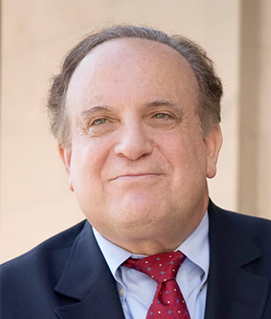
In April 2018, a Chester County, PA (Philadelphia area) Democrat State Senator by the name of Andy Dinniman (who we think looks like Tony Soprano) filed a formal, legal complaint with the Pennsylvania Public Utility Commission (PUC), asking the PUC to shut down and keep closed all of the Mariner East pipeline projects–ME1, ME2, and ME2X (see Philly Dem Senator Tries to Shut Down ME2 Pipe Construction). It took long enough, but the PA Commonwealth Court, whom Sunoco appealed to, ruled yesterday that Dinniman’s complaint is meritless. The court ordered the PUC to dismiss Dinniman’s complaint.
Read More “Philly Dem Senator Loses Bid to Shut Down ME Pipelines”
 Just prior to taking a long Labor Day holiday weekend, MDN brought you news that the Federal Energy Regulatory Commission (FERC) has overruled New York State to allow the Constitution Pipeline to move forward with construction (see
  Taking a chapter from the corrupt New York Dept. of Environmental Conservation (a political tool of NY Gov. Andrew Cuomo), the New Jersey Dept. of Environmental Protection (NJ DEP) is trying to run out the clock on the PennEast Pipeline by telling the project that its latest (now second) application for a federal “401” water crossing permit is “incomplete” and therefore they won’t even consider it. It’s a political move by a corrupt state agency–done at the request of Democrat Gov. Phil Murphy.
 Since late last year we’ve tracked a lawsuit brought by radical antis and the City of Oberlin, OH against the long-completed NEXUS Pipeline project. Last Friday the D.C. Circuit Court of Appeals, the court that handles challenges to regulatory agencies like the Federal Energy Regulatory Commission (FERC), refused to drop the case and told FERC to once again try to justify the project in light that some of the gas gets exported to Canada.
 This story is befuddling–we’re still trying to wrap our heads around it. The North Carolina Utilities Commission has filed a protest with the Federal Energy Regulatory Commission (FERC) objecting to Williams’ Leidy South expansion project, a project that is being built 100% in Pennsylvania! Why are NC regulators objecting to work being done in another state 500 hundred miles away?
 You can’t say we didn’t see this one coming. Last week the Federal Energy Regulatory Commission (FERC) ruled that the New York Dept. of Environmental Conservation (DEC) took too long to deny a federal Clean Water Act “Section 401” water crossing permit for the Williams Constitution Pipeline project (see
 A brief pause to enjoy an unqualified victory over the wackadoodles at the litigious New Jersey Chapter of the Sierra Club. Williams has just placed into service its Rivervale South to Market Project in New Jersey, now flowing enough fracked Pennsylvania Marcellus Shale gas to service an extra 1 million homes in the northeastern U.S. The Clubbers opposed the project and ultimately couldn’t do a thing to stop it.
 In the American legal system those accused of wrongdoing, including those afraid of being entrapped by so-called law enforcement (like the Chester County, PA District Attorney Tom Hogan) are entitled to legal representation–to protect themselves from the abuses of people like DA Hogan. Yet when they do so, avail themselves of legal representation, Hogan gets bent out of shape. Could it be he *has no case* and wants to bully people into admitting to things they are not guilty of? Or force them to falsely testify to things the prosecutor wants to hear?
 In October 2016, Dominion announced a new pipeline project called Eastern Market Access Project (see
  Sunoco Pipeline, a division/part of Energy Transfer, has just been fined (again) for work related to the construction of the Mariner East 2 pipeline project. This time around Sunoco got two fines: One for problems with their work in 2018, to the tune of $240,840, and one for work done back in 2017, to the tune of $78,621. Total bill: $319,461. So far the Mariner East project (ME1, ME2, and ME2X) has incurred over $13 million in fines with over 80 violations.
 Must be it was “pile on Mountain Valley Pipeline” week last week. In addition to FERC requesting U.S. Fish and Wildlife Service to pull a permit for the project (which happened), a small group of leftists fanned out and snapped pictures of supposed “violations” of the MVP project in West Virginia. The “volunteers” are spun by lefty media outlets as concerned, salt of the earth citizens. We call them pipeline snitches.
 Reversing a decision they made in January 2018 (see
  Andrew Cuomo, so-called governor of New York State (more like a ruling mob boss), is feeling the heat from HIS decision to block the Northeast Supply Enhancement (NESE) pipeline from getting built to provide more gas to the New York City region. Because of HIS decision, National Grid, one of two natural gas utility companies for NYC and Long Island, has slapped a moratorium on all new customers of any kind from being added to the gas delivery system. If they add new customers, they run the risk of running out of gas during peak usage times in the winter. Cuomo is now threatening to replace National Grid as the utility supplier, displaying true mob boss-like behavior.