
Anti-Fracking Protesters Turn Out in Force at DRBC Meeting
 As we warned you earlier this week, a large contingent of anti-fossil fuel
 wackos protesters planned to crash a meeting of the Delaware River Basin Commission yesterday (see Josh Fox & Antis Plan to Disrupt DRBC Meeting This Wednesday). Their concern is that the DRBC may be reconsidering its years-long ban on fracking in the Delaware River Basin–a ban which illegally denies landowners in Pike and Wayne counties (PA) from profiting from the Marcellus Shale beneath their land. True to form, the protesters bused people to the meeting from places like New York City–so they could pack the room. On the docket were two items of concern for antis: (1) a short, 8-mile pipeline that will cross through a small sliver of DRBC-controlled territory, and (2) adoption of a two-year water resource plan “that instructs staff to carry out the commission’s natural gas regulations.” The antis are concerned the water plan will restart the discussion on regulations to allow fracking. Although DRBC Executive Director Steve Tambini told the motley crew that the Commission was there to listen only, NOT to answer questions, Maya van Rossum (THE Delaware Riverkeeper) demanded Tambini answer HER questions anyway…
Read More “Anti-Fracking Protesters Turn Out in Force at DRBC Meeting”
 Here’s a story fake news outlets like the Washington Post refuse to cover. The bought-and-paid-for protesters in North Dakota, supposedly protesting the Dakota Access Pipeline over concerns it may pollute local water supplies, have themselves created a dire situation with their illegal protest camp that now threatens the same local water supply (used by Indian tribes) that they supposedly are protesting to protect! The situation perfectly encapsulates the brain-dead philosophy and motivation of this group of environmental anarchists. Forbes contributor David Blackmon has written a brilliant article that should be on the front page of every news outlet in the country. But you won’t find this story in any of the fake “mainstream” news outlets–because the story doesn’t support the fake narrative they’re trying to get you to believe. Read the following and try not to let your blood boil…
 A California company that manufactures small electric-generating plants that run on natural gas, has just sold three more of their “microturbines” to midstreamers in the Marcellus Shale play. This is not the first time Capstone Turbine Corporation has sold their devices to pipeline companies in the Marcellus (see
  Anti-pipeline insanity has metastasized in Tompkins County, NY (i.e. Ithaca). Members of the Tompkins County Energy and Economic Development Task Force object to building seven miles of 10-inch natural gas pipeline in the Lansing area (suburb of Ithaca)–because the pipeline flows a fossil fuel. They have objected to the point that the local utility company wanting to build it, NYSEG (New York State Electric & Gas), has floated an alternative plan: Build a compressor station for existing customers, and no new customers are allowed to receive natgas service. Ever. Period. Talk about nuts! The tinfoil hat folks on the Task Force instead want NYSEG (or someone else) to invest in so-called alternative energy projects to meet the energy demand for new customers. That is, the Task Force is prejudiced against the type of energy residents prefer to use–to the point of forcing another choice on them. Only in the Communist Paradise of Ithaca…
 We have a concern about the kind of education being offered by the very high-priced University of Pittsburgh. What are the professors actually teaching to those young skulls full of mush? Judging by the kinds of editorials coming from the student-run Pitt News newspaper, we’d have a big concern about the education (or rather, miseducation) coming from Pitt, especially if we were parents of students at Pitt. In today’s editorial, titled “No Mariner East II pipeline, period.”, the writers actually, fantastically say this: “But as our levels of dependency on oil combined with estimates of what’s left in the earth come to a head in the next few decades, investing in infrastructure to increase our fossil fuel consumption is both unwise and irresponsible.” Are these young people just really stupid? Or have they been miseducated? Do they not know that the same flawed, “We’re going to run out of fossil fuels any decade now” thinking has been around for the past 40+ years? And that we have MORE supplies of fossil fuels today than we thought possible just a decade ago? The entire editorial is a rail against Mariner East 2, and against all pipelines, because they flow fossil fuels. This is nuttery. And frankly, it’s not acceptable from so-called “educated” students at a reputable university. We think an investigation should be launched into how this sort of obviously flawed thinking can happen at a place like Pitt…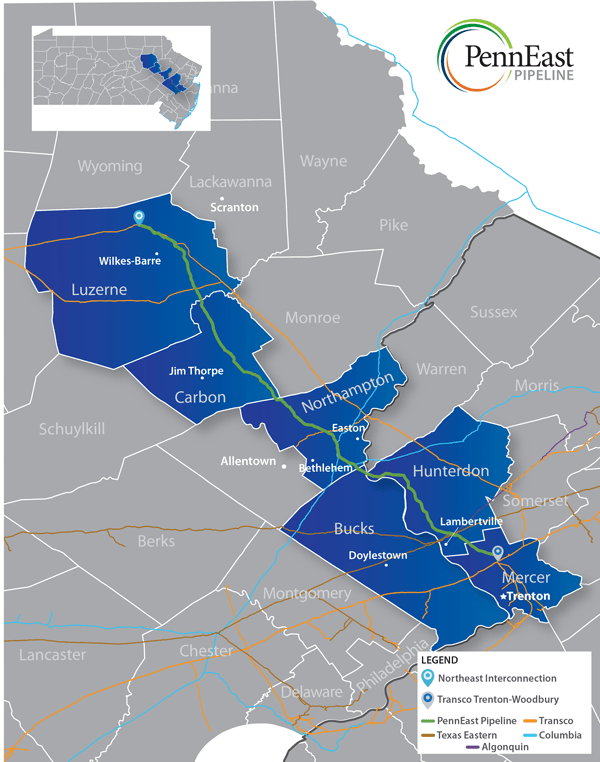
 The colorful new Governor of West Virginia, Jim Justice, is wasting no time in showing his support and appreciation to the natural gas industry. During Justice’s State of the State address last week, he ordered his new head of the WV Dept. of Environmental Protection, Austin Caperton, to stop saying “no” to businesses that show up with requests (including the drilling industry). During a rambling address, Justice had this to say: “Now, I underline — underline, underline, underline — nobody loves the outdoors as much as me. Nobody loves water as much as me. We’re not going to break the law. We’re got going to do anything to damage the environment to the very best of our abilities. Or our waters. But we are not going to just say no.” And we have perhaps the first instance of that philosophy in action. The previous Gov. Earl Ray Tomblin Administration had enacted certain restrictions in WV permits for compressor stations–establishing noise and light restrictions to protect nearby residents. At the request of the West Virginia Oil and Natural Gas Association (WVONGA), Caperton removed those restrictions…
 Last week we pointed out that of all the major pipeline projects we had hoped the Federal Energy Regulatory Commission (FERC) would approve before Norman Bay quit the Commission in a huff, that NEXUS (runs through Ohio) did not get a go-ahead (see
  One year ago (February 2016) MDN told you about an exciting new market for Marcellus and Utica Shale gas that may open up in the next 2-3 years in the Midwest (see
  In the midstream (i.e. pipeline) world, it seems like nobody owns 100% of anything. Big midstream companies like Williams and Kinder Morgan (and others) are composed of subsidiaries and (sometimes) MLPs–master limited partnerships. And beyond the companies within companies (like a Russian nesting doll), often pieces of pipeline systems are co-owned with other companies, even competitors! In 2014 Williams bought out Access Midstream, the renamed and former division of Chesapeake Energy called Chesapeake Midstream (see
  Elections have consequence–not only on the national level, but also on the state and even local levels. Case in point: Barack H. Obama blocked the Keystone XL Pipeline through most of his presidency, and he blocked the completion of the 97% finished Dakota Access Pipeline. Trump got elected over Obama clone Clinton, and that’s all now changed. The Dakota Access Pipeline has received its final clearance and will be done within a few months. Keystone is refiling their application and will get built within the next year or so. However, there is a flip side too. Even when pipeline projects are federally approved, like the Constitution Pipeline from northeast PA into New York, states can throw a monkey wrench into the works and screw it all up–as NY Gov. Andrew Cuomo has done (see
  The clock just ran out for Ohio landowners who either thought Energy Transfer’s Rover Pipeline would not get authorized, or hoped to hold out and get higher rates of payment to agree to allow the pipeline to cross their land. As pipeline companies often say, the use of eminent domain to gain access to property is a “last resort.” The time of last resort has come. As soon as Rover received its final authorization from the Federal Energy Regulatory Commission on Friday (see