
Questerre Energy to Challenge Quebec’s Utica Frack Ban in Court
 The Utica Shale, which underlies much of the Marcellus Shale, also underlies part of Canada’s Quebec province. From time to time we highlight news concerning the Utica in Canada. There hasn’t been much news to highlight over the years since Quebec has had a moratorium on fracking since 2012. But as we reported in December 2016, something of a minor miracle happened–the Quebec National Assembly voted to pass Bill 106, ostensibly to support Quebec’s “clean power plan” (see Fracking in Canadian Utica Shale Takes Big Step Closer to Reality). The bill includes a section that “lays out a framework for oil and gas development” in Quebec. Then in September 2017, Quebec did the unthinkable (for radical environmentalists)–they published draft Utica drilling regulations (see Quebec Government Publishes Draft Utica Fracking Regulations). Canadian driller Questerre believes Utica drilling can begin this year (see Questerre Plans 8 Initial Well Pads in Canadian Utica 2018-2019). News of new Utica regs caused antis in Canada to go berserk. The pressure got to be too much and the politicians decided in June of this year that they will commit fracking suicide instead (see Quebec to Ban Utica Shale Drilling, Most Other Drilling Too). Questerre isn’t taking it lying down. They have considerable acreage in the Quebec’s Utica. Questerre issued a press release this morning to celebrate Bill 106 (passed in 2016) finally going into effect–and to say as for the frack ban, Questerre will sue the government as soon as it’s implemented, to try and get it overturned…
Read More “Questerre Energy to Challenge Quebec’s Utica Frack Ban in Court”
 The Federal Energy Regulatory Commission (FERC) has had a change of heart–sort of–with respect to their stop-work order issued to Mountain Valley Pipeline (MVP). We previously told you that on August 3, FERC told MVP to stop all construction prompted by an order from the U.S. Court of Appeals for the Fourth Circuit vacating permits issued for the project as it crosses 3.5 miles of Jefferson National Forest in West Virginia and Virginia (see
  Work on the Mariner East 2 and 2x pipelines in West Whiteland Township, Chester County (near Philadelphia) stopped in May following a Public Utility Commission (PUC) administrative law judge’s highly questionable ruling (see
  The U.S. Senate Environment and Public Works Committee held a hearing yesterday to consider the Water Quality Certification Improvement Act of 2018 (S. 3303). Two weeks ago we told you about S. 3303, a bill that will “fix” the issue of states like New York using Section 401 of the Clean Water Act, which allows states to have a say in where interstate pipeline routes can pass through a state, from abusing that authority to block pipeline projects (see
 A new hope has emerged for Competitive Power Ventures (CPV) Valley Energy Center, a $900 million, 680-megawatt natural gas-fired electric generating plant in Orange County, NY. Last week MDN told you that at the last minute, four days before the plant was set to start up, the Andrew Cuomo-corrupted Dept. of Environmental Conservation (DEC) pulled the ultimate dirty trick and refused to renew an air permit for the plant they previously issued five years earlier (see
  Borrowing a chapter from EQT and their Mountain Valley Pipeline project, Dominion Energy has asked the Federal Energy Regulatory Commission (FERC) to lift a stop-work order for its 600+ mile Atlantic Coast Pipeline (ACP) project. On Tuesday MVP sent a letter to FERC requesting the agency lift it’s stop-work order for them (see
  A bill under active consideration in the Pennsylvania Senate would remove the PA Dept. of Environmental Protection’s (DEP) prohibition against using brine from conventional oil and gas wells on PA’s roadways (see
  Shell is proposing to remediate a swamp in Mercer County as a way to “offset” the “impacts” of building an ethane pipeline to feed it’s mighty cracker plant under construction in Beaver County. Oops. Sorry. Instead of calling it a swamp, the PC term is “wetland.” Shell will make a swampy portion of Neshannock Creek in Mercer County swampier, in return for permission to build the Falcon ethane pipeline elsewhere. Apparently it’s not the first time Shell has proposed such a swap. Shell is in the middle of remediating a swamp in Washington County in return for “local impacts” (i.e. “damage” to the environment) they’re causing by building the cracker plant itself. This is not an uncommon practice–across the country. We happen to think it’s silly. Either a project is worthwhile–worth “damaging” some of our precious environment, because of the greater good it will bring–or not. Playing this game of “I’ll spoil this area here, so I’ll un-spoil that area over there” is senseless, in our humble opinion. But hey, if that’s the game we must play to get it built…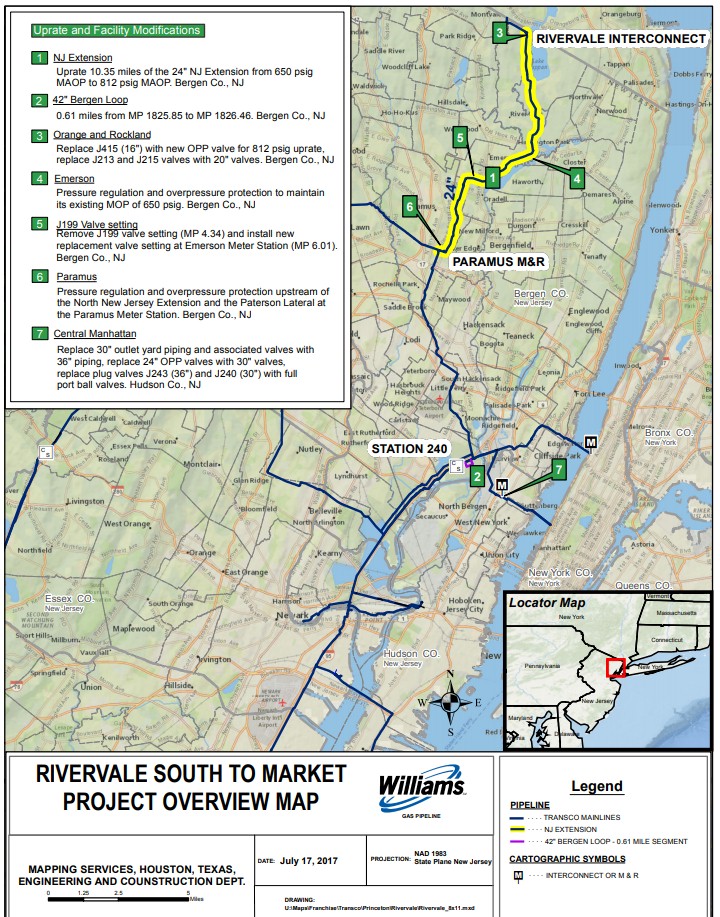

 We spotted something that seemed a bit odd to us. In a story about pipelines in WV and the challenges they face, EQT said they continue to engage in some construction activities for Mountain Valley Pipeline, even though the Federal Energy Regulatory Commission (FERC) recently ordered them to stop all construction on the project until further notice (see
  In just about every state in the country, before you start digging a hole in the ground for some reason (water well, septic system, laying an underground electric line, etc.)–the first thing you do is call 811 or some similar phone number. The “one call” or “first call” reaches a state-authorized (not necessarily state-run) office where they have, on file, maps detailing any kind of underground cables, pipelines and other infrastructure. If such underground structures exist, a representative of the owner for the underground line will, if necessary, stop by and mark the areas so when you do begin digging, you don’t hit it. Makes sense. A bill introduced in 2016 in the Pennsylvania legislature “enhances” the existing 811 law in PA. One of the “enhancements” is that it removes an exclusion for low-pressure natural gas gathering pipelines from being required to be part of the 811 system, mainly lines run to conventional gas wells. The bill was opposed by the Pennsylvania Independent Oil & Gas Association (see
  The U.S. Senate Environment and Public Works Committee will hold a hearing this Thursday to consider the Water Quality Certification Improvement Act of 2018 (S. 3303). Two weeks ago we told you about S. 3303, a bill that will “fix” the issue of states like New York using Section 401 of the Clean Water Act, which allows states to have a say in where interstate pipeline routes can pass through a state, from abusing their authority by blocking pipeline projects (see
  As MDN predicted last week (see