
DEP GP-5 & 5A Regs – Imminent Threat to PA Marcellus Drilling
 In December 2016, the Pennsylvania Dept. of Environmental Protection (DEP) unveiled new regulations to clamp down on methane emissions and other other air pollution that allegedly comes from shale drilling sites (see PA DEP Releases New Regs re Methane & Air Pollution at Drill Sites). The onerous new regulations, not in effect yet, were originally prompted by bullying from the federal Environmental Protection Agency. Even though EPA pressure has disappeared under President Trump, PA Gov. Wolf still intends to push forward with these onerous (frankly, disastrous) regulations. According to the DEP, the proposed General Permit 5A (GP-5A) and the revised General Permit 5 (GP-5), “establish updated Best Available Technology (BAT) requirements for the industry regarding air emission limits, source testing, leak detection and repair, recordkeeping, and reporting requirements for the applicable air pollution sources.” After some final tweaks, the DEP released draft versions of the new permits (i.e. regulations) in February (see PA DEP Seeks Public Comment on Regs for Methane, Compressor Stns). The original public comment period was slated to last 45 days, ending in March. For no stated reason, the DEP extended the comment period until June 5th (see PA DEP Extends Public Comment Period for Methane Regs). In March, MDN editor Jim Willis heard former DEP Secretary Mike Krancer say if GP-5A is enacted as written, it will result in a 12-18 month moratorium on new production in Pennsylvania (see Big News from the O&G Awards Northeast Industry Summit). The shale industry is taking the changes very seriously and has initiated a full court press to oppose the new regulations as written…
Read More “DEP GP-5 & 5A Regs – Imminent Threat to PA Marcellus Drilling”
 MDN previously reported on a $900 million Marcellus gas-fired electric generating plant coming to Orange County, NY (see
  More trouble for Energy Transfer and the Rover Pipeline project as the company is working against a tight deadline to get the $3.7 billion, 711-mile Marcellus/Utica natural gas pipeline that traverses Ohio up and running this year. It appears as if the Ohio Environmental Protection Agency (OEPA) is hellbent on picking a fight with the project. Perhaps some of OEPA’s criticisms are justified–perhaps some are not. We’ll give you the “lay of the land” (pun intended) as we see it. Early on Rover appeared to rush too much, resulting in numerous drilling mud spills in locations where Rover was drilling underground to avoid creeks and rivers and other structures. One of those spills dumped 2 million gallons of drilling mud (i.e. bentonite) in a wetland next to the Tuscarawas River (see
  Here’s one that really gets us hot and bothered. MDN is written from Upstate New York (near Binghamton). We covered, extensively, the battle to allow fracking (and now, natural gas pipelines) in our beloved home state. We won’t plow up old ground again except to say that one of the battles fought, and lost, was over whether or not local municipalities can ban fracking for everyone. Two backwater towns in New York–Dryden (Tompkins County) and Middlefield (Otsego County) passed town bans that were challenged in court. The case eventually went to NY’s highest court, the Court of Appeals. We (pro-drillers) lost. Local towns now have the right to outright ban fracking–if and when it ever becomes legal to frack in New York. Some call it the “home rule” law. This was all done at the prompting and urging of a very corrupt governor–Andrew Cuomo. The judges on NY’s high court are appointed by the governor. It’s the worst kind of incest and miscarriage of justice. So along comes a wind power project that a corporation wants to build in Western NY. Some of the locals don’t want it. If they convince their towns to pass a ban on wind projects for the town, guess what? In that case NY state law will overrule the town and allow the wind project to get built anyway. How, on God’s green earth, is that in any sense fair? Here’s what we hope: We hope at least one of the towns involved passes a ban and it goes to court and they throw the high court’s decision on frack bans right back in their face. It’s time to expose the energy double standard in NY…
 It’s so enormously frustrating to live in The Empire State–New York. Which is where MDN is produced. Our illustrious governor, Andrew Cuomo, has drunken deeply from the man-made global warming Kool Aid fountain. Cuomo, a radically left Democrat, may or may not actually believe in man-made global warming. Makes no difference. He, like other lib Dems, find it a useful tool to control the population. If you can control what people use for energy (and what how they pay for health care), you control their lives, period. Cuomo has made a decision to align himself with global warming nutters who oppose all fossil fuels because supposedly said fossil fuels, when burned, release carbon dioxide into the air. CO2 becomes “trapped” in the atmosphere and takes a long time to dissipate, creating (as the disproved theory goes) a “greenhouse effect,” trapping heat and (eventually) catastrophically warming Mom Earth. The problem, that we’ve pointed out countless times, is that empirical data–where people use instruments to monitor “average” temperatures–proves the earth has been cooling for the past 20 years. That little fact never makes it into mainstream media because it destroys the mythology that’s developed around this POLITICAL issue. Global warming is not, as the left pushes, about science. It is about politics. But we digress. Yesterday Gov. Cuomo released burdensome new methane emissions regulations that will further hamstring New York’s wilting conventional (not shale) oil and natural gas drillers. It seems Andy simply wants to extinguish the rest of the industry in our beloved home state…
 As MDN alerted you on May 10, President Trump has nominated two highly qualified individuals to serve on the Federal Energy Regulatory Commission–Neil Chatterjee and Rob Powelson (see
 Something has befuddled us for a long time. Why would Big Oil companies–like ExxonMobil, Shell and BP–actually support the international climate agreement that caps carbon dioxide emissions from the fuels they extract? In December 2015, then-President Barack Hussein Obama signed the Paris Agreement (otherwise known as COP21) that forfeits the national sovereignty of the United States in the name of so-called man-made global warming (see
  While reviewing documents filed with the Federal Energy Regulatory Commission (FERC) for the Energy Transfer Rover pipeline project, we came across a letter filed by ET yesterday. The letter (full copy below) addresses the recent “inadvertent return” (i.e. major leak) of 2 million gallons of drilling mud in a swamp next to the Tuscarawas River (Stark County, OH). Following that leak and other leaks, FERC told Rover to stop any new underground drilling not already under way (see
  Things that don’t make sense, don’t make sense for a reason. You have to keep digging until you get to the truth. We’re referring to our previous posts where we scratched our heads over calls by both House and Senate Democrats (very liberal, very anti-drilling) for President Trump to hurry up and nominate commissioners to the quorumless Federal Energy Regulatory Commission (see
  The largest (so far) Marcellus Shale-gas fired electric plant in Pennsylvania is currently under construction in Lackawanna County, PA (near Scranton). The Lackawanna Energy Center, being built in Jessup by Invenergy, will produce 1,480 megawatts of electricity. However, there is a second, smaller Marcellus-fired electric plant also in the works. Last October, MDN brought you the news that Archbald Energy Partners, a collaboration between Canada-based EmberClear Corp. and New Jersey-based DCO Energy, wants to build a plant in Archbald, PA (again, near Scranton) that will produce 485 megawatts of electricity (see
  There’s a reason hospitals and court rooms are frequently the settings for soap operas on TV–there’s always so much drama surrounding medicine and the law–the latter of which is our focus today. In January MDN reported what seemed like the final chapter in a long, drawn-out case between Marcellus driller EQT and the Pennsylvania Dept. of Environmental Protection (DEP). In October 2014, the DEP fined EQT a whopping $4.53 million for a leaky wastewater impoundment in Tioga County, PA (see
  Early last week MDN brought you the news that Energy Transfer’s Rover Pipeline project has been fined by the Ohio Environmental Protection Agency (OEPA) for $431,000 for “18 incidents involving mud spills from drilling, stormwater pollution and open burning at Rover pipeline construction sites have been reported between late March and Monday” (see
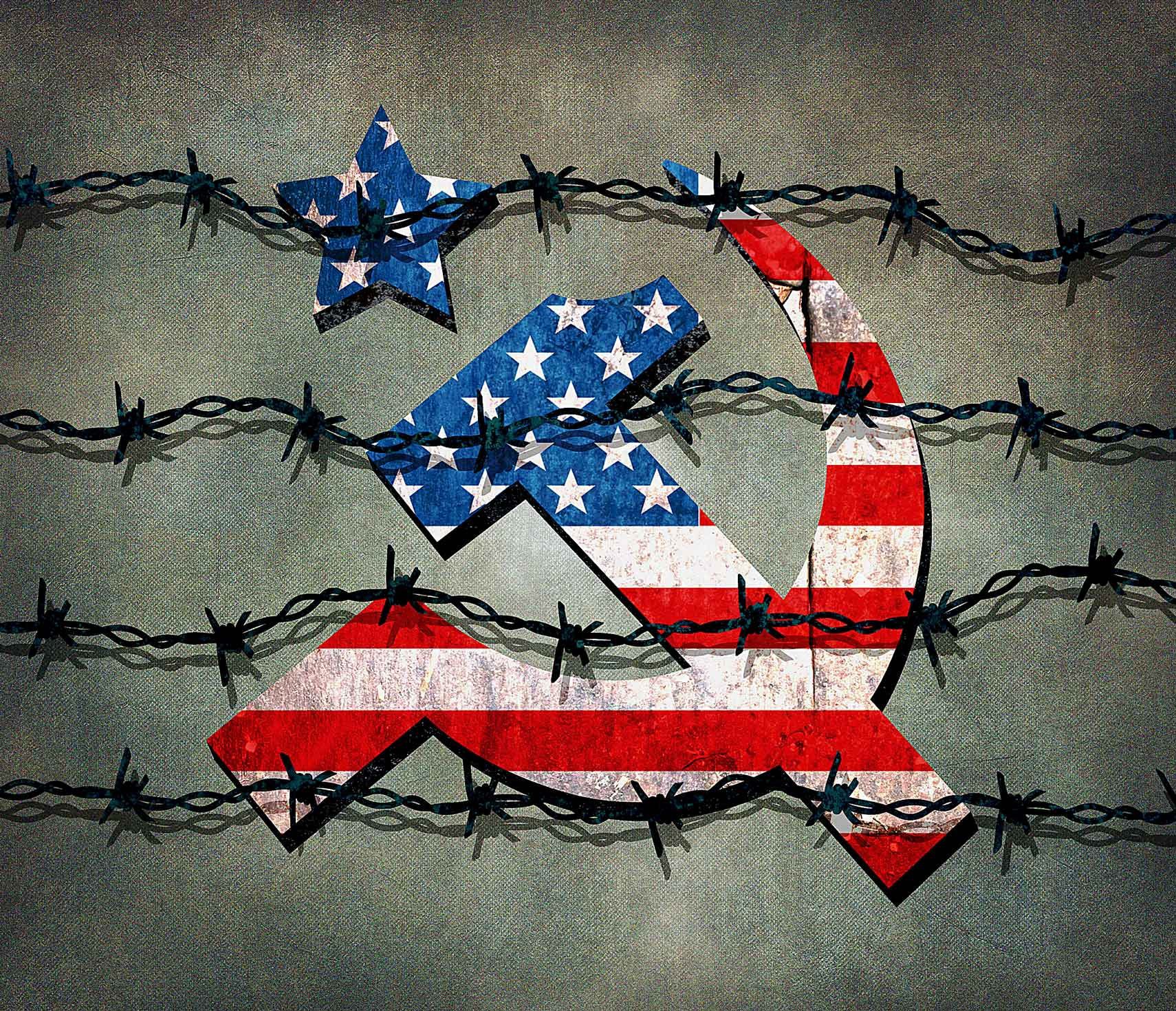 Wikipedia: “The Iron Curtain was the name for the boundary dividing Europe into two separate areas from the end of World War II in 1945 until the end of the Cold War in 1991. A term symbolizing the efforts by the Soviet Union to block itself and its satellite states from open contact with the West and non-Soviet-controlled areas. On the east side of the Iron Curtain were the countries that were connected to or influenced by the Soviet Union.” There is an “economic Iron Curtain” in Wayne County, PA–a curtain imposed by the Delaware River Basin Commission, or DRBC (equivalent to the Soviet Union in our metaphor). The DRBC refuses to allow shale well drilling and fracking in the Delaware River Basin, while next door in the Susquehanna River Basin such activity has been going great guns for years. As we previously reported, one brave landowner in Wayne County is fighting, in court, to rip down the DRBC Iron Curtain (see
  As MDN began reporting last week, Energy Transfer’s Rover Pipeline, a $4 billion, 711-mile Marcellus/Utica natural gas pipeline that will run from PA, WV and eastern OH through OH into Michigan and eventually into Canada, has quickly become a soap opera. MDN brought you the news that Energy Transfer’s Rover Pipeline project has been fined by the Ohio Environmental Protection Agency (OEPA) for $431,000 for “18 incidents involving mud spills from drilling, stormwater pollution and open burning at Rover pipeline construction sites have been reported between late March and Monday” (see