
NatGas Replacing Coal for Power Gen in Ohio; Renewables Tiny 3%
 Here’s an interesting and fun fact: In just 12 years electricity generated by coal plants has gone from powering 87% of Ohio’s homes and businesses to just 47%. So-called renewables (solar and wind) make up a whopping 3% of Ohio’s electric generation. So what’s replacing coal? Natural gas, which now generates 34% of the state’s electricity. Gas still hasn’t beaten coal, but give it a few more years and it will.
Read More “NatGas Replacing Coal for Power Gen in Ohio; Renewables Tiny 3%”
 Every now and again we traffic in rumors here on MDN, but we do so rarely and only when we trust the source of the rumor. In mid-March we brought you juicy tidbits from a highly trusted source about the PTT Global Chemical ethane cracker project in Belmont County, OH, a rumor about why a final investment decision (FID) to proceed has been delayed (see
  CNX Resources released its first quarter 2019 update yesterday, which shows the company lost $87 million, as opposed to making $527 million in profit in 1Q18. Even so, CEO Nicholas DeIuliis announced the company is upping its drilling budget from the previously announced $700 million to instead spend $885 million, largely to drill more “deep dry” Utica wells. Go big or go home!
 New York State is already doing it, Pennsylvania is actively considering doing it, and now, Ohio has caught the contagion too. The “it” we’re talking about is soaking electric rate payers to pump more money into the coffers of big corporations so they can keep uneconomic and financially failing nuclear electric generating plants operating. Both PA and OH lawmakers have floated plans to soak rate payers in their respective states.
 There is an ongoing question of whether or not the Ohio Marketable Titles Act (MTA), which impacts Utica shale rights, can be used to return previously severed mineral rights back to a surface landowner, or whether the MTA is superseded by Ohio Dormant Minerals Act (DMA). In February, Ohio’s Seventh District Court of Appeals said the MTA *does* still apply to mineral rights (see
  We spotted some interesting comments made by Rick Simmers, chief of Ohio’s Division of Oil and Gas Resources (part of Ohio Dept. of Natural Resources, or ODNR), at the recent Utica Midstream conference in North Canton. Rick recounted the rapid, recent history of Utica drilling in the state, coming from nothing less than a decade ago to now having over 2,500 Utica wells drilled and producing. He also pulled out the crystal ball for a prediction of how many new Utica wells will get drilled both this year and next.
 Last week Enbridge, owners of the Texas Eastern Transmission Company (Tetco) pipeline, filed documents with the Federal Energy Regulatory Commission showing that Phase II of its Texas Eastern Appalachian Lease (TEAL) Project began service on April 1st. The TEAL project connects to and feeds Utica Shale gas to the NEXUS pipeline.
 Did you know that at least $70 billion has been spent in Ohio on drilling and pipelines and other infrastructure to support the Utica Shale industry since 2011? No, we didn’t either. That is an astounding number! How about this number: Ad valorem (i.e. property) taxes paid by the shale industry from 2010 through 2018 have totaled ~$132 million. That’s money that goes to fund local schools and towns. Amazing!
 A 30-inch segment of Enbridge’s Texas Eastern Transmission Company (Tetco) interstate natural gas pipeline exploded in January, sending two people to the hospital and destroying two nearby homes when fires from the blast spread (see
  One of the arguments often heard from those who oppose natural gas pipelines is that “nobody” benefits from the pipeline except the sleazy Big Corporation that builds and profits from it. A single pipeline running through Ohio and Michigan puts that lie to rest. Rover Pipeline, built and operated by Energy Transfer, paid out some $73 million in local property taxes in 2018 when the pipeline first began operation. For 2019, with the full pipeline operating at 100% capacity for the entire year, Rover says they will pay out ~$180 million in property taxes! Taxes that fund schools, roads, first responders and other worthy causes.
 Investment firm BlackGold Capital Management announced late last week it has purchased Overriding Royalty Interests (ORRI) in the Utica shale of Ohio from an unnamed seller. We have a guess as to who did the selling.
 Ohio Congressman Bill Johnson is “urging patience” with PTT Global Chemical and their long-overdue final investment decision (FID) to move forwarding with building what is now being called a $7-$10 billion ethane cracker complex in Dilles Bottom (Belmont County), OH.
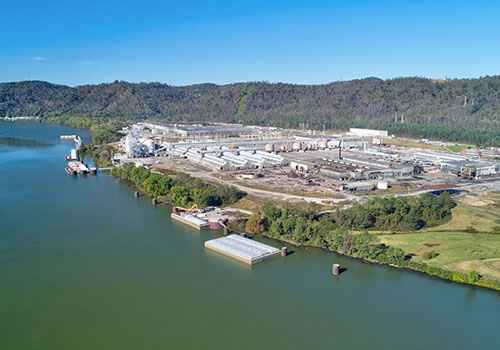
 Some major news coming from yesterday’s Utica Midstream conference held in North Canton, Ohio. A rep from Marathon Petroleum (which is based in Ohio) told conference attendees his company is contemplating building an underground NGL storage facility in Harrison County, OH–to store ethane, butane and propane.