OH Man Arrested for Making Bomb Threat Against Marcellus Biz in PA
 Last week an Ohio man was arrested for allegedly calling in a bomb threat last November against Myers Well Service, located in Eighty Four (Washington County), PA. A cell phone belonging to Ryan Dougherty of Belmont, OH was used to make the threat. Dougherty claims he called the business, but didn’t make any threats. The investigation took three months. Last Tuesday authorities arrested and charged Dougherty. Read More “OH Man Arrested for Making Bomb Threat Against Marcellus Biz in PA”
 We’ve written extensively over the years about the Ohio Dormant Minerals Act (DMA) and even about the Ohio Marketable Titles Act (MTA), both of which impact Utica shale rights. There has been an ongoing question of whether or not the MTA can be used to return previously severed mineral rights back to a surface landowner. The answer to that question appears to have been rendered in a court decision made earlier this month.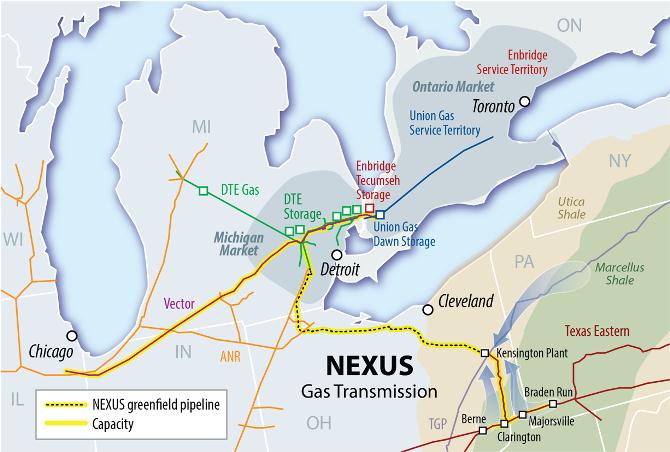
 Comments by Cabot Oil & Gas in their 2018 update issued Friday, along with added comments by CEO Dan Dinges during the earnings call on Friday, reveals the big news that Cabot has given up test drilling in Ohio Knox formation.
 There had been an ongoing legal squabble in Trumbull County, OH over a proposed Utica gas-fired electric plant in Lordstown, located next door to another gas-fired plant (see
  Last November Encino Acquisition Partners (i.e. Encino Energy) completed its purchase of all of Chesapeake Energy’s Ohio Utica Shale assets for $2 billion (see
  Ohio’s current Governor, Mike DeWine, is an establishment-type swamp dwelling Republican. DeWine was Attorney General for Ohio in November 2017 when he was manipulated into suing Energy Transfer claiming the Rover Pipeline project was guilty of “polluting state waters while constructing a natural gas pipeline across Ohio” (see
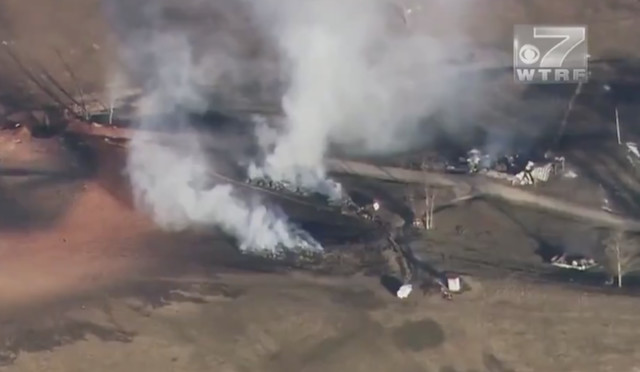
  The Ohio Dept. of Natural Resources (ODNR) is doing a happy dance that they’ve shaken down XTO Energy $425,000 to settle a violation by XTO for drilling a shale well in Belmont County a year ago that exploded and caught fire.
 NEXUS Pipeline, a $2.6 billion, 255-mile interstate pipeline that runs from Ohio into Michigan, began a partial startup in October, and was fully online in November. Although there was early opposition to the project, and some complaints from landowners along the route of construction, the project is noteworthy for the just how little complaining there actually was.
 Landowners in Ohio who didn’t like being force pooled with their neighbors have, since 2015, tried to get the courts to declare that forced pooling is illegal. They’ve struck out in every court where they’ve tried that argument, including (now) the U.S. Court of Appeals for the Sixth Circuit.

 A 30-inch segment of Enbridge’s Texas Eastern Transmission Company (Tetco) interstate natural gas pipeline exploded one week ago today, sending two people to the hospital and destroying two nearby homes when fires from the blast spread (see