 The CORNballs are still at it. Even though NEXUS Pipeline, a $2.6 billion, 255-mile interstate pipeline that runs from Ohio into Michigan, partially started up in October, and went fully online in November, the Coalition to Reroute NEXUS (CORN), along with the City of Oberlin, Ohio, is asking the D.C. Court of Appeals to reverse the Federal Energy Regulatory Commission’s original decision to approve the project. Yes, the CORNballs (our name for CORN) want to shut it all down–even though the pipeline is in the ground spreading economic cheer throughout the region, and even though all of the scary nightmare scenarios predicted by CORN and Oberlin with respect to building the pipeline have now been proven false. The CORNballs and Oberlin are sore losers and apparently have endless gobs of money for lawyers to file frivolous lawsuits in federal court. The same two groups tried this stunt in a different court, the Sixth Circuit, where the lawsuit was tossed out last March. They’ve gone court shopping to try it all again.
Read More “CORNballs Return, Ask DC Court to Shut Down NEXUS Pipe”


 Each week the Ohio Dept. of Natural Resources (ODNR) Oil & Gas Resources division publishes the latest list of permits issued to drillers in the Utica (and/or the Marcellus) for the Buckeye State. Each month the same department issues updated maps for both the Utica and the Marcellus to show where drilling is (and by omission, is not) happening. We have the latest maps below.
 Is anyone surprised that the $6 billion ethane cracker plant complex proposed by PTT Global Chemical for Belmont County, OH did not, as previously promised, announce a final investment decision (FID) in 2018? We sure weren’t.
 Last September the Ohio Supreme Court handed down a decision that requires oil and gas landmen working in Ohio to have a real estate license (see
  The Ohio Dept. of Natural Resources (ODNR) issued third quarter 2018 production numbers for Utica shale oil and gas production yesterday. And what a report it is! Natural gas production was up an amazing 31% over the same period last year (after being up 42% in 2Q18). Utica natgas production broke another record, hitting a new all-time high of 605 billion cubic feet (Bcf) in 3Q18. But perhaps the biggest story was Utica oil production. In 1Q18 Utica oil production was down 3.6%. In 2Q18 Utica oil production was up 11%. But in 3Q18, Utica oil production soared, going up 32%.
 Last week the Bureau of Land Management’s (BLM) Eastern States Office ran another oil and gas lease auction for federal land on the eastern side of the country. Up for auction was 2,456 acres in Ohio, Michigan and Mississippi. Only half of the property listed for auction actually brought bids and sold. Of the 2,456 acres offered, a piddly 75 acres, in two parcels, was located in Ohio’s Wayne National Forest (WNF)–in Monroe County. That is, 3% of all the acreage in the BLM sale was in the Ohio Utica–and yet that 3% brought in 69% of the revenue from the sale: $15,720 total. However, the amount paid per acre for the WNF parcels seems to be small–just $209 per acre. So who picked up the 75 acres for a song?
 It’s been a while since we’ve heard anything about Duke Energy’s plan to build a critically-needed natural gas pipeline near Cincinnati, OH, to replace an old pipeline built in the 1950s. We told you in April that Duke had, finally, refiled their application to build the new pipeline along an alternate route, with a few tweaks (see
  In June 2017, MDN reported that the Fresh Water Accountability Project (FWAP), a radical anti-fracking group based in Michigan, had filed a lawsuit against the Patriot Water Treatment facility and the City of Warren, OH, claiming the two treat frack chemicals at their respective facilities that don’t get processed enough–and consequently get released into the Mahoning River (see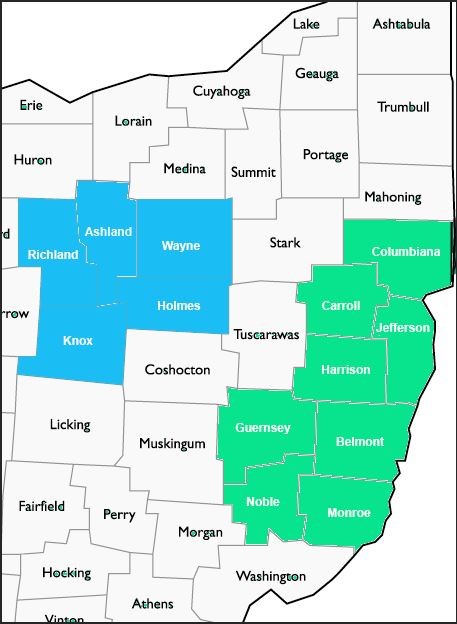
 If a deed refers to a previously reserved royalty interest where the reference identifies the type of interest created and the person to whom the interest was granted (with no other details), is that sufficiently specific enough to preserve the royalty interest under the Ohio Marketable Title Act (OMTA)? According to a decision rendered last week by the Supreme Court of Ohio, the answer is, “Yes.” In a case with its roots dating back to 1915, landowners attempted to sever royalty interests under the Ohio Dormant Mineral Act, attempting to cancel the old interest because a 1969 deed that referred back to the original deal (of one-half royalty interest) was not “specific enough.” The 1969 reference didn’t include the volume and page number of the instrument that originally created the royalty interest. In other words, it wasn’t a “Simon Says” kind of thing–it didn’t follow the exact legal standard. The current landowner tried to cancel the original royalty sharing obligation via a legal loophole.
 An analysis by Argus Media shows the number of new permits issued to drill in the Pennsylvania Marcellus Shale was down 42% in November 2018 over the same time a year ago. Drilling in Ohio’s Utica Shale was down 26% in November vs. a year ago. Yet one overpowering fact remains: Production in both states is UP over a year ago! How do you explain it? Each year drillers get better at what they do–they get more gas from drilling fewer wells. Longer laterals, more sand, improved fracking techniques–it all adds up to more production with less drilling. Our region is also still working down our DUC (drilled but uncompleted) wells inventory, which means less drilling. And winter cold has set in, early. Yeah, less drilling means fewer jobs and fewer opportunities to sell goods and services to drilling companies. But watch for the permit numbers to start going up again (our prediction). Why? Because with pipelines which recently went online and new pipes due to go online, the price our gas is fetching has dramatically increased–and that means the willingness of M-U drillers to drill new wells will increase too.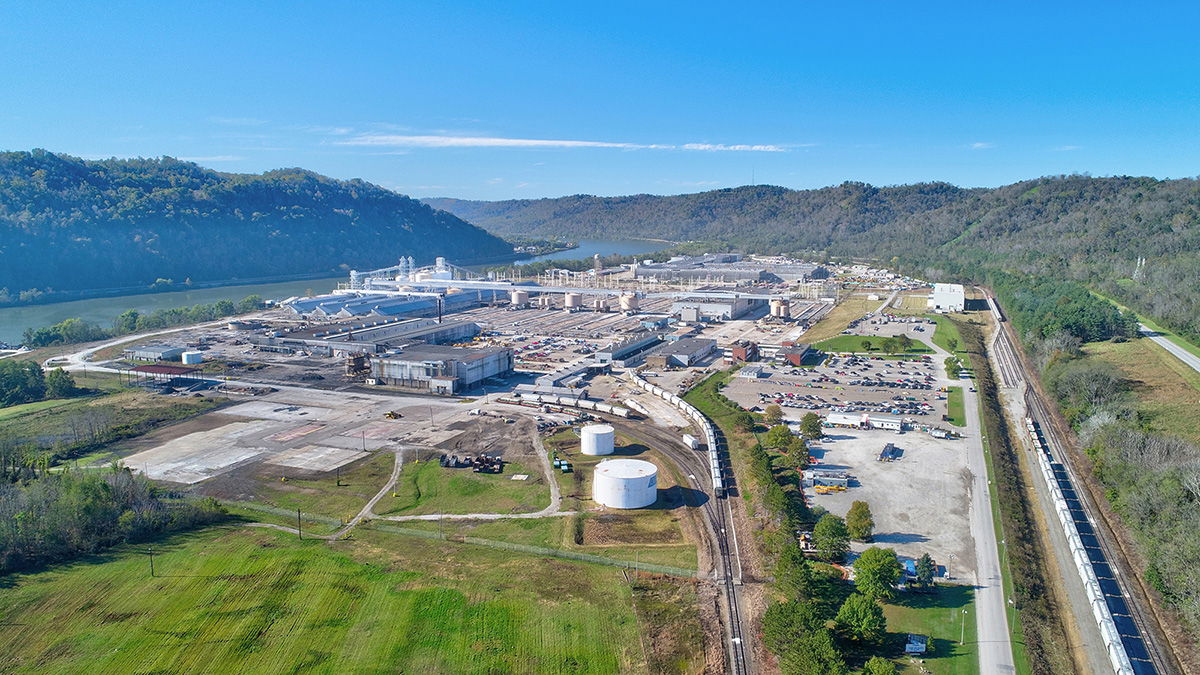


 The Pennsylvania Dept. of Environmental Protection (DEP) issued 269 permits for Marcellus (and possibly a few Utica) shale wells in October and November. The Ohio Dept. of Natural Resources (ODNR) issued 22 permits in the Utica/Point Pleasant shale play in October, and 11 permits in November (as of Nov. 17). That’s over 300 new shale wells between the Marcellus and Utica in the most recent two months–a strong showing. Farm and Dairy, a 100+ year-old publication serving the rural communities of Ohio, Pennsylvania and West Virginia, recently tabulated the permit numbers for western PA and eastern OH, down to the county level. Here’s what the numbers show.