
Encino Takes Over from Chesapeake in Ohio Utica; Big Plans
 The deal is done. On Monday, Encino Acquisition Partners completed its purchase of all of Chesapeake Energy’s Ohio Utica Shale assets for $2 billion, originally announced in July (see Stop Press: Chesapeake Sells ALL of its Ohio Utica Assets for $2B). The deal includes all of Chesapeake’s 933,000 Ohio acres (with 320,000 net Utica acres) and 920 operated and non-operated Ohio Utica wells. With the deal now done, Encino is signaling good things are ahead. The company will keep its Utica regional headquarters in Louisville, OH–right where Chesapeake had it. Encino has and will continue to operate two active drilling rigs in the Utica this year, and add a third rig next year. Encino CEO Hardy Murchison recently spoke about the company’s Utica plans moving forward. It has folks in Ohio excited!
Read More “Encino Takes Over from Chesapeake in Ohio Utica; Big Plans”
 A number of times we’ve highlighted a cool training program offered by the The Gas Technology Institute (GTI). The
  Cleveland State University and Case Western Reserve University have floated a bold plan to build a $100 million microgrid to power the city of Cleveland, OH’s central business district in downtown, a 2-3 square mile area. At the heart of the microgrid would be a Utica gas-fired combined heat and power system (CHP). The CHP plant would produce up to 48 megawatts of electricity and act as a backup and/or alternative to the grid. The cost per kilowatt-hour would higher than electricity from the regular grid, but hey, it would mean virtually 100% up-time, providing electricity when grid demand is extreme (hot summers, cold winters). It’s all about reliability.
 In early October NEXUS Pipeline, a $2.6 billion, 255-mile interstate pipeline that runs from Ohio into Michigan, received permission from the Federal Energy Regulatory Commission to begin partial operation (see
 Less than two weeks ago NEXUS Pipeline, a $2.6 billion, 255-mile interstate pipeline that runs from Ohio into Michigan, received permission from the Federal Energy Regulatory Commission to begin operation (see
  American Water Management Services (AWMS) owns a wastewater injection well in Trumbull County that supposedly caused a low-level earthquake (that nobody could feel) in 2014. Two wells located at the site, both operated by AWMS, were “temporarily” shut down by the Ohio Dept. of Natural Resources following the quake (see
  Gulfport Energy, an independent oil and gas driller with significant acreage positions in the Utica Shale of eastern Ohio and the SCOOP Woodford and SCOOP Springer plays in Oklahoma, issued its third quarter operational (not financial) update yesterday. Gulfport is one of those companies that delivers its operational news first, and a few weeks later issues its financial news. Gulfport reports production continued to climb to new highs, averaging 1,427.5 million cubic feet equivalent (MMcfe) per day, a 7% increase over 2Q18 and 19% increase over 3Q17. Said another way, 1.43 Bcf/d.
 Last Friday three county commissioners from Belmont County, OH took a field trip to visit Beaver County, PA, touring the Shell ethane cracker site and talking with Beaver County officials about how the project has impacted that area. Tuesday night, a member of the Potter Township (PA) Board of Supervisors came to a meeting of local leaders in Belmont County, to talk about the Shell cracker project and what such a project in Belmont could do for the Ohio Valley. PTT Global Chemical is supposedly close to making a final investment decision on building a cracker in Belmont. The interesting comment coming from Tuesday’s meeting was about the timing of a decision to build the PTT cracker: “It [the decision] will be revealed by the end of the year.” So says Belmont officials.
 The Ohio Oil and Gas Association (OOGA) and St. Clairsville Area Chamber of Commerce sponsored an update on the Utica Shale and its impacts in southeastern Ohio at a one-day event held yesterday at Belmont College. The upshot of the day seemed to be this: The Utica is still creating thousands of jobs, and still attracting millions of dollars in investment. Among the speakers were reps from both EQT and Ascent, who had some interesting comments about their respective operations. Question: Who do you think is the largest natural gas producer in Ohio today? One of the speakers made the surprise claim that her company is now the top producer in Ohio.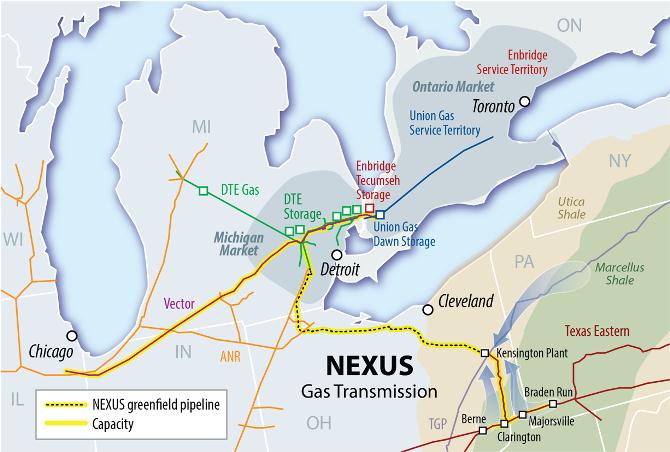


 Each large (over 475 megawatts) gas-fired electric power plant is an economic bonanza. The plants cost hundreds of millions of dollars to build–over a billion dollars for the largest plants. They provide hundreds of jobs during construction, jobs that last several years. They provide millions in tax revenue to local municipalities and schools. And best of all, each one of these plants uses an enormous amount of Marcellus and Utica Shale gas. There are 29 of these incredible projects already built or in various stages of planning and construction in PA, OH and WV. We have the list below.
 Reliable One Resources, a wastewater treatment company headquartered in Texas, has just purchased an existing/functioning wastewater injection well in Athens, OH. Reliable does not say in their announcement who sold them the well. They do say they intend to drill a second well next to the first one (which is the big news for us), and that they (Reliable) is in the process of buying “multiple trucking companies” that will hauling wastewater from Marcellus/Utica drillers to their facility.