
3 Counties, 5 Drillers Led OH’s 50% Increase in 2Q Gas Production
 The Pareto Principle is alive and well in the Buckeye State. You may know it as the 80/20 rule, or in this case, the 75/25 rule. The rule that states roughly 80% of the results come from 20% of the effort. Last week MDN brought you the latest update from the Ohio Dept. of Natural Resources–their second quarter 2018 report showing all production coming from the Ohio Utica Shale (see Top 25 Producing Gas & Oil Wells in Ohio Utica for 2Q18). While MDN provided you with Top 25 lists showing the best-performing wells (both gas and oil) during 2Q, and while we provided you with a better spreadsheet to view the information than that provided by the ODNR itself, our analysis was basic and high level. Utica natgas production was up a big 42% over the same period last year, and Utica oil production was up 11%–a cumulative 50% increase when you convert it all into equivalents. The experts at S&P Global Platts have done a deep dive into the numbers and have found that three counties represent 75% of all production in 2Q18, and five drillers represent 75% of all production in 2Q18. Which counties and which drillers? Read on…
Read More “3 Counties, 5 Drillers Led OH’s 50% Increase in 2Q Gas Production”
 According to a news account from Ohio, Cabot Oil & Gas is either in the midst of, or just recently completed, fracking their very first shale well in central Ohio. The well is located in Ashland County’s Green Township. As we previously reported, Cabot is targeting the Knox formation (see
 Houston-based Schlumberger (pronounced Shlum-Bur-Zhay) is the world’s largest oilfield services company. They’re the company a majority of exploration and production companies (drillers) call when they want a new well drilled. The #2 company on speed dial for drilling new wells is Halliburton, and they’re not even close in size to #1 Schlumberger. Here in the U.S., the #3 company on speed dial for drilling is Baker Hughes, still (for now) owned by GE. We mention all that because most folks recognize the names Halliburton and Baker Hughes, yet are often not familiar with the hard-to-pronounce Schlumberger. Even so, Schlumberger has a big presence in the Marcellus/Utica region. In a gesture of “giving back,” the company has just made a VERY generous grant of $14 million of its own proprietary software used for modeling and assessing risk associated with drilling new wells, to Youngstown State University. Most major E&Ps use Schlumberger’s software, even if they don’t use Schlumberger itself to do the actual drilling. While at first glance the gift of software may seem self-serving, it’s not. This gift means that students will be trained on the latest and greatest software that they will need to know, coming right out of college. It helps the kids gain a valuable skill, making them more employable once they hit the workforce…
 The Gas Technology Institute (GTI) continues to offer its popular 100% free training program (worth $3,500) for those interested in a career building pipelines in the Marcellus/Utica region. Starting salaries often exceed $40,000 per year, and a six-figure income is attainable for employees with time and experience. Companies supporting the GTI program have told GTI they anticipate hiring 1,100+ workers over the next two years. There’s no excuse! If you want a high-paying job, get the 4-week training and get yourself to work. Because of ongoing construction programs within the utility and pipeline industry, and because of aging workforce retirements, the M-U pipeline industry has an acute need for reliable gas pipeline workers. The next round of free training, limited to 20 students per section, begins on Sept. 24 at Belmont College in St. Clairsville, OH…
 It sure feels like PTT Global Chemical, the Thailand-based petrochemical giant that says it wants to build an ethane cracker in Belmont County, OH, is getting close to making a positive final investment decision (FID). On Monday we told you that an Ohio State Representative, Andy Thompson, said such a decision will be forthcoming in “a month or so” (see
  The Federal Energy Regulatory Commission (FERC) game of hardball with Energy Transfer over the Rover Pipeline has finally paid off. For months FERC has refused to allow four Rover laterals–feeder pipelines to shuttle gas from where it’s produced into the main Rover pipeline–to start up (see
  Sometimes you spot an innocent, off-the-cuff remark that’s not really part of the intended story–but has huge meaning. Such was the case when we spotted a story quoting Ohio House of Representatives member Andy Thompson (Republican, 95th District covering Carroll, Harrison and Noble counties, and portions of Washington and Belmont counties). Thompson, who (to his credit) is not running for reelection after four terms [NOTE: a sharp MDN reader emailed to say Mr. Thompson was term-limited out and could not run again], gave a speech at the Ohio Mid-Eastern Governments Association last week in St. Clairsville. In his remarks, Thompson talked about the work of Shale Crescent USA, an economic development organization formed a few years ago to encourage business growth in the Ohio Valley based on low natural gas prices that allow manufacturers to operate more efficiently–with easy access to half the population of the United States and Canada. Although Thompson’s focus was not on the PTT Global Chemical ethane cracker project potentially planned for Belmont County, he had some VERY interesting remarks about that project and others like it…
 Cabot Oil & Gas is drilling test wells in north central Ohio looking for “what’s next” after the Marcellus. So far Cabot, long known for its prolific production in the Marcellus Shale, has drilled two test wells and is in the process of permitting/drilling a third well, all in Ashland County, OH. Now Cabot is turning its sights on neighboring Richland County. Last Tuesday Cabot reps briefed Richland County commissioners on what they’re doing in Ashland County, and what they would like to do in Richland. Here’s the latest on Cabot’s effort to locate a new rock layer, hoping to spin straw into gold like they’ve done in Susquehanna County, PA…
 Ever hear of a PILOT? No, not the airplane kind. A PILOT is a “payment in lieu of taxes”–a common arrangement for electric generating plants. If such plants paid property taxes at full market value, the taxes would be so insanely high the plants would be uneconomical and therefore wouldn’t get built. So PILOTs are used instead. Such an agreement was recently reached between EmberClear and Harrison County, OH. In September 2016, MDN reported that EmberClear planned to fund and build a new $900 million electric generating plant in Harrison County (see
  Yesterday the Federal Energy Regulatory Commission (FERC) granted a “certificate of public convenience and necessity” (i.e. official approval) for Rover Pipeline to spend $4.7 million to build a new meter station along Rover’s Burgettstown Lateral. The new meter station, to be located in Jefferson County, OH, will connect a pipeline gathering system built and maintained by Utica Gas Services LLC, connecting the gathering system to Rover. The new connection will flow 350 million cubic feet per day of Utica Shale gas into the Rover pipeline system. But here’s the thing: FERC has not yet given Rover permission to begin flowing gas along the Burgettstown Lateral. FERC is playing hardball, withholding permission for Burgettstown and three other laterals until Rover (i.e. Energy Transfer) gets restoration work done along certain portions of the project (see
  Aubrey McClendon, co-founder of Chesapeake Energy and founder of American Energy Partners (renamed to Ascent Resources) was the first to recognize the importance of the Ohio Utica Shale and once famously said the Utica is “the biggest thing to hit Ohio since maybe the plow.” Turns out he was right, God rest his soul. The Consumer Energy Alliance (CEA), a national group of families, farmers, small businesses, distributors, producers and manufacturers joined together to support America’s energy future, has just released a report that shows from 2006 to 2016, Ohioans saved more than $40 billion (!) on energy costs (natural gas and electricity) because of the Ohio Utica Shale. The report, titled “The Benefits of Ohio’s Natural Gas Production to Energy Consumers and Job Creators” (full copy below), breaks down the savings this way: Ohio residential customers saved close to $15 billion during the 10-year period, while commercial and industrial consumers saved more than $25 billion. But that’s not all. The report also quotes JobsOhio in saying that shale-related investment in the Buckeye State from 2011-2017 was a staggering $63.9 billion. If you add those two numbers together, the amount of money saved on energy (and therefore spent on other things), and the amount of money invested, it totals more than $100 billion of economic impact from shale in Ohio–in ten short years. Put another way, one-tenth of trillion dollars has been spent in Ohio because of shale. Mind-blowing…
 The mayor of Bloomingdale, OH, in Jefferson County, wants Ascent Resources to “come to the table for more fair arrangements on leases, road use agreements and fixing already-damaged roads.” The mayor and the village council are threatening to sue Ascent if they don’t “come to the table.” In other words, pay up or else. What has Ascent done to anger the mayor and village? Primarily the issue involves RUMAs–road use maintenance agreements. Some roads the village says Ascent uses have been damaged and the village wants them fixed. They also want a new agreement in place to pay for more fixes in the future. The mayor also says Ascent is using pressure tactics in leasing land from village residents. Some one-third of the village is now leased. These problems have been going on for about a year now, and the situation seems to be coming to a head…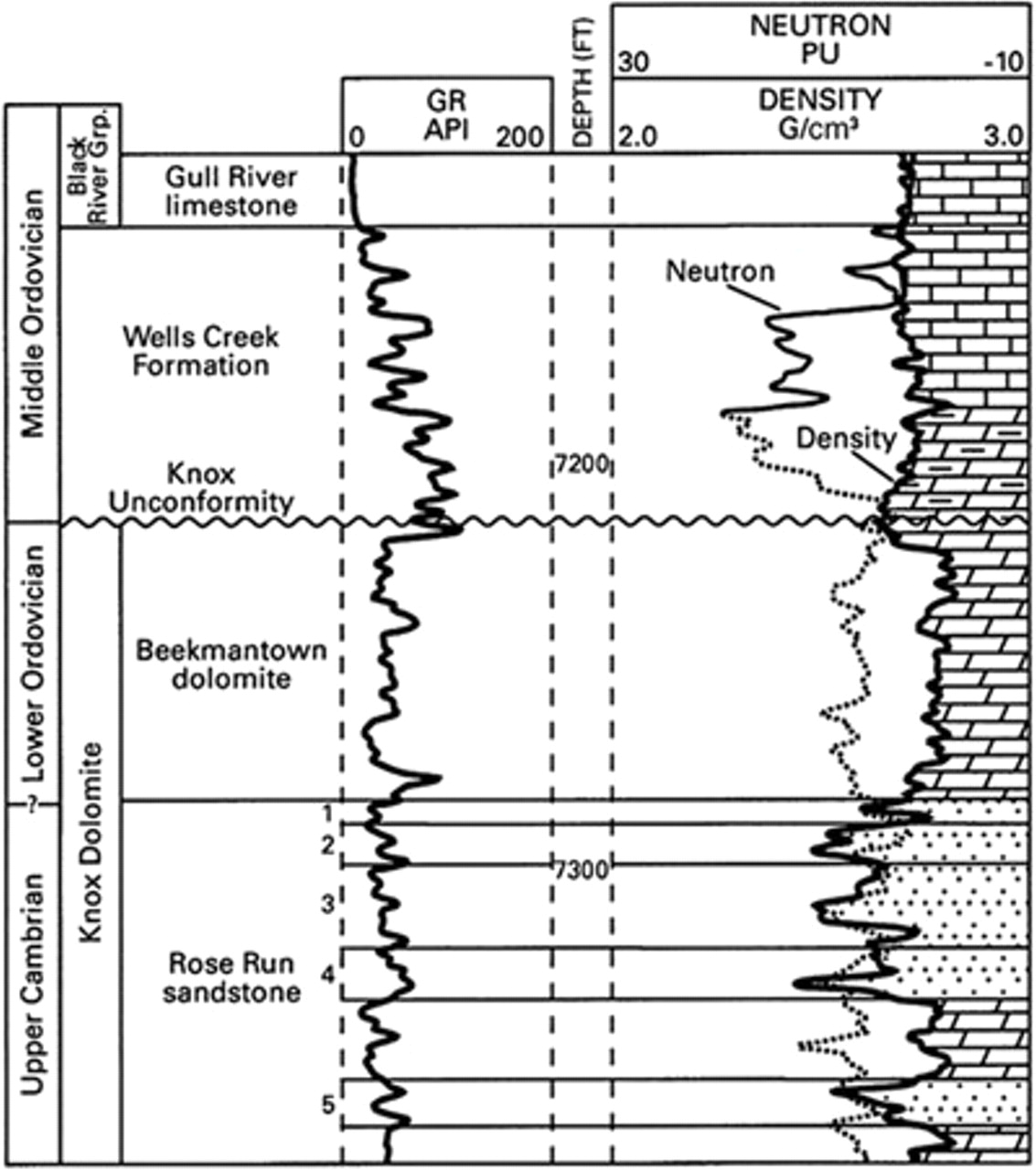
 While the Marcellus Shale play is mostly about natural gas, with some natural gas liquids in the southwestern part of the play, the Utica play in Ohio is a different story. Yes, a lot of natgas and NGLs get produced in the Utica, but the Utica also has a lot of oil coming out of the ground. Crude oil. Straight from the Utica/Point Pleasant rock layer. Something that hadn’t dawned on us (until now) is this question: How do Utica drillers get their crude to refineries? With natgas and even NGLs, it’s done mostly via pipelines. When’s the last time you heard about a “gathering pipeline” running to a well pad for crude oil? Yeah, never. So how do drillers get all that oil to refineries? They truck it. Another interesting factoid: those Pilot Flying J truck stops don’t only sell refined petroleum (diesel) to truckers, some of those operations also truck raw crude to refineries. The Pilot Flying J in Canton, OH is one such operation–and they currently have a shortage of truck drivers to haul Utica crude. It’s a “trucker’s market” right now. If you have a Class A commercial driver’s license with Hazmat (hazardous materials) and tanker endorsements, Flying J wants to talk to you, stat…