 A recent article in the left-leaning Roll Call (official publication for Washington, D.C. swamp dwellers) attempts to paint the Trump Administration as out of step with the people he wants to help in West Virginia. The article says Trump’s strategy to prop up failing coal and nuclear plants is an attempt to boost coal mining jobs in WV, but is running counter to the state’s strategy of embracing the natural gas industry. Perhaps they have a point. However, what’s most interesting about the article is not the ginned up conflict between Trump and WV, but how the article spotlights WV’s two U.S. Senators–Republican Shelley Moore Capito and Democrat Joe Manchin–and their continuing role in trying to make a $10 billion NGL (mostly ethane) storage hub facility become a reality. The storage hub will be a jobs magnet with some estimates that it will create more than 100,000 new jobs in the state. The storage hub will also draw manufacturers looking to locate near ethane crackers, as a source for plastics used in their manufacturing process. Capito, in her comments, attempts to gloss over the rivalry between coal and natural gas, saying “all those rivalries have gone by the wayside.” Er, a, we beg to differ. But leaving aside the coal v. natgas focus of the article, we found two very interesting items. (1) The Dept. of Energy loan guarantee that would cover $1.9 billion of the estimated $10 billion cost to build it is a much bigger deal that we had realized. Why? Because any project that wins such a guarantee has gone through a rigorous review process. Winning such a guarantee is like conferring a triple A rating on the project for others who will consider investing in the project. It gives them confidence that the project has been thoroughly vetted and is low risk. (2) Manchin, in speaking with DOE Sec. Rick Perry, is using an interesting and novel argument to convince Perry the storage hub is a good thing to do. Manchin said when hurricanes hit the Gulf Coast, it knocks out petrochemical industry there, with a cascading effect across the U.S. Cracker plants (fed by the storage hub) in the northeast, are not susceptible to hurricanes. So Manchin’s pitch to Perry is this: Keep the Gulf Coast crackers cooking for products to export to other countries, but let’s build the storage hub (and crackers) in the northeast, so our country’s petchem industry isn’t adversely affected by a major hurricane…
Read More “WV’s US Senators Lead the Charge to Build $10B NGL Storage Hub”

 MDN exclusively brought you the news, on June 19, that Diversified Gas & Oil had purchased EQT’s Huron Shale assets in Kentucky, Virginia and West Virginia for $575 million (see Diversified Gas & Oil Adds to Conventional Assets in KY, VA, WV). At that time, Diversified did not disclose who it had purchased the assets from. MDN provided a guess, but that guess proved wrong. Within an hour of posting about the sale, an MDN tipster confirmed for us the seller was EQT, which we subsequently updated, providing the MDN audience with the inside skinny. On Friday, June 29, EQT issued a press release (below) confirming that yes, it was they who had sold the acreage/assets, including nearly 12,000 wells with 200 million cubic feet per day of natural gas production, to Diversified. The deal also includes 2.5 million acres of leases and some 6,400 miles of gathering pipelines. What we didn’t know about the deal (until now) is that it includes 8 field offices and 250 employees. Here’s the EQT announcement with full details of the deal…
 Appalachian Mountain Advocates, a far-left, radical anti-drilling organization that some media outlets refer to as a simple “nonprofit law firm,” has filed a lawsuit against West Virginia University to force the university to hand over privileged and secret communications concerning the deal WV struck with China to invest $83.7 billion in the state, in the shale and petrochemical industries. As you may recall, that deal was announced last November (see
  The insidious and well-funded Sierra Club has scored another temporary legal victory in stopping Mountain Valley Pipeline (MVP) construction throughout West Virginia. One month ago we reported that the Clubbers had claimed a temporary victory in stopping construction work of MVP at four river crossings in WV. At that time (in May), the Clubbers and a mishmash of other radicalized groups filed a motion asking the Fourth District U.S. Circuit Court of Appeals to suspend a permit issued by the U.S. Army Corps of Engineers that allows MVP to construct the pipeline across streams and rivers in the Mountain State (see
  TransCanada’s Leach XPress project–some 160 miles of new natural gas pipeline and compression facilities in southeastern Ohio and West Virginia’s northern panhandle which flows 1.5 billion cubic feet (Bcf) of gas all the way to Leach, Kentucky (hence the name)–went online January 1st. A section of the pipeline exploded and burst into flames on June 7 (see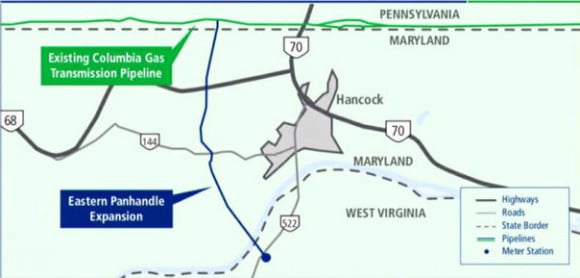
 Cunningham Energy is a small oil driller based in West Virginia. In 2015, Cunningham struck oil in the Big Injun sandstone formation in Clay County, WV (see
  You can’t say we didn’t warn you. In early April, when the current “trade war” with China began to heat up, we said this with respect to the deal China signed to invest $83.7 billion in West Virginia shale and petrochemicals: “However, if a trade war does develop, it would be foolish to not think those investments (withholding them) will be used against us.” (
 It increasingly looks like LyondellBasell Industries, one of the largest plastics, chemicals and refining companies in the world, will buy out/take over Braskem, the largest petrochemical company in Latin America (headquartered in Brazil). Braskem and its parent company Odebrecht, as you may recall, was hot-to-trot to build a multi-billion dollar ethane cracker near Parkersburg, WV–four years ago. Odebrecht got mired in scandal in Brazil and that put things on hold in 2015 (see


 We told you last week that Columbia Gas Transmission’s Leach XPress Pipeline, which only came online in January, experienced an explosion and fire in Marshall County, WV (see
  Rover Pipeline (Energy Transfer Partners) has agreed to pay a $430,030 fine to the West Virginia Dept. of Environmental Protection for water pollution violations related to construction activities for the pipeline. The “consent order” was dated May 15 but not released to the public until Tuesday of this week. The proposed deal is now open for public comment until July 13. Rover received 18 notices of violation and 2 cease-and-desist orders dating back to April 2017. Most of the violations relate to failure to control erosion and for allowing sediment water to leak out of construction areas. WV DEP has not yet signed (officially accepted) the order, but it certainly appears to be a done deal. Here’s the news and a copy of the consent order…
 No wonder the teachers in Philadelphia think that the money in drillers’ pockets actually belongs to them. Because in neighboring West Virginia, it does! At least some of the money. WV held its final public hearing (#21) as part of a statewide “listening tour” about how the state should fix (i.e. pay for) its insurance program for public employees. Most of the speakers at the 21 complain-fests were teachers. Their #1 preferred solution to “fixing” (paying for) better benefits is to boost the severance tax on natural gas higher than the current 5% (already one of the highest rates in the country). Such an increase would, of course, kill new drilling. And sooner or later previously drilled wells on which current severance tax revenues are based wind down, leaving teachers back at square one, with no extra money to pay for better insurance plans. Here’s more on the story of WV teachers looking to take money out of the pockets of a single industry, in order to grab other people’s hard-earn money for themselves…