
PA Gov Wolf “Acts” to Finalize the State Budget, No Severance Tax
 Attempting to bluster his way through an epic fail to get a budget agreement done, Pennsylvania Gov. Tom Wolf tried to lay the blame for a late budget on House Republicans, for their refusal to pass a severance tax. Yesterday Wolf unilaterally acted to plug a budget deficit (to fill the gap in a wildly overspent budget) by borrowing $1.25 billion from the state’s Liquor Control Board, from future liquor revenue payments. Playing politics, Wolf laid blame on Republicans in the House, saying he has “had enough of the games” and is “drawing a line in the sand.” Wolf’s willingness to act unilaterally by borrowing against future liquor revenues appeared to have stunned Republicans in the House, who rightly ask this question: If Wolf could have acted unilaterally like this to pull forward revenue and plug the gap, why didn’t he do it a month ago to prevent a downgrade in PA’s credit rating? That’s a great question. So who’s really playing politics with the people of PA? Wolf’s official statement belies his petulant, crybaby attitude in not getting his own way with a Marcellus-killing severance tax. Wolf held out hope that traitorous Republicans in the Senate could bully House Republicans into accepting a severance tax. Wolf lost that political gamble and he now must scramble to try and cover his political backside before the next election. Wolf’s base of far-left Philadelphia teachers won’t be happy. Wolf couldn’t get a severance tax passed in his first four years in office–so why expect he can in the next four? Wolf’s future as governor is now on life support–thanks to principled House Republicans who held the line and refused to cave to the pressure. So for now, the budget battle has ended. It’s over. Yes, a few more things need to get done, but the pressure is off. You might as well say the budget for this year is a done deal, WITHOUT a severance tax!…
Read More “PA Gov Wolf “Acts” to Finalize the State Budget, No Severance Tax”
 In March MDN brought you the news that APV Renaissance Partners (a subsidiary of American Power Ventures) wants to build a 1000 megawatt, combined-cycle power plant at the old Hatfield’s Ferry site in Greene County, PA–to be powered with Marcellus Shale gas (see
  In reporting on APV Renaissance Partners’ plan to build a 1000 megawatt electric power plant in Monongahela Township (Greene County), PA, today, we noticed an interesting closing paragraph in the story we quoted, which says: “Another energy company, Hill Top Energy Center, also has proposed constructing a natural gas power plant in Greene County. Hill Top has proposed building a 536-megawatt plant on 41 acres of land off Thomas Road in Cumberland Township. A public hearing on Hill Top’s proposed air quality plan will be held by DEP at 6 p.m. Nov. 2 in the Carmichaels Area High School auditorium.” A second Marcellus-fired power plant planned for Greene! Who knew? We went searching for details we could find to share with you about this second project, which will get a DEP hearing in a month…
 In August MDN introduced you to a new-to-us driller based in Akron, Ohio–Pin Oak Energy Partners (see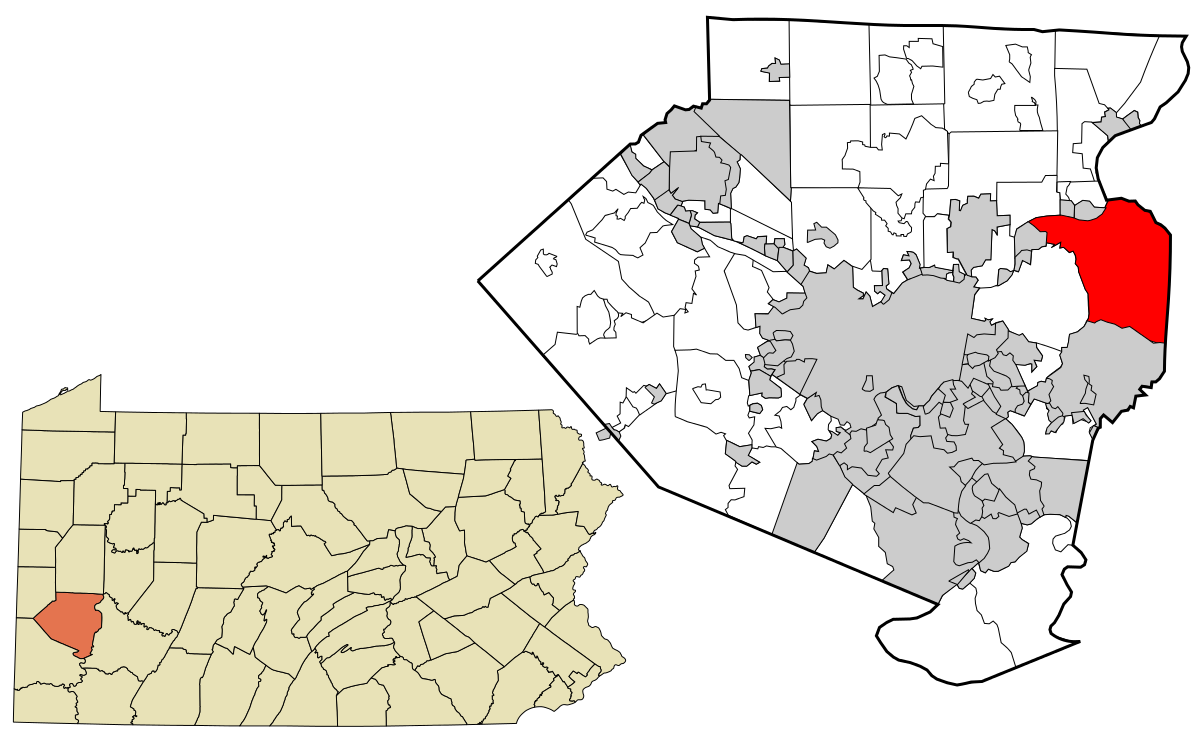
 Next month when New Yorkers go to the polls to cast their votes (an illusory scam in Communist NY), there will be three Propositions on the ballot. One of the three is called, “Authorizing the Use of Forest Preserve Land for Specified Purposes.” The one-paragraph description implies municipalities will have more flexibility in using “preserved” land–so long as they designate the same amount of land to be added back to the pool of preserved land. It also allows bicycle trails and public utility lines to cross preserved land. However, what the description does not say (which can be found in a full reading of the proposition) is this: the proposition “prohibits the construction of a new intrastate gas or oil pipeline that did not receive necessary state and local permits and approvals by June 1, 2016.” So no new intrastate (within the state) pipelines through preserved land, period. Ever. Even though electric lines crossing preserved land are just fine. Why is Gov. Cuomo trying to hide this from residents? Will NY residents even wake up and notice they don’t know what they’re actually voting for (or against)? That’s how sleazy politics is played in the Empire State…
 As we do every month (and have for more than two years), MDN tracks how many rigs oilfield services company Patterson-UTI Energy reports operating–as a proxy for rig count health in general and rig count health in the Marcellus/Utica in particular. Patterson recently bought out and merged in Seventy Seven Energy (see
  Each year the Natural Gas Supply Association (NGSA) issues an annual Winter Outlook assessment of the wholesale natural gas market. Yesterday the NGSA issued its 17th such report. Among their predictions: demand for natural gas will hit an all-time high this winter, even outstripping the infamous Polar Vortex from two years ago. However, production, Canadian imports and existing natural gas in storage (in record numbers) will be able to meet the demand, therefore prices will remain steady–no huge ups, no huge downs. NGSA’s forecasts are based on weather forecasts. They assume this winter will be an average of 13% colder than last winter. We don’t like the sound of that, since we live in the cold northeast! Bottom line from NGSA: “The picture that emerged for the upcoming winter is of a natural gas market experiencing substantial growth in both demand and supply.” Below is the NGSA press release/overview, a copy of the full report, and a copy of the NGSA PowerPoint slide deck, with lots of pretty charts and graphs…
 Starting today you will notice changes on the MDN website. A new “look and feel” for the site. The overall architecture remains the same–same menu items, same layout of where stories are located, etc. The fonts and colors and use of white space has changed, hopefully making it easier to read on your computer screen. Please note there are likely a few issues with the new site. As much as we test and review, it seems like something always slips through the cracks. So we want your feedback. Have a look around, and tell us what you like/don’t like about the new look. And if you find any problems/issues, please alert us right away. Send your comments to:
  The “best of the rest” – stories that caught MDN’s eye that you may be interested in reading. In today’s lineup: PA natgas pipeline safety bill heading for full House vote; VA DEQ to make pipeline recommendations in Dec. for Atlantic Coast & Mountain Valley; court orders Vermont AG to sit for deposition in #ExxonKnew case; Shell says energy industry close to voluntary methane emissions; US shale shows signs of fatigue; natgas exports could add $73B to US economy; India wants to rework LNG deals; and more!
 In an issue that’s growing old, fast, the Pennsylvania legislature has still not dragged the dead horse known as the 2017 state budget across the finish line. It all started months ago when the Republican-led legislature passed a $32 billion budget–with only $30 billion available to pay for it. Big mistake. The pressure was intense to pass a severance tax to help fill the gap. Traitorous Republicans in the Senate caved to that pressure and in July passed a budget bill that hikes taxes on lots of things, including a severance tax (see
 On Monday, Mr. Supattanapong Punmeechaow, president and CEO of PTT Global Chemical (Thailand’s largest petrochemical company) signed a Memorandum of Understanding (MOU) with JobsOhio regarding PTT’s proposed ethane cracker plant. The MOU pledges to “enhance the well-being and quality of life” for those living in the area near the proposed cracker plant. PTT announced in April 2015 they are interested in building a $5 billion ethane cracker plant complex in Belmont County, OH (see
  There’s lots of acronyms in that headline, so right up front let us restate the headline in clearer language: The Federal Energy Regulatory Commission (FERC) has just taken the next step to advance a project by Kinder Morgan to reverse a portion of the mighty Tennessee Gas Pipeline (TGP) to reverse its flow, to go from the northeast to the southwest, in order to haul Marcellus/Utica natural gas liquids (NGLs) to the Gulf Coast. Currently TGP hauls natural gas (not liquids) from the Gulf to the northeast. With a bumper crop of natural gas produced by the Marcellus/Utica, gas from the Gulf is no longer needed. Kinder Morgan, the owner/operator of TGP, first floated the idea to reverse 964 miles of their pipeline back in 2013 (see
  According to experts speaking at the Platts Houston Energy Forum held yesterday, new pipelines going into service in the Marcellus/Utica region are having an effect. Pipeline constraints–not enough capacity to get the gas to markets outside of the region–are easing. Prices in some areas of our region where gas is bought and sold are improving (going up), but prices still have a long way to go. Perhaps the biggest eyeopener is that at least in the near-term, we may end up having more pipeline capacity than gas to fill it. By next spring, another 4.57 billion cubic feet per day (Bcf/d) of new pipeline capacity will go online: Access South and Adair Southwest projects on Texas Eastern Transmission will add another 520 million cubic feet per day (MMcf/d); Leach XPress on Columbia Gas Pipeline will add 1.5 Bcf/d; Rover Pipeline will get finished, bringing online an additional 2.55 Bcf/d (on top of the existing 700 MMcf/d flowing now). Here’s what the experts had to say about what’s coming down the pike in our region over the next year or so…