
“Father of Marcellus Shale” Terry Engelder Retiring from Penn State
 Penn State University professor Terry Engelder, the geologist who first discovered the potential of the Marcellus (and called “the Father of the Marcellus Shale”) is retiring from Penn State in June. The Marcellus Shale boom, while starting with a single Range Resources well in 2004, is largely due to the insights of Engelder. In 2007 he did some “back of the envelope” calculations that showed (first) there is roughly 50 trillion cubic feet (Tcf) of recoverable natural gas in the Marcellus. He later revised that number, to 489 Tcf. It was Engelder’s calculations that caught the interest and confidence of drillers who then decided to give the Marcellus a try. The rest is history–and we have Dr. Engelder to thank. Penn State News does a good job in providing a tribute to celebrate the contributions of Engelder to the university’s geosciences department. What will Engelder miss the most when he retires? Finding new shale layers? Figuring out new techniques to extract oil and gas? Maybe a better way of predicting earthquakes? Nope. He’ll miss the people–students and the professors/staff at “one of the finest geosciences departments in the world.” Here’s a proper sendoff for a key figure, a giant in the canon of the Marcellus story…
Read More ““Father of Marcellus Shale” Terry Engelder Retiring from Penn State”
 Range Resources, one of the most prolific producers in southwestern Pennsylvania, reported its first quarter of profit in two years. Range swung from a loss of $94 million in 1Q16 to a profit of $170 million in 1Q17. After two years of cutting its capital expenditure spending, Range is once again increasing capex. This year, Range plans to spend $1.15 billion, with 65% allocated to the Marcellus Shale in PA, and the rest to the Terryville Field in LA. Production soared for the company by 40% year over year, to a new record high of 1.93 billion cubic feet equivalent (Bcfe) per day. Below we have the full Range 1Q17 update, along with the latest PowerPoint slide deck. We’ve also extracted out some interesting comments from the quarterly earnings call, which highlight Range’s program of drilling longer laterals in the Marcellus…
 EQT, one of the biggest drillers in the Marcellus/Utica, had quite a ride in 2016. A good ride! In the last 10 months EQT has added 220,000 acres to its Marcellus/Utica portfolio–by buying large tracts from other companies. One of the deals included buying the other company (Trans Energy) lock, stock and barrel (see
  As they have in previous quarters, Rex Energy released only part of their first quarter 2017 update earlier this week. Rex released an operation update on Monday, but elected to not release (yet) a financial update. Rex has struggled. They are a smaller driller focused mainly on the Marcellus/Utica–headquartered in State College, PA. In 2016, Rex lost $109 million (see
  The “best of the rest” – stories that caught MDN’s eye that you may be interested in reading. In today’s lineup: Gas-focused E&Ps double down on spending in the Marcellus/Utica; Mountain Valley Pipeline plans moving forward, FERC approval due by June 23; is northeast natgas market no longer pipeline constrained?; FERC wants more info from Cove Point LNG; ODNR issues 7 Utica permits, OH rig count at 22; Pitt prof tells Beaver County air quaality will suffer from Shell cracker; natgas rigs up by 1 in PA; WV businesses anticipate next oil & gas boom; shale is crushing solar; Trump’s first 100 days in the energy sector; oops, warmists just lost the Antarctic peninsula – now cooling; and more!
 More twists and turns to report with respect to an issue we previously reported with the potential to impact every mineral rights owner and driller in West Virginia. In December MDN reported on the huge West Virginia Supreme Court decision against driller EQT that disallows EQT from deducting post-production expenses from royalty checks, even with signed contracts in place (see
  The New Jersey Department of Environmental Protection (NJDEP) has temporarily rejected PennEast Pipeline’s Freshwater Wetlands Individual Permit and Water Quality Certificate application, submitted April 6. NJDEP said in their response that PennEast has not provided enough detail about the project–leaving out key pieces of information for two-thirds of the pipeline’s 37-mile trek through NJ. NJDEP says they want the application refiled within 30 days, and if PennEast doesn’t give them what they want within 60 days, the DEP will consider the application “withdrawn.” The news from NJ comes on the heels of the U.S. Army Corps of Engineers also telling PennEast they need more information too. Radicalized antis are rejoicing and their mouthpieces in mainstream media are painting this as a grim development for PennEast–perhaps the death rattle has begun. PennEast, on the other hand, is treating the news as a minor bump in the road–the application has just a “few outstanding items” that PennEast needs to track down and provide to the DEP, and then all will be just fine. We suppose the next 30-60 days will tell the tale…
 Northeast Natural Energy (NNE) is a midsize driller headquartered in Morgantown, WV. NNE owns 49,000 net acres of leases “in the heart of the Marcellus Fairway,” and operates 27 Marcellus wells and over 100 conventional oil and gas wells. In 2011 NNE fought Morgantown for the right to drill a couple of wells just outside the city limits (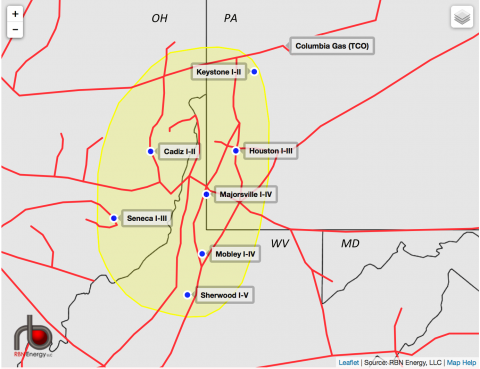
 On Feb. 3, the Federal Energy Regulatory Commission (FERC) gave its final approval to Energy Transfer’s Rover Pipeline project–a $3.7 billion, 711-mile Marcellus/Utica natural gas pipeline that will run from PA, WV and eastern OH through OH into Michigan and eventually into Canada (see

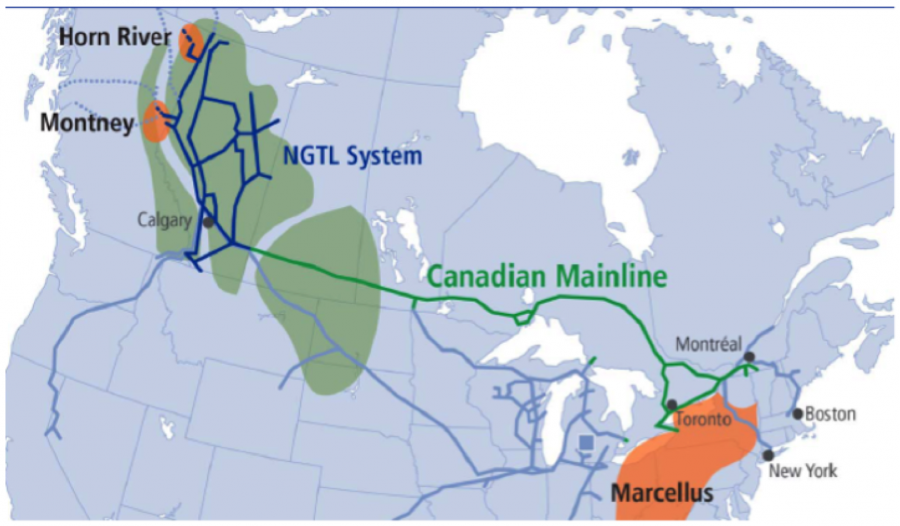
 MDN is excited to partner with NGI to present a VERY important webinar on Thursday, May 4th: “
 ENSERVCO is an oilfield services company headquartered in Denver, CO. ENSERVCO’s services include: hot oiling, acidizing, frac water heating, water transfer, bacteria and scaling treatment, water hauling and oilfield support equipment rental. The company says it serves customers in various shale basins across the country, and in states including Colorado, Kansas, Montana, New Mexico, North Dakota, Oklahoma, Pennsylvania, Ohio, Texas, Wyoming and West Virginia. So yeah, they have customers in the Marcellus/Utica. Yesterday ENSERVCO issued an update for first quarter 2017–preliminary financials and an operational update. The thing that caught our eye was this statement: “We’re also moving forward with plans to begin offering water transfer in the Marcellus Shale, where we’re hiring staff and gearing up our marketing plans.” We’re not quite sure what they mean. Yet another trucking outfit with a parade of tankers trundling down the road (like we saw last weekend when visiting Hop Bottom, PA, in Susquehanna County). Or water pipelines? Or both?…