
Chesapeake Energy 2017: Less New Drilling in M-U, More DUC Work
 Yesterday Chesapeake Energy provided a glimpse into their plans for 2017. In Chessy’s “gudiance” for 2017, we learn that the company plans to up the number of active drilling rigs (nationwide) from 10 to 17. We also learn that last year Chessy spent ~$1.75 billion to drill 213 new wells, and place 428 wells into production–the difference between the two numbers being they finished up already-drilled wells, or DUCs. This year? They will spend ~$2.5 billion to drill ~400 new wells–essentially doubling the number of wells drilled–and place ~450 into production. The only problem (from our perspective) is that most of the drilling will happen in places other than the Marcellus/Utica. Of the new wells they plan to drill, only 10-15 new wells will get drilled in the Marcellus, and 40-50 new wells in the Utica. Chessy says they will complete and turn into production 50-60 Marcellus wells in 2017, and 70-80 Utica wells. Translation: Not a lot of new drilling in our neighborhood, with more of an emphasis on completing already-drilled wells…
Read More “Chesapeake Energy 2017: Less New Drilling in M-U, More DUC Work”

 Midstream (i.e. pipeline) giant Williams has just created a brand new executive position–Chief Operating Officer (COO). The position was created for Micheal G. Dunn, formerly president of Questar Pipeline and executive vice president of Questar Corporation. Does Questar ring a bell? It should. Questar is, or rather was, a Rockies-based integrated natural gas company operating through three principal subsidiaries. In an attempt to diversify out of the northeast, Dominion bought Questar in September for $4.4 billion (see
  FTS International is the largest private (no publicly traded stock) well completion company in North America. In 2015 FTS fracked EQT’s ginormous Scotts Run 591340 dry Utica well in Greene County, PA producing an initial production (IP) of 72.9 million cubic feet of natural gas per day (see
  A California company that manufactures small electric-generating plants that run on natural gas, has just sold three more of their “microturbines” to midstreamers in the Marcellus Shale play. This is not the first time Capstone Turbine Corporation has sold their devices to pipeline companies in the Marcellus (see
  Anti-pipeline insanity has metastasized in Tompkins County, NY (i.e. Ithaca). Members of the Tompkins County Energy and Economic Development Task Force object to building seven miles of 10-inch natural gas pipeline in the Lansing area (suburb of Ithaca)–because the pipeline flows a fossil fuel. They have objected to the point that the local utility company wanting to build it, NYSEG (New York State Electric & Gas), has floated an alternative plan: Build a compressor station for existing customers, and no new customers are allowed to receive natgas service. Ever. Period. Talk about nuts! The tinfoil hat folks on the Task Force instead want NYSEG (or someone else) to invest in so-called alternative energy projects to meet the energy demand for new customers. That is, the Task Force is prejudiced against the type of energy residents prefer to use–to the point of forcing another choice on them. Only in the Communist Paradise of Ithaca…
 We want to alert you to an upcoming webinar that will be worth your time. On Feb. 27 at 2 pm, NGI (Natural Gas Intelligence) will host a webinar titled, “Cracking the Ethane Code in Appalachia,” all about the Shell ethane cracker. NGI’s ace reporter Jamison Cocklin (MDN editor Jim Willis knows Jamison and has the highest regard for his reporting and writing) will moderate. On the call will be an all-star cast: Don Rush, VP of CONSOL Energy; Jim Cooper, American Fuel & Petrochemical Manufacturers; Denise Brinley, PA Department of Community and Economic Development; and Danielle Sandusky, Level 2 Energy. The webinar will help answer questions about the size and scope of the cracker, whether (and how) the cracker will impact drilling decisions, what about competition from other crackers along the Gulf Coast, and more. Below is more information, and a
  We have a concern about the kind of education being offered by the very high-priced University of Pittsburgh. What are the professors actually teaching to those young skulls full of mush? Judging by the kinds of editorials coming from the student-run Pitt News newspaper, we’d have a big concern about the education (or rather, miseducation) coming from Pitt, especially if we were parents of students at Pitt. In today’s editorial, titled “No Mariner East II pipeline, period.”, the writers actually, fantastically say this: “But as our levels of dependency on oil combined with estimates of what’s left in the earth come to a head in the next few decades, investing in infrastructure to increase our fossil fuel consumption is both unwise and irresponsible.” Are these young people just really stupid? Or have they been miseducated? Do they not know that the same flawed, “We’re going to run out of fossil fuels any decade now” thinking has been around for the past 40+ years? And that we have MORE supplies of fossil fuels today than we thought possible just a decade ago? The entire editorial is a rail against Mariner East 2, and against all pipelines, because they flow fossil fuels. This is nuttery. And frankly, it’s not acceptable from so-called “educated” students at a reputable university. We think an investigation should be launched into how this sort of obviously flawed thinking can happen at a place like Pitt…
 The “best of the rest” – stories that caught MDN’s eye that you may be interested in reading. In today’s lineup: Another round of NGL infrastructure for the Marcellus/Utica; ODNR issues 8 permits in the Utica; DiClaudio takes the helm of Energy Innovation Center in Pittsburgh; Indians ask judge stop DAPL, even though the pipeline will be done in 60 days; Chesapeake settles with McClendon family; 10% of new big rigs will run on natgas by 2025; the solution for U.S. energy policy is really simple; oil exports rising; and more!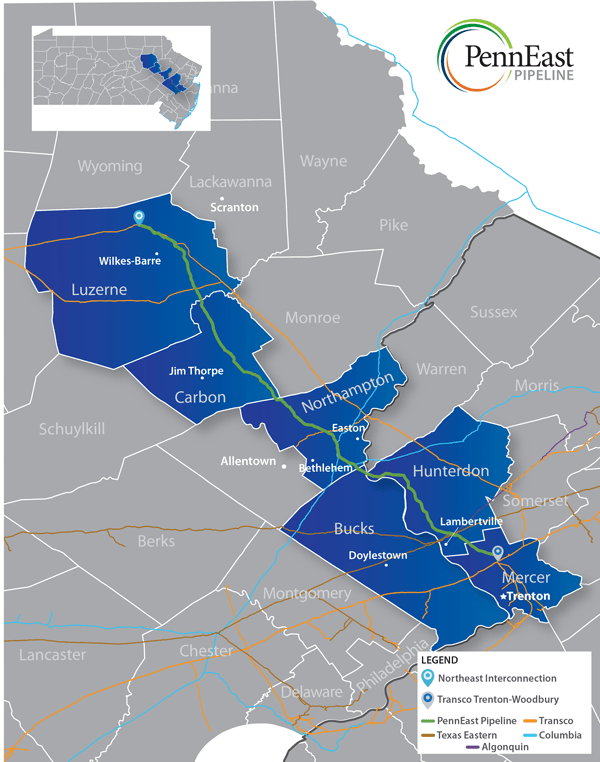
 Noble Energy, a driller with a significant presence in the Marcellus but with a bigger presence in other shale plays, (and operations in other countries and offshore), announced in February that of the four shale plays they operate in onshore in the U.S.–the DJ Basin, Eagle Ford, Delaware and Marcellus–in 2016 they plan to focus on the first three and scale back in the Marcellus, limiting their Marcellus activity to completing previously drilled wells (see
  Yesterday MDN’s favorite government agency, the U.S. Energy Information Administration (EIA), issued our favorite monthly report–the Drilling Productivity Report (DPR). The DPR is the EIA’s best guess, based on expert data crunchers, as to how much each of the U.S.’s seven major shale plays will produce for both oil and natural gas in the coming month. For the past four reports, estimating production for November, December, January, and February, Marcellus natgas has increased. The trend continues in this latest report, which forecasts production for the coming month of March. In fact, EIA says natgas production for six of the seven major shale plays will go up–by a lot. In fact, if the numbers prove to be true, the combined natural gas production for the seven major plays will hit a new record high of 49.1 billion cubic feet per day (Bcf/d) in March. Two months ago the EIA predicted natgas production in the Marcellus would zoom up by 160 million cubic feet per day (MMcf/d). Last month EIA predicted Marcellus production would go up another huge 188 MMcf/d. This month, it’s even higher: March production will go up 192 MMcf/d! The other big story (for us) is just how much natgas production is rising in the Texas Permian Basin–up another 129 MMcf/d. But wait, the Permian is an oil play, right? Correct. However, more than just oil comes out of the ground–plenty of “associated” natural gas also comes out, along with the oil. The Permian is seeing white hot levels of new drilling. The more oil drilling, the more associated natural gas that comes along with it. Below we have the latest report, long with some analysis…
 In December the Pennsylvania Dept. of Environmental Protection (DEP) unveiled new regulations to clamp down on methane emissions and other other air pollution that allegedly comes from shale drilling sites (see
  Some farms not only produce products like milk, meat, eggs and/or crops–some farms produce energy. Would it surprise you to learn that in 2014 (the most recent year with stats available), energy companies paid farmers a staggering $2.9 billion for the energy extracted from private farms? The U.S. Dept. of Agriculture posted a brief blurb from their Amber Waves magazine yesterday, recounting stats from a report released last November. The report, “Trends in U.S. Agriculture’s Consumption and Production of Energy: Renewable Power, Shale Energy, and Cellulosic Biomass” (full copy below) points out it’s not just oil and gas extraction that farmers receive income from. Some farmers lease their land for solar and wind generation. Some biomass. However, it was one particular chart and stat that caught our attention: About 9.6% of Pennsylvania farms received energy income in 2014. The average amount received, per farm? $157,000! Almost all of that revenue came from the Marcellus Shale…
 Gulfport Energy, an Oklahoma City-based independent oil and natural gas exploration and production company (“driller”) that is a “top 5” driller in the Ohio Utica Shale, released their fourth quarter 2016 and full year 2016 operational update in mid-January (see