
New Fortress Energy Enters UK Equivalent of Prepackaged Bankruptcy
 New Fortress Energy (NFE) owns and operates natural gas and liquefied natural gas (LNG) infrastructure, along with an integrated fleet of ships and logistics assets, to rapidly deliver turnkey energy solutions to global markets. At one point, NFE planned to build an LNG liquefaction facility in Wyalusing, PA, to chill locally extracted Marcellus gas, which would be shipped by rail to a port on the Delaware River for export. Never happened. NFE announced yesterday that it has entered into a voluntary UK Restructuring Plan, which is roughly equivalent to a U.S. prepackaged bankruptcy. NFE will split into two companies, diluting existing shareholders’ stock ownership to roughly one-third of its previous value. Read More “New Fortress Energy Enters UK Equivalent of Prepackaged Bankruptcy”
 Here’s a question: Do you want the government to be able to control your thermostat (turning it down in the winter, or up in the summer), controlling your water heater (making it cooler), or controlling your “smart” refrigerator (raising the ambient temp inside), or controlling other so-called smart appliances, bypassing *your* preferred settings? Would you like the government to be able to grab stored electricity from solar panels on your roof or from the battery in your charged-up EV during times of electric grid “stress”? That’s what Democrat members of the Pennsylvania state legislature want to do. It’s called a “virtual power plant,” and it’s being sold as a quick solution to power shortages without having to build new gas-fired power plants (or new windmills, solar farms, etc.). Creating a virtual power plant just takes a little software and a lot of apathy from citizens to make it work.
  Governor Kathy Hochul warns that a recent court ruling requiring New York to meet strict 2030 greenhouse gas mandates could trigger a dramatic spike in energy costs. Justice Julian Schreibman ruled that state agencies must strictly adhere to the Climate Act’s deadlines, despite official concerns regarding feasibility. While state energy officials predict a “cap-and-invest” (better called a cap-and-tax) program could cost households thousands annually, environmental advocates are open to settling the case to avoid “draconian” economic impacts. To reach these goals affordably, Hochul is pushing to adjust emission accounting methods to a 100-year standard, extending the compliance timeline while maintaining the state’s commitment to clean energy.
  MARCELLUS/UTICA REGION: PA Senate passes bill to protect vehicle choice; OTHER U.S. REGIONS: Response to Democrat Senator’s letter to Hochul re Climate Act; Japanese firm unveils proposal to import LNG to Hawaii; New energy policies in California threatening America’s national security; NATIONAL: Natural gas climbs as traders watch headlines; The market wants more oil, shale may not deliver; U.S. LNG feedgas demand rebounds; Big Tech needs Trump’s energy agenda; US energy realism pays off in Iran crisis; U.S. E&Ps increasingly see LNG as way to get a piece of the arbitrage pie; INTERNATIONAL: Oil settles higher on supply threats; JP Morgan flags oil price ‘misalignment’; Hormuz choke point displays ‘green’ vulnerabilities and US power.
  The Energy Cooperative (TEC) has proposed a 24-mile-long, 24-inch natural gas pipeline across Licking County, Ohio, stretching from Bennington Township to the New Albany International Business Park. Estimated at $150 million, the project is designed to supply energy to a specific, unnamed data center, which will fully fund the construction. (We think we’ve identified the “unnamed” data center, which we’ll do below.) While TEC maintains the pipeline will enhance system reliability and stabilize pressure for its 58,000 members, the project faces scrutiny from local landowners. Concerns involve the potential use of eminent domain and the environmental impact on agricultural land.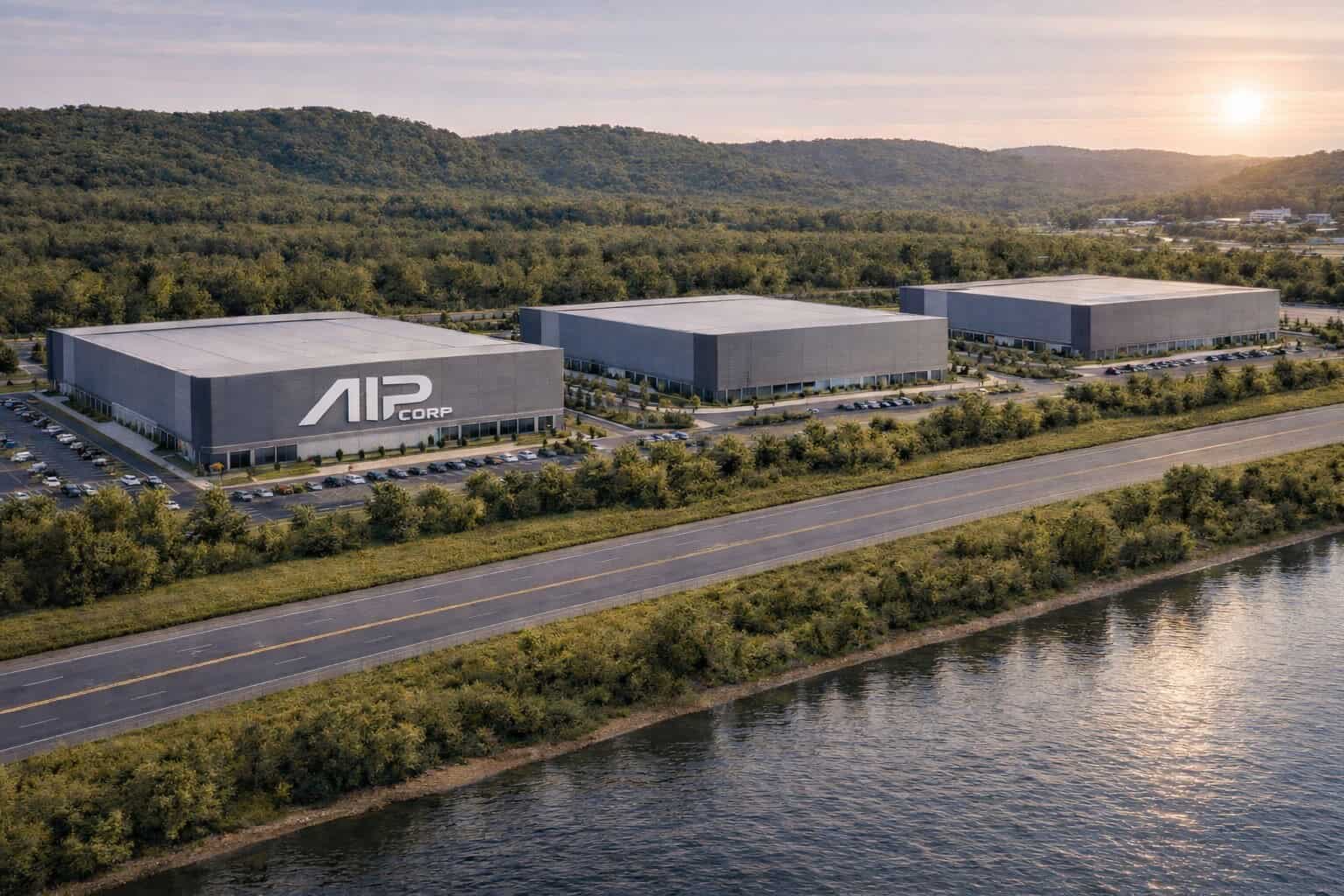
 In 2025, U.S. marketed natural gas production reached a record average of 118.5 billion cubic feet per day (Bcf/d). This growth was largely driven by a 60% increase in Henry Hub spot prices, which averaged $3.52/MMBtu. The Appalachia (Marcellus/Utica), Permian, and Haynesville regions collectively accounted for 67% of total production and 81% of the annual increase. Appalachia remained the top producer, aided by the new Mountain Valley Pipeline, accounting for 31% (36.6 Bcf/d) of marketed natural gas production. However, the Permian is nipping at our heels.
 Students at Allderdice High School launched the Dice Well Done Club to combat mythical climate change by plugging abandoned oil and gas wells. Led by junior Lucy Hurowitz, the group partners with the Well Done Foundation to address methane leaks, which supposedly contribute to Pennsylvania’s greenhouse gas emissions. After raising $5,000 (out of $15,000 needed) in 2025 to seal a well near Erie, the club is targeting another $5,000 to raise this year for a local project. By turning student-led fundraising into tangible environmental action, these teenagers are providing a blueprint for schools nationwide to tackle the massive problem of orphaned wells.
  The INGAA Foundation’s 2025 North American Midstream Infrastructure Report highlights the critical need for over $1 trillion in natural gas pipeline and related infrastructure investments through 2052 to meet rising energy demands in the United States and Canada. Driven by increased electricity demand from data centers and growing LNG exports, the study projects a need for 37,000 miles of new transmission pipelines and 103,000 miles of gathering lines. Even under a low-carbon scenario, natural gas remains foundational.
  Two weeks ago, the Marcellus/Utica saw a realignment in rig counts, at least in Ohio and West Virginia. Pennsylvania kept the 20 rigs it has had since early February. Ohio lost two rigs, from 13 to 11, the fewest active rigs in the Buckeye State since last September. And West Virginia picked up one rig, from 7 to 8 rigs, for the first time since last May! Overall, the M-U region had a net loss of one rig two weeks ago, going from 40 to 39 active rigs. The same numbers for the M-U held last week—no changes. One thing we didn’t mention last week (we just noticed this week) is that, along with the change in rigs between OH and WV, came a shift in Marcellus-focused and Utica-focused rigs. The Marcellus gained one rig (now runs 27), and the Utica lost two rigs (now runs 12).
  A Connecticut Superior Court judge told a Big Green puppet group, Save the Sound, along with the colluding Town of Brookfield, that their joint lawsuit to block a compressor station expansion was the equivalent of starting the parade before the band had arrived (our words). The two groups are trying to block a permit for a compressor station in the Town of Brookfield proposed by Iroquois Gas Transmission. The CT Department of Energy and Environmental Protection (DEEP) has not yet issued a final permit for the project, so there’s nothing to object to. Yet. After DEEP issues the final permit, they can come back and try again.
  In early February, MDN told you about West Virginia Senate Bill (SB) 706, which proposed reducing the state’s severance tax from 5% to 3% for new natural gas and oil wells drilled after June 30, 2026, that meet specific production thresholds (see
  Can we PLEASE now put to bed the pervasive lie spread by anti-shale people that drill cuttings (the leftover rock and dirt that comes out of the ground when drilling a shale well) are somehow glow-in-the-dark radioactive and if disposed of in a landfill will cause people who live near such a landfill to die from radiation poisoning? A two-year study by the Pennsylvania Department of Environmental Protection (DEP) concluded that radium levels in landfill wastewater (leachate) do NOT pose a risk to human health.
  A 39-year-old former division order analyst at Pittsburgh-based EQT has been charged with allegedly stealing approximately $215,000 from the company. Between March 2021 and October 2025, the (now) ex-employee diverted funds from “orphaned” land interest accounts (unclaimed royalties) into a bank account held by his husband. The scheme was uncovered when a supervisor noticed unauthorized payments while reviewing the employee’s work. When confronted, the employee confessed to the theft, citing significant credit card debt as his motive. While his husband has not been charged, the (now) ex-employee faces multiple counts, including theft and unlawful computer use. Approximately $101,000 has already been repaid for official company restitution purposes.