
AI | CNX Resources | Electrical Generation | Energy Companies | Industrywide Issues | Pennsylvania | Washington County
Former Coal Mine Owned by CNX Resources Marketed for AI Data Center
 A study by the Allegheny Conference on Community Development indicates that a proposed 500 to 700-megawatt hyperscale data center at the Zediker site in Washington County, PA, could generate $407 million for the local economy and create 2,364 jobs. Owned by CNX Resources Corp., the former coal mine is being marketed for generative AI facilities, leveraging nearby natural gas supplies and remediated mine gas to power the operation. While no official deal has been struck, the project is expected to yield $67.5 million in tax revenue, positioning the site as a transformative hub for high-tech investment and regional prosperity. Read More “Former Coal Mine Owned by CNX Resources Marketed for AI Data Center”
 In the closing hours of the 2014 West Virginia legislative session, the legislature passed Senate Bill (SB) 373, the Aboveground Storage Tank Act (see
  Venture Global’s Calcasieu Pass (CP) LNG export facility in Louisiana began operations in March 2022 (see
  Nine Energy Service, a Houston-based provider of onshore completion solutions with operations in a number of shale basins, including major operations in the Marcellus/Utica, received court approval for its prepackaged Chapter 11 bankruptcy plan on March 4. The company filed for protection in the Southern District of Texas on February 1, 2026, seeking to address a heavy debt load largely resulting from its 2018 acquisition of Magnum Oil Tools (see
 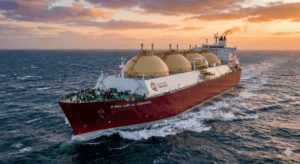 The U.S. Department of Energy (DOE) has granted non-FTA export authorization for Cheniere Energy’s Corpus Christi LNG expansion, specifically Mid-Scale Trains 8 and 9. This 3.28 MMTPA addition establishes the terminal as the second-largest U.S. LNG export project, with a total authorized capacity of 4.45 Bcf/d. Following a June 2025 investment decision, construction is proceeding alongside the Stage 3 Project, which successfully completed four trains in 2025. As the U.S. leads global LNG exports, Cheniere is already seeking further capacity increases through 2026. This authorization lasts until 2050, securing the facility’s long-term role in international energy markets. Marcellus/Utica molecules help feed this facility, so this is good news for our region!
  OTHER U.S. REGIONS: Mainspring to deploy multi-fuel power at Travis Air Force Base; CT lawmakers push climate “superfund” bill despite rising energy costs; NATIONAL: U.S. natural gas futures settle lower; The radical left’s green scam is running out of fuel; At a time of int’l turmoil, ARC-ES can bring energy stability to U.S.; INTERNATIONAL: Crude price already stops climbing; EU sees no energy supply concern from Mideast war for now; U.S., Australia can do little to replace lost Qatari LNG cargoes; Qatar shuts gas liquefaction, will take weeks to restart; What the military conflict with Iran could mean for hydrocarbons; Russia may halt gas supplies to Europe amid Iran energy spike, Putin says.
 During the Pennsylvania House Appropriations Committee hearing held on March 2, House Republicans advocated for expanded shale gas drilling on state forest lands and beneath state parks to bolster revenue. Department of Conservation and Natural Resources (DCNR) Secretary Cindy Adams Dunn, a radical leftist, noted that current drilling provides an average of $95 million annually but has already caused the “loss” of 30,000 acres of core forest land. Republican members suggested that revising the long-term leasing moratorium could generate an additional $250 million, which fell on deaf Democrat ears.
  Olympus Energy (now owned by EQT) drills in the Greater Pittsburgh region, in Allegheny and Westmoreland counties. In 2021, Olympus applied to build a new well pad in a rural part of Allegheny County, in West Deer Township. So-called “concerned citizens” got amped up to oppose the project. They succeeded when town supervisors rejected the Dionysus well pad (see
  As the conflict with Iran and the halt in LNG production in Qatar triggered a 100% spike in European natural gas prices, U.S. liquefied natural gas (LNG) has solidified its role as a critical global energy stabilizer. Following the 2022 invasion of Ukraine, the U.S. became Europe’s primary supplier, a shift highlighted at a recent Pittsburgh energy conference. EQT CEO Toby Rice and other Pennsylvania producers argue that expanding Marcellus Shale exports is essential for allied security. Despite infrastructure bottlenecks, U.S. LNG exports are projected to grow significantly by 2030, offering a reliable alternative to volatile Middle Eastern and Russian energy supplies.
  Although there are legitimate concerns over data centers locating in populated communities (noise, water use, etc.), make no mistake: The anti-data center movement is nothing more than the anti-fracking movement in new clothes (see
  The Oil and Gas Climate Initiative (OGCI) is a CEO-led initiative comprising 12 of the world’s leading energy companies that have sold out and pledged allegiance to the cockamamie “net zero” future and the 2015 Paris Agreement. OGCI’s members are Aramco, BP, Chevron, CNPC, Eni, Equinor, ExxonMobil, Occidental, Petrobras, Repsol, Shell, and TotalEnergies. Shame on them all. The OGCI is now colluding with the so-called Carbon Mapper in “a new collaboration aimed at accelerating practical and measurable reductions in methane emissions from the oil and gas industry.” They’re all zealous about solving the fugitive methane problem, but only 21% of it comes from the O&G sector.
  Last week, EOG Resources reported strong full-year 2025 results, earning $5.0 billion in net income and returning $4.7 billion in free cash flow to shareholders. For 2026, EOG announced a $6.5 billion capital plan targeting 13% total production growth and increased operational efficiency. A central component of this strategy is EOG’s Ohio Utica play, which the company has identified as a top priority alongside the Delaware Basin and Eagle Ford. Following its transformational Encino Energy acquisition last August, the company expects significantly higher activity in the Utica throughout 2026.
  Last week, RBN Energy held its GasCon 2026 conference in Houston, Texas. Among the heavy hitters who attended and spoke at the event were Sital Mody, President of Natural Gas Pipelines at Kinder Morgan, and Dan Brouillette, the 15th Secretary of the U.S. Department of Energy. Mody had this to say during his talk: “When I take a step back and reflect on the natural gas industry, the one thing that comes to mind for me is all gas, no brakes.”