
Joe Manchin Goes on the Record to Justify Betrayal of Fossil Energy
 U.S. Senator Joe Manchin, in an interview with the Associated Press, attempts to come off as the reasonable, middle-of-the-road, aw-shucks guy who sticks up for what he believes is right and the good of West Virginians. Don’t fall for it. He was pressured by the wackadoodle left in the Democrat Party, and he folded like a cheap suit. Manchin deserves to be voted out of office the instant that opportunity arises. We’re talking, of course, of Manchin’s betrayal of fossil energy through his support for one of the most destructive pieces of legislation that has passed since Joe Biden began to occupy the White House–the so-called Inflation Reduction Act (IRA), better known as the Green New Deal (aka Build Back Better). Manchin’s betrayal has profound consequences for fossil energy in this country.
Read More “Joe Manchin Goes on the Record to Justify Betrayal of Fossil Energy”
 We simply don’t understand the minds of liberals. They are frustratingly irrational. In June, German Chancellor Olaf Scholz spoke to Canadian Prime Minister Justin Trudeau about Germany buying LNG from Canada (see
  NATIONAL: Here’s why Buffett loves Oxy; Manchin’s permitting side deal highlights the energy transition’s central conundrum; INTERNATIONAL: German power prices smash record as energy panic engulfs Europe; Asia gas prices jump after Russia pipe work sends Europe benchmark price to record; Saudi prince says oil disconnect may force OPEC+ action; Charter rates for natural gas supertankers have surged 124%.
 Morningstar provides what it calls “independent” research, ratings, and tools to help people invest. One of the so-called ratings is Morningstar’s environmental, social, and governance (ESG) investing ratings for companies. The ESG measurement is a clever way of steering investors (investors representing big funds worth billions of dollars) away from investing in fossil energy companies. Missouri Attorney General Eric Schmitt and the AGs from 18 other states (19 AGs in all) have launched an investigation into Morningstar’s ESG rating system that “plays politics with pensions and real people’s livelihoods.”
 Looks like $2 billion is just too much of a temptation for Shell, Equinor (formerly known as Statoil), and U.S. Steel to resist. Those three companies have been a part of a joint effort with EQT, Williams, Southwestern Energy, and a few other companies in a group called Appalachian Energy Future (AEF), which was supposed to be the “one ring to rule them all” group aimed at enticing a hydrogen hub to one of the three Marcellus/Utica states (see
  Now we know why Diversified Energy liked Traitor Joe Manchin’s sell-out Green New Deal law, also falsely referred to as the Inflation Reduction Act (see
  A recent survey commissioned by the Gas and Oil Association of West Virginia Inc. (GO-WV) found that 81% of West Virginians support natural gas and oil drilling in the state. That is a staggering, overwhelming majority! Nearly as many (close to 80%) favor policies that increase domestic oil and gas drilling and the completion of pipeline projects, in order to ease inflation. Some 52% of West Virginians ranked inflation as the most important issue facing the state (the top vote-getter). Although the survey results don’t mention it, we wonder how many West Virginian’s are disappointed with Sen. Manchin for his role in increasing inflation with the recent Big Green bill (aka Inflation Reduction Act) signed into law with the help of Manchin?
 Along with Harvard, Yale University used to be one of the top two higher ed schools in the country. Wow, how the mighty have fallen! Yale is a husk, a shell of what it once was. Yale now puts political ideology above science and generates garbage, calling it “research.” Yale is experiencing some major cognitive dissonance. At various points over the past decade, Yale researchers have claimed fracking does NOT contaminate water aquifers (see
  Yesterday the Pennsylvania Independent Fiscal Office (IFO) released its latest quarterly Natural Gas Production Report for April through June 2022 (full copy below). There were 133 new horizontal wells spud (drilled) in 2Q22, an increase of 13 wells (10.8%) compared to 2Q21. However, natural gas production volume was 1,836 billion cubic feet (Bcf) in 2Q22, a slight decrease (-0.9%) from 2Q21. It is the second quarterly decrease in production in a row. It appears that maybe PA has hit a plateau for natural gas production.
 Since 2015 we’ve reported on the case of Grant Township, a town that passed an ordinance cooked up by the radical Community Environmental Legal Defense Fund (CELDF) to try and block a state-approved injection well proposed by Pennsylvania General Energy (
 A new audit of the Ohio Dept. of Natural Resources’ (ODNR) Orphan Well Program was released August 9 by the Auditor of State’s Ohio Performance Team (full copy below). The Ohio Auditor’s office reviews the operations of government agencies and programs and offers recommendations to improve their efficiency and effectiveness. Auditor of State Keith Faber said in the audit that ODNR is still spending only about half of the funding required to plug old wells. Faber said, “ODNR’s Orphan Well Program is moving in the right direction, but there’s still much work to do,” and “We need to pick up the pace.” It was a metaphorical kick in the seat of the pants.
 Food & Water Watch (extremist radicals on the far-left spectrum) stirred up a small group of New Jersey residents to come out and protest a proposed electric generating plant to be located at the site of a current power plant in Woodbridge, NJ. Competitive Power Ventures (CPV) already operates one gas-fired power plant at the location. The plant currently powers about 700,000 homes. In 2018, CPV proposed adding a second power plant at the same location (see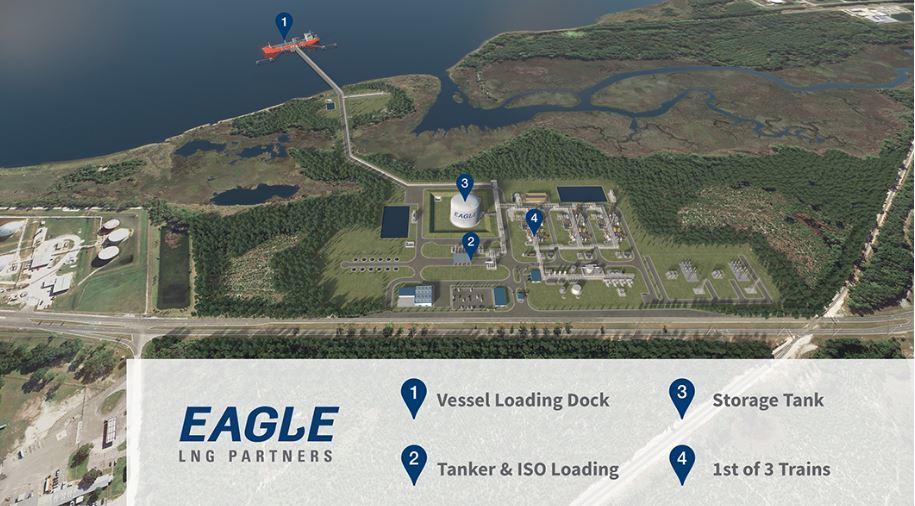
 The 303-mile Mountain Valley Pipeline (MVP) project is 94% complete and in the ground. About the only thing left to build is a short 3.5-mile piece on federal land (Jefferson National Forest) and crossings either through or under several hundred creeks and swamps. We are almost there. And yet anti-fossil fuel zealots believe they can still stop the project and block it from ever finishing. We read yet another fawning ode to environmental zealots article about a small group gathering to commiserate about how they dream of stopping MVP, and it struck us, as it often does, how these people speak of themselves and their efforts in religious terms.