
PA DEP Orders Sunoco to Reroute ME2X Pipeline Around State Park
 Sounding downright nasty and mean, the Pennsylvania Dept. of Environmental Protection (DEP) Secretary Pat McDonnell has ordered Sunoco Logistics Partners (Energy Transfer) to reroute part of the Mariner East 2X pipeline around Marsh Creek Lake State Park, following a spill of nontoxic drilling mud that ended up in Marsh Creek Lake in Chester County. McDonnell uses combative and incendiary words like Sunoco “blatantly disregarded the citizens” of Chester County, has been “careless” and is guilty of “unlawful actions.” In a rather uppity tone, McDonnell says he will “not stand for more of the same” and he is “demanding a proper cleanup” of the site. Sunoco has been working diligently to clean up the spill since it happened.
Read More “PA DEP Orders Sunoco to Reroute ME2X Pipeline Around State Park”
 Bad news for leftists Joe Biden and Kamala Harris: A majority of registered voters in their own party support using natural gas as an energy source, according to a new independent, national poll. No wonder both Biden AND Harris are furiously backpedaling (i.e. lying) about their views on fracking. They risk losing PA, OH, and other states where fracking is a big deal.
 Amid all the prattling about so-called renewable energy and how renewables are taking over the world and everyone should just dump using fossil fuels right now because renewable nirvana is here…comes this splash of cold, hard truth. The U.S. Energy Information Administration (EIA) has run the numbers and found that in 2019, like in years past, the vast majority of the energy used by Americans comes from fossil fuels. Some 80% of all the energy we consumed in this country last year came from fossil fuels. Renewables? A minuscule fraction.
 MARCELLUS/UTICA REGION: Pence touts ‘American energy renaissance’ in visit to Beaver County drilling site; W.Va. Coal Association criticizes Brooke County power project; OTHER U.S. REGIONS: Dominion Energy South Carolina celebrates milestone of serving 400,000 natural gas customers; What’s ailing California’s electric system?; NATIONAL: US oil policy at stake in November presidential election; Trafigura sees no US shale growth until end-2021 amid ‘enforced sabbatical’; The new geopolitics of energy; U.S. oil & gas rig count falls for the first time in four weeks; A secret recording reveals oil executives’ private views on climate change; The economics of U.S. LNG in a competitive global gas market; INTERNATIONAL: Saudi Aramco is now suffering the consequences of a failed oil price war; Greenpeace blocks tanker from delivering oil to Swedish refinery.
 In mid-May the nation’s largest natural gas producer, EQT Corporation, temporarily shut-in (curtailed) roughly one-third of its natural gas production in Pennsylvania and Ohio (see
  We suppose we shouldn’t be surprised, but we’re frustrated nonetheless that the Delaware River Basin Commission (DRBC) has caved to extremist pressure and voted to reverse (at least for now) a permit it previously granted to New Fortress Energy to build a dock in the Delaware River that would allow LNG tanker ships to tie up and load up on Marcellus LNG transported from northeastern PA. The radicals of the far-left THE Delaware Riverkeeper pressured (i.e. bullied) DRBC members to block the project–because Riverkeeper irrationally hates fossil fuels. Riverkeeper compromised three of the five DRBC voting members–New York, New Jersey, and Delaware.
 Pin Oak Midstream, a subsidiary of Pin Oak Energy Partners, a relatively young Marcellus/Utica driller based in Akron, OH, has purchased most of the pipeline assets of Laurel Mountain Midstream for an undisclosed amount. The assets include 1,050 miles of natural gas-gathering pipelines and five compressor stations located in three Pennsylvania counties.
 If you live in New York City, Boston, or anywhere in the states of New Jersey, Massachusetts, Connecticut, Rhode Island, or New Hampshire, brace yourselves to pay much higher prices for your natural gas this winter. That’s according to an analysis by S&P Global Platts. Right now the forward strip prices at key trading hubs in those locations show prices for natural gas in the range of $6.00-$6.63 per thousand cubic feet (Mcf), about twice the price of last winter.
 In Lansing, NY, just outside of Planet Ithaca in Tompkins County, the local utility company, NYSEG, wanted to build a short pipeline in 2017 to supply new customers with natural gas, but was blocked by crazies who irrationally hate fossil fuels (see
  The Consumer Energy Alliance (CEA) released an important new study yesterday. Titled “How Pipelines Can Spur Immediate Post-COVID Economic Recovery,” the new study finds delays, obstruction, and cancellation of pipeline infrastructure projects are threatening at least $13.6 billion in economic activity, over 66,000 jobs, and more than $280 million a year in state and local tax revenue at a time when America’s financial recovery from COVID-19 requires MORE investment and tax revenue. A section of the report finds anti-pipeline fanatics in NY, NJ, and PA threaten $3.5 billion worth of investments and 17,000 jobs in our region alone.
 Most political analysts believe this year’s presidential election may come down to one or two states–namely Pennsylvania and Ohio. If Biden can win in those two states, he stands a good chance of winning the election (an absolute nightmare!). But here’s what you don’t hear from mainstream media: the election may well turn on the issue of shale fracking. Counties in PA and OH, like Washington County in southwestern PA, are likely where the race will be won or lost. It’s not looking good for old ban-fracking Joe.
 Enbridge’s Weymouth compressor station project, the final piece of the $452 million Atlantic Bridge expansion project, has begun testing in preparation to go online. As part of the testing, the station will, on occasion, release a small amount of (gasp!) natural gas into the air. Run for the hills! Get out while you can!
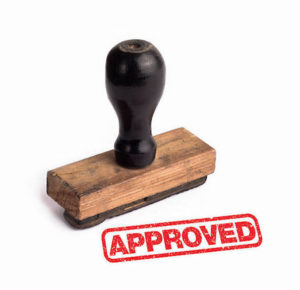 Justice (with a small “j”) has prevailed in West Virginia. We’ve covered the issue of a proposed new shale gas-fired power plant planned for Brooke County, WV for years. We are down to the wire on some of the final bits needed for this project to advance. One of those bits, the last major hurdle, is a loan guarantee for $5.5 million, covering a tiny part of the financing required to build this nearly $1 billion project. Yesterday the WV Economic Development Authority unanimously approved the loan guarantee.
 Yesterday the full Pennsylvania Senate passed House Bill (HB) 2025, a bill already passed by the House previously. The bill now goes to Democrat leftist Gov. Tom Wolf, who says he will veto it. The bill restores democracy to the Commonwealth by giving the legislature–the very people elected to be the voice of PA citizens–a role in deciding whether or not PA should join the so-called Regional Greenhouse Gas Initiative (RGGI)–which is nothing more than an obscenely high tax on carbon meant to kill coal and natural gas-fired power plants in the state–a major customer of Marcellus gas.