
Kimmeridge Joins Ascent Resources Bidding War with $6B Offer
 The bidding war is heating up for those interested in buying Ascent Resources, a privately held company focused 100% on the Ohio Utica Shale. Ascent is Ohio’s largest natural gas producer and the 8th largest natural gas producer in the U.S. Kimmeridge Energy, a private investment firm focused on the energy sector (sometimes called an “activist investor” and/or corporate raider), has put an offer on the table to buy out and take over Ascent: $6 billion. This is the first hard number we’ve seen since the whole bidding war began last week. Read More “Kimmeridge Joins Ascent Resources Bidding War with $6B Offer”
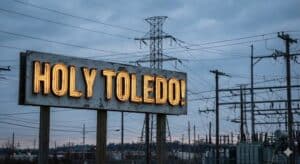 In early April, MDN brought you the exciting news that pipeline giant Williams, via its newly-minted subsidiary, Will-Power, is planning to build two Utica/Marcellus gas-fired power plants in the New Albany International Business Park in Licking County, Ohio, near Columbus, to power a massive new Meta (Facebook) data center complex (see
  Pipelines in West Virginia (like most other states) pay property taxes. It’s a significant revenue generator for counties. There are many pipelines in Wetzel County, including three NGL pipelines owned and operated by MarkWest (aka MPLX) that connect to the Mobley Gas Plant. In 2022, MarkWest filed a tax return for the pipelines showing a 35% reduction in value due to less-than-forecasted pipeline usage, a concept called “economic obsolescence based on inutility.” The County Assessor for Wetzel County challenged MarkWest’s claim.
 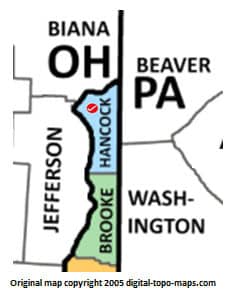 Hancock County, WV, is located in the tippy top of the northern panhandle of West Virginia, surrounded by Pennsylvania on one side and Ohio on the other. Yet somehow Hancock County has been left out of the Marcellus/Utica bonanza happening all around it. It’s not like there isn’t good rock under Hancock. Every other county that touches Hancock has drilled M-U wells within the last year. However, we can’t find any permits for a single shale well in Hancock. Ever. What gives?
  In October, National Fuel Gas Company, a large utility company headquartered in the Buffalo, NY area with both upstream and midstream subsidiaries (Seneca Resources and NFG Midstream), announced a deal with CenterPoint Energy to acquire CenterPoint’s Ohio natural gas utility business (CNP Ohio) for $2.62 billion (see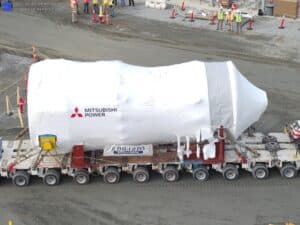

 OTHER U.S. REGIONS: Dominion Energy Charitable Foundation awards grants to 388 nonprofits; Blue states, high rates; New York utility says queue for large power users has tripled; NATIONAL: U.S. natural gas futures extend losing streak; U.S. oil slides to four year low; Tokyo Gas to invest in U.S. downstream assets; Nearly 1,400 natural gas stations to power clean transport growth in 2026; INTERNATIONAL: Baker Hughes, Hunt announce joint framework for redevelopment of mature O&G fields; USA emerges as world’s hydrocarbon superpower.
  The Marcellus/Utica rig count gained a rig last week in the Ohio Utica. The combined count hit 39 total rigs, the most it has operated in more than a year. That’s great news! It means drilling is picking up in the M-U. Pennsylvania has held at 18 active rigs for four consecutive weeks. Ohio picked up one and now operates 14 rigs. Before last week, Ohio had held the same number of rigs at 13 since September 26. West Virginia maintained its 7 rigs, which it has operated since May 30. There were 24 rigs targeting the Marcellus and 15 targeting the Utica, for a combined 39 rigs in the M-U.
  Eastern Gas Transmission and Storage (EGTS), a wholly owned subsidiary of Berkshire Hathaway Energy Company (Warren Buffett’s company), filed a new project with the Federal Energy Regulatory Commission (FERC) in July (see
  Earlier this year, Houston-based EOG Resources acquired Encino Acquisition Partners for $5.6 billion, establishing the Utica Shale as a “third foundational play” alongside its Permian and Eagle Ford assets (see
 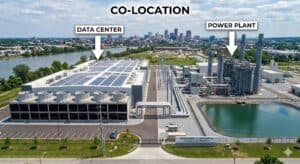 Earlier this year, the Federal Energy Regulatory Commission (FERC) and PJM Interconnection, the country’s largest electric grid operator (covering PA, WV, and OH, among other states), began to grapple with the issue of co-locating power plants with data centers (see
  Last week, the U.S. House of Representatives passed two bills that will make it easier to build natural gas pipelines in the northeast and elsewhere. The House passed H.R. 3898, the Promoting Efficient Review for Modern Infrastructure Today (PERMIT) Act, making it more difficult for states to reject pipeline and related projects based on the Clean Water Act. No more cases of New York and other states blocking federally-approved pipelines from getting built for years on end. The House also passed H.R. 3668, the Improving Interagency Coordination for Pipeline Reviews Act, which designates the Federal Energy Regulatory Commission (FERC) as the lead agency in the interstate pipeline approval process. No more interference from the EPA, BLM, and other federal agencies attempting to stifle pipeline projects.
  The European Union is simplifying compliance with its methane emissions law for oil and gas imports, a decision expected to aid U.S. exporters following pressure from the Trump administration. Recognizing that the commingled nature of U.S. liquefied natural gas (LNG) makes tracing difficult, the European Commission proposed two streamlined reporting options: utilizing third-party verification certificates or a digital “trace and claim” system. While the core regulation remains intact with stricter standards scheduled for 2027, these adjustments aim to prevent supply disruptions by offering more flexible monitoring solutions for the fragmented U.S. energy industry. To which we say, tell Europe to bugger off.