
Why We’re Downgrading the Odds on Permitting Reform
 Former Sen. Joe Manchin says he’s “tickled to death” about the bipartisan permitting reform bill now waiting for a Senate vote. He puts the odds it becomes law at “well past 50%.” We’d love to believe him. We don’t. On Oct. 5 we called passage “a coin flip, maybe a little better” (see Bipartisan Permitting Bill Takes Aim at NY’s Pipeline Veto Power). Two weeks of fresh reporting has us downgrading that call. House Democrats are openly saying, “wait,” the big green groups can’t decide what they think, and the Nov. 3 election could sink the deal no matter which party wins. Below are links to two new articles, one from POLITICO (Manchin’s victory lap) and one from The Washington Sun (Big Green’s identity crisis), plus our reasons for doubting Joe. Read More “Why We’re Downgrading the Odds on Permitting Reform”
 The Federal Energy Regulatory Commission (FERC) on Thursday took a chainsaw to one of the slowest, most litigated parts of its pipeline review process. In a 4-1 vote, FERC issued a draft policy statement saying it will no longer require pipeline and LNG companies to submit “air dispersion modeling” for new or expanded compressor stations and LNG terminals. Why should Marcellus/Utica folks care? Because nearly every project that moves more of our gas to market, such as Iroquois ExC and MVP Boost, involves building or beefing up compressor stations. Faster approvals mean more pipe, more takeaway capacity, and (eventually) better prices for drillers and royalty owners.
 Researchers at the University of Southern California (USC) built a $250 gadget that sits over an old, abandoned oil or gas well and sniffs for methane leaks around the clock, reporting its findings online. The research paper behind it leans on a well-known 2014 Princeton study of abandoned wells in Pennsylvania. That study is worth a second look, because its “average” leaking well isn’t so average. Read the fine print, and you’ll find most old wells leak a tiny amount, or nothing at all, while a handful of bad actors drive the headline numbers. That’s why a cheap tool that can tell the difference could save taxpayers a lot of money.
 OTHER U.S. REGIONS: USA to use Cold War-era law to expand Texas refinery; NATIONAL: U.S. natural gas futures mixed after below-estimate storage build; Venture Global inks deals with GE Vernova, Baker Hughes for power expansion; INTERNATIONAL: Oil prices diverge as supply risks mount; Europe may miss its 2026 deadline to phase out Russian LNG.
 It’s a go. Yesterday, one day ahead of its own October 15 deadline, National Fuel Gas Company’s (NFG) board approved a plan to split the 124-year-old company in two. Seneca Resources and the NFG Midstream gathering business will spin off as a new, publicly traded Marcellus/Utica driller. The company is calling it “IUG” for now (short for Integrated Upstream and Gathering) because it doesn’t have a real name yet. Seneca president Justin Loweth will be the CEO. NFG shareholders will get the new shares tax-free. Don’t hold your breath, though. The split isn’t expected to close until the second half of 2027.
 The Delaware Riverkeeper Network and PennFuture fought for years for the right to challenge Transco’s Regional Energy Access (REA) pipeline permits before Pennsylvania’s Environmental Hearing Board (EHB). They got their wish. Then they lost at the EHB. And yesterday, they lost again in federal court. A three-judge panel of the U.S. Court of Appeals for the Third Circuit unanimously upheld the state Department of Environmental Protection’s (DEP) water permits for the Williams-owned pipeline expansion. The court said the groups never showed that the extra water testing they demanded would have changed a thing. Even better, the court handed down a ruling on Pennsylvania’s Environmental Rights Amendment that could make life a lot harder for anti-drillers going forward.
 Infinity Natural Resources, the Morgantown, WV-based driller that bought Antero Resources’ Ohio Utica assets for $1.2 billion earlier this year, isn’t done shopping. CEO Zack Arnold told Hart Energy at its SUPER DUG conference in Houston in September that Infinity is “actively looking for the next opportunity.” Arnold also dropped a few other nuggets worth your attention: Infinity has drilled its first deep dry gas Utica well in a Pennsylvania field that has only ever produced from the Marcellus; a “couple” of unnamed operators are starting to develop the Marcellus in eastern Ohio; and newly available state and federal lands in Ohio are a fresh source of drilling locations.
 Europe blinked. On Wednesday, the European Commission (the EU’s executive branch) proposed delaying its world-first methane rules for imported oil, natural gas, and coal by one year. The rules were set to kick in on January 1, 2027. Under the new proposal, they won’t start until 2028. That’s good news for U.S. LNG (liquefied natural gas) exporters, which supply more than half of Europe’s LNG, and, by extension, for the drillers and royalty owners whose gas feeds those export plants. Pressure came from France, the U.S., many EU countries, and the oil and gas industry. Big Green, as you’d expect, is having a meltdown. The delay still needs a thumbs-up from the European Parliament and EU member governments, and some want a longer, three-year pause.

 Back in July, Infinity Natural Resources (INR) told the world it had booked a $57.5 million derivative (hedging) gain for the second quarter, and MDN used the occasion to decode how hedging works (see

 Remember Bucks County, PA’s “sneaky” lawsuit against Big Oil? The one a county judge tossed in May 2025 “with prejudice,” meaning don’t come back? Well, it’s back. Today (Oct. 14), Pennsylvania’s Commonwealth Court will hear Bucks County’s appeal, which asks the court to bring the dead case back to life. Lined up against the county is an impressive list of “friends of the court,” including Pennsylvania’s own Attorney General Dave Sunday, the U.S. Chamber of Commerce, the National Association of Manufacturers, the Pennsylvania Manufacturers’ Association, the Pennsylvania Chamber, and our friends at both PIOGA and the Marcellus Shale Coalition. All of them are telling the appeals court the same thing: leave it dead.

 Remember the hydrogen hubs? Three years ago, the Biden administration handed out $7 billion to build seven of them, including two with deep Pennsylvania roots: the Appalachian Regional Clean Hydrogen Hub (ARCH2), awarded $925 million to make “blue” hydrogen from Marcellus/Utica gas, and the Mid-Atlantic Clean Hydrogen Hub (MACH2), awarded $750 million to make “green” hydrogen from wind and solar power (see
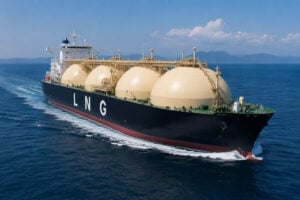 Good news for Marcellus/Utica drillers and the landowners who collect royalty checks from them: Cove Point LNG, the export terminal in Maryland that runs on our gas, is back in business after its annual 23-day maintenance break. Add the return of a Freeport LNG train in Texas and a record run at the new Golden Pass LNG plant, and U.S. “feedgas” (the natural gas piped into LNG plants to be chilled into a liquid and shipped overseas) jumped to 19.7 Bcf/d on Tuesday, the highest level since April. That’s billion cubic feet per day, for those keeping score at home.