
Developers Plan 1.1M Sq Ft Data Center Near SWPA Tenaska Gas Plant
 Another data center proposal has landed in Westmoreland County, PA. This one is a 1.1-million-square-foot building on old farmland in South Huntingdon Township, right off I-70 and across the road from the Pittsburgh Renaissance Festival. The developers are Sippel Development Co. of Zelienople and TriEnergy of Sewickley — the latter a company that has spent roughly 30 years buying land for oil and gas development. The plans filed with the township don’t say where the electricity will come from. But we have a pretty good guess. The site sits about a mile from Tenaska’s 940-megawatt natural gas-fired power plant, and gas wells are nearby. Here’s what we know. Read More “Developers Plan 1.1M Sq Ft Data Center Near SWPA Tenaska Gas Plant”
 Shell Chemical Appalachia wants a federal judge in Pittsburgh to throw out a lawsuit Philadelphia-based Big Green group Clean Air Council filed more than three years ago over air emissions at Shell’s ethane cracker plant in Monaca (Beaver County), PA. Shell’s main argument is simple: the PA Department of Environmental Protection (DEP) has already gone after Shell for the very same violations, not once but twice, collecting nearly $25 million in penalties and “community” payments. Federal law, says Shell, doesn’t let a private group pile on when the state is already on the case. Shell also argues the Council never showed that a single member was actually harmed. Shell filed its motion last Friday, Oct. 9, and the Council has agreed to pause the case while the judge decides.
 Here’s a case that slipped under our radar, and it shouldn’t have. On Monday, Nov. 9, the U.S. Supreme Court will hear arguments in Hoffmann v. WBI Energy Transmission, a fight between a group of North Dakota ranchers and an interstate pipeline company. The question sounds dry: when a pipeline company uses eminent domain to take land, does state law or federal law decide how much the landowner gets paid? However, the answer could put money in, or take money out of, the pockets of landowners in Pennsylvania and Ohio. Yesterday, the Court agreed to let the Trump administration take part in the argument, on the side of the pipeline company.
 MARCELLUS/UTICA REGION: Utica Shale Academy awarded funds to expand to three counties; OTHER U.S. REGIONS: You don’t win energy games in New York by appeasement; We Energies proposes 750 MW natural gas plant at Fox Energy Center in Wrightstown; NATIONAL: U.S. natural gas futures gain on storage views; U.S. natural gas futures pull back on warmer weather outlook; Climate lawsuits fail constitutional and scientific review; Your data center life; Republicans denounce Trump’s diesel deal with Russia’s Putin amid mounting backlash; INTERNATIONAL: Brent steady amid Middle East tensions; Brent tops $106 as supply risks intensify; October is beginning to look a lot like April for oil; Environmentalists picket African Energy Week, urging an end to new oil and gas exploration; The Global State of Methane Regulations Report.
 Here’s a story you won’t read anywhere else. Strata Petroleum, LLC buys oil and gas mineral rights, and it has quietly sold its mineral interests in 116 producing Ohio Utica wells to Dallas-based Rising Phoenix Royalties. The deal closed effective October 5. Strata managing partner Justin Wainwright reached out to MDN with the news. He won’t disclose the exact price, but he told us it was “well into 7 figures.” The wells are operated by two of the biggest names in the Ohio Utica, EOG Resources and Ascent Resources, and they’re spread across six of the play’s core counties. Strata says it isn’t leaving the region. It plans to keep buying minerals across Ohio, West Virginia, and Pennsylvania.
 PJM Interconnection, the outfit that runs the electric grid for 13 states (including PA, OH and WV) plus DC, has picked its first three projects for a brand-new fast lane to get big power plants hooked up to the grid. Two of the three are giant battery projects from ENGIE. The third is the one that caught our eye: LS Power plans to add 455 megawatts (MW) to its existing Hunterstown natural gas-fired power plant near Gettysburg, in Adams County, PA. By MDN’s math, that expansion will need roughly 60 million cubic feet of natural gas per day once it’s up and running. Guess where that gas is coming from?
 Last Wednesday, MDN told you about the Allegheny County Board of Health’s latest move against shale drilling (see
 The rest of the country is heading into winter swimming in natural gas. Production is at record highs, storage is above average, and Henry Hub January futures are trading below $4. Yet traders are paying more than $20 per MMBtu for gas delivered into parts of New England in January. That’s more than five times the national benchmark. The problem isn’t a shortage of gas. It’s a shortage of pipe. New England sits just a few hundred miles from the Marcellus Shale, one of the most prolific gas fields on the planet, but more than a decade of blocked pipeline projects means it can’t get enough of our gas when the weather turns cold.
 Six weeks. Same number. The Marcellus/Utica held at 33 rigs again for the week ended October 9, while the national count jumped by five to 603 — the first time it has topped 600 in the current run-up, and a new 52-week high. Oil rigs did all the lifting (up six). Gas rigs slipped by one. Frac spreads jumped by seven, the biggest weekly gain in a while. And on the price board, natural gas climbed back over $3, settling at $3.22 per MMBtu. Plus: a familiar name pops up on the Enverus permit list for the first time.
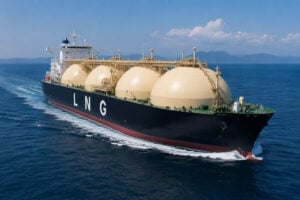 Finally, a little justice. An international arbitration panel ruled that Venture Global (VG) breached its contract with Portugal’s Galp by delaying the declaration of its Calcasieu Pass LNG export plant in Louisiana as “commercially operational.” That official start date, called COD (commercial operation date), is what triggers deliveries to long-term customers. For more than three years, VG shipped cargo after cargo of LNG from Calcasieu Pass, much of it sold on the sky-high spot market after Russia invaded Ukraine, all while insisting the plant was still in its “commissioning” (startup) phase. Galp, which signed up in 2018 to buy 1 million tonnes per year (MTPA) of LNG for 20 years, waited. Galp now joins BP as the second customer to beat VG in arbitration. The catch? Galp’s payday is capped at $170 million, and the check won’t be written until after a damages hearing in 2027 or 2028.
 It’s Columbus Day! MDN will not publish our regular list of stories today — but have no fear; we will be back tomorrow (Tuesday) with a full lineup. Take a moment today to celebrate the world’s most famous Italian, the guy who started it all, the guy who discovered the Americas, and what would one day become the greatest country on earth: The United States of America!
 The Marcellus/Utica region received 29 new drilling permits last week, September 28 – October 4, nearly double the 16 permits issued two weeks earlier. Pennsylvania issued 20 of the new permits. Ohio issued 9 new permits. And West Virginia got skunked, issuing no new permits. The drillers who received new permits last week were: Blackhill Energy, Coterra Energy (now Devon Energy), EOG Resources, Expand Energy, Gulfport Energy, Infinity Natural Resources (INR), and Snyder Brothers.
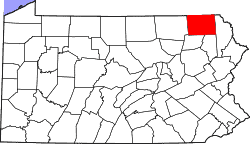
 One shoe has dropped. Yesterday (Oct. 8), Devon Energy announced it is selling its entire Eagle Ford position in South Texas to Houston-based Crescent Energy for $4.2 billion in cash. It’s Devon’s first big asset sale since it swallowed Coterra Energy in May. It’s also not the sale most of us expected a few months ago. The old Cabot Oil & Gas Marcellus position in Susquehanna County, which Devon now owns, stays put. For now. The question we keep hearing from Northeast PA landowners: Is the Marcellus next? Below we read the tea leaves.
 The Natural Gas Supply Association (NGSA) released its 26th annual Winter Outlook yesterday, and the bottom line is music to the ears of anyone who pays a heating bill: NGSA sees “downward market pressure” on natural gas prices this winter compared to last. Henry Hub futures for November through March average $3.43 per MMBtu, down $1.08 (23.9%) from $4.51/MMBtu realized last winter. That’s less happy news for landowners hoping for fat royalty checks. But buried on page 5 of the report is a nugget every MDN reader should notice: last winter, while nearly every other U.S. shale basin grew, Marcellus and Utica production actually shrank. The reason? Pipes. Or rather, the lack of them.