
Study: Project Beacon Would Save Mass. Ratepayers $367M a Winter
 A new study from the Boston-based Fiscal Alliance Foundation puts a price tag on what New England’s pipeline shortage costs Massachusetts families. The study, done by Always On Energy Research, finds that Enbridge’s proposed Project Beacon, a 300 MMcf/d (million cubic feet per day) expansion of the Algonquin Gas Transmission pipeline, would have saved Massachusetts ratepayers an average of $367 million per winter over the past seven winters. Even after paying their share of the pipeline’s cost, the average gas-heated household comes out ahead by $76 each winter, and small businesses by $622. Read More “Study: Project Beacon Would Save Mass. Ratepayers $367M a Winter”
 Back on Sept. 2, we told you about Invenergy’s plan to build two big gas-fired power plants in Brillion, Wisconsin (see
 North Carolina’s Oil and Gas Commission is doing something it is required to do once every 10 years: review its entire rulebook for oil and gas drilling, including fracking. The Commission’s verdict so far is that every last rule is “necessary.” Case closed, right? Not if you’re an anti. Clean Water for North Carolina (CWFNC) is in full alarm mode, urging supporters to flood the Commission with “not one step back” comments before the November 9 deadline. Why the panic over rules that have never been used (not once) in 11 years? Follow the gas. A company wants to reopen an old vertical well in Lee County to power an AI data center. It would be the first commercial gas well in the state’s history.
 MARCELLUS/UTICA REGION: Bundle up – Pennsylvania’s power gap is growing; Utica Shale Academy debuts new program; NATIONAL: U.S. natural gas futures settle lower; Hybrid sales rise while battery electric sales remain lower after tax credit expiration; “Green” isn’t always clean; Elon Musk’s gas strategy shows how the US market is changing; The energy election – 2026 midterms likely to determine your power bill; INTERNATIONAL: Oil prices hover near five-month high; What will happen to the oil price over the next few quarters?; Greenpeace protest forces shutdown at Woodside’s $12.5 billion gas project; UN climate panic rests on false scenario and buried past.
 Seven weeks. Same number. The Marcellus/Utica held at 33 rigs again for the week ended October 16, while the national count held at 603 for a second straight week, tying the 52-week high set last week. Underneath that flat national number, oil rigs dropped by three and gas rigs added one. Frac spreads slipped by four, snapping a five-week winning streak. On the price board, oil and gas went in opposite directions: WTI blasted past $100 to settle at $101.41 a barrel, while natural gas fell back to $3.116 per MMBtu. Plus: Expand Energy grabs the top spot on the Enverus permit list, and a name we don’t recognize shows up at No. 4.
 On Friday, we told you a leak on Columbia Gas Transmission’s Mountaineer XPress (MXP) pipeline had pushed Appalachian gas down to $1.06 (see
 Ten days ago, after Devon Energy agreed to sell its Eagle Ford assets for $4.2 billion, we asked whether the Marcellus would be next (see
 The feds have spoken: this winter in the Northeast will most likely be warmer than normal, and maybe a little soggier, too. NOAA’s Climate Prediction Center released its official winter outlook last Thursday (Oct. 15), and a “super” El Niño is calling the shots. For those who make a living from Marcellus/Utica gas, a warm winter means less gas burned to heat homes, and that means softer prices. The market noticed. November futures slid 12 cents on Friday. But here’s the twist. In pipeline-starved New England, traders are still betting on $20-plus gas in January. A mild winter can’t fix what bad policy broke.
 The PJM Interconnection, the outfit that runs the power grid for 13 states plus Washington, D.C. (including Pennsylvania, Ohio, and West Virginia), had a rough week last week. Unusually warm October weather, combined with a big chunk of power plants down for fall maintenance, pushed PJM into emergency mode on October 13 and 14. The lights stayed on. But PJM says weeks like this are becoming normal, because electricity demand from data centers is growing faster than new power plants and power lines are being built. PJM’s answer? More power plants.
 Last Thursday, in a unanimous 5-0 vote, the Federal Energy Regulatory Commission (FERC) proposed something it has twice before refused to do: create a “blanket” authorization program for LNG plants. That’s regulatory-speak for letting LNG export terminals (and the smaller LNG “peak shaver” storage plants up here in the Northeast) make upgrades, swap out equipment, boost capacity, and even build new liquefaction trains, tanks, and marine berths without begging FERC for a separate, case-by-case order each time. Interstate pipelines have had a blanket program like this since 1982. LNG never did. FERC Chairman Laura Swett called it “historic,” and for once the word fits. The proposal is a notice of proposed rulemaking (NOPR), not a final rule, and the usual suspects are already lining up against it, including nine blue-state attorneys general. But if it goes through, more gas gets out the door faster, and that’s good news for the Marcellus/Utica.
 The Marcellus/Utica region received 10 new drilling permits last week, October 5-11, down a big 19 from 29 permits issued two weeks earlier. Pennsylvania issued 7 of the new permits. Ohio issued 2 new permits. And West Virginia issued a single new permit. The drillers who received new permits last week were: Ascent Resources, EQT, PennEnergy Resources, and Range Resources.
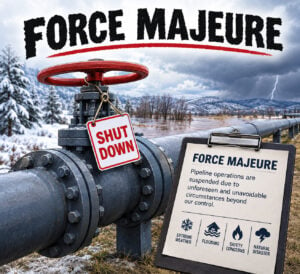 On Thursday, physical (spot) natural gas sold at Louisiana’s Henry Hub (the national benchmark) went for $3.30 per MMBtu. On the same day, gas sold at Texas Eastern M-2, which is the main price point for gas produced in southwestern Pennsylvania, West Virginia, and Ohio, went for $1.055. That’s the same molecule of methane, and our version fetched about 32 cents on the dollar. Why? Because a pipeline carrying Appalachian gas out of the region sprang a leak again. Here’s what happened, why it matters to your royalty check, and why there’s some good news on the horizon.
 Last month we told you Ohio had asked PJM to dust off the “State Agreement Approach,” a grid-planning tool invented for New Jersey’s offshore wind, and use it instead for the $4.2 billion in power lines feeding the 10-gigawatt SoftBank data center and gas plant complex at Piketon (see
 The Homer City Energy Campus in Indiana County, PA, will be one of the country’s largest natural gas-fired power plants under construction. It burns Marcellus gas, and it needs a lot of water to keep cool. On Wednesday, the Pennsylvania Department of Environmental Protection (DEP) held a public hearing on a permit change that would let the plant send up to 6.8 million gallons a day of used cooling water into Blacklick Creek. All of the roughly a dozen speakers opposed it. DEP says it will decide before the current permit expires at the end of this year. Here’s what the opponents said, and what DEP’s own paperwork says, which is a different story.