
Energy Transfer Expects FID for Lake Charles LNG Early Next Year
 A month ago, MDN reported that Energy Transfer was holding off on a final investment decision (FID) for its Lake Charles LNG export project until 80% of the project had been sold to equity partners (see Energy Transfer Taps the Brakes on Lake Charles LNG Export FID). Good news! ET has now secured enough agreements to move forward with the FID and plans to do so “early next year.” Read More “Energy Transfer Expects FID for Lake Charles LNG Early Next Year”
 U.S. natural gas production and demand reached record highs in 2025, with the U.S. Energy Information Administration (EIA) projecting continued growth in output and LNG exports through 2026. Driven by surging international demand in Europe and Asia, the U.S. has become the world’s largest LNG exporter. This natural gas resurgence is bolstered by the Trump administration’s support and significant investments from major energy firms prioritizing gas as a so-called transition fuel (it’s actually a destination fuel). Consequently, U.S. natural gas pipeline capacity is set for its biggest one-year expansion since 2008. Surging demand from LNG exporters, data centers, and manufacturing is driving a $50 billion investment boom.
  Representatives from Chesapeake Utilities and BHE GT&S, a subsidiary of Berkshire Hathaway Energy, presented a proposal to the Port Canaveral Authority to construct a new liquid natural gas (LNG) liquefaction facility in Brevard County. The project, targeting a 2029 completion date, aims to supply essential fuel for both cruise ships and the burgeoning space industry’s rockets. While LNG is currently trucked in to support rocket launches, this facility would provide dedicated local infrastructure to meet the growing demands of the world’s busiest cruise port and the active space sector.
  OTHER U.S. REGIONS: Drew Barrymore joins MSC Cruises to celebrate new LNG-powered ship; Consumers Energy defends customer protections for data centers against challenge from Mich. AG; New York was a leader on climate issues, under Hochul things changed; The Gulf of America is back; NATIONAL: Natural gas prices are down 20% in just a week; Winners from S&P Global Energy’s 27th Annual Platts Global Energy Awards; Voltagrid & Halliburton make 400 MW power commitment re data centers; US gas inventories down by 177 Bcf; One state’s green mandates can become another state’s nightmare; U.S. E&Ps continue to maintain investor support despite commodity price plunge; Supremes have chance to end climate lawfare; INTERNATIONAL: Crude settles at October lows; The Christmas gift that climate Grinches can’t abide.
  EQT CEO Toby Rice has personally led a strategic investment round in Pittsburgh-based
  Sometimes politics is a game of “chicken” whereby you must keep fighting and wait out the other side when you *know* you are in the right. Such was the case with Pennsylvania Democrats’ insistence that the state join the Regional Greenhouse Gas Initiative (RGGI) carbon tax scheme. RGGI aims to force coal- and gas-fired power plants to shut down by making them super expensive to operate. Tax them out of existence on the theory that unreliable renewables like wind and solar would replace them. But Republicans in the PA Senate kept fighting—for seven long years—and finally won (see
  When the Transcontinental Gas Pipe Line (Transco) was placed into service in 1950, it was hailed as the longest pipeline in the world and the largest single-project construction venture ever attempted. Today, Transco, now owned by Williams, transports about 16% of the natural gas consumed in the United States. More than a single pipeline, Transco is a network stretching nearly 10,000 miles, connecting South Texas to New York. It’s hard to overstate the importance of this pipeline system to the country and to the Marcellus/Utica region. It carries an estimated 4.0 to 4.5 billion cubic feet (Bcf) of M-U molecules every day. We have written over 1,100 posts on MDN, either focusing on or prominently mentioning Transco (
 It’s always one step forward and two steps back here in the “Empire” State of New York. Recent actions by New York Governor Kathy Hochul regarding the energy sector have been encouraging. She horse-traded with President Trump to allow two natural gas pipelines to get built in the state (see
 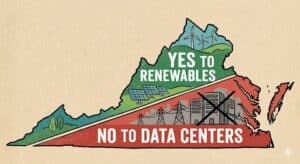 Democrats in Virginia are experiencing political ecstasy at the prospect of reversing four years of common-sense energy policies under outgoing Governor Glenn Youngkin. Gov. Youngkin removed the state from the odious Regional Greenhouse Gas Initiative (RGGI) carbon tax scheme. Incoming Gov. Abigail Spanberger has pledged to re-enroll the state in the program. Youngkin vetoed bills that would have favored unreliable renewable energy. Now, the Dems will not only have Spanberger as Governor, but hardened leftist Ghazala Hashmi as Lt. Governor, and a strong majority in both chambers of the legislature. They are already planning to reintroduce bills favoring renewables and blocking new data centers. It’s a crying shame what Virginia has done in electing these radicals to lead it.

 The Pennsylvania Environmental Quality Board (EQB) held a meeting yesterday to consider whether or not to accept a petition by radical green groups, including the Clean Air Council and Environmental Integrity Project, to “study” the issue of increasing setbacks for shale drilling so far that it would ban ALL new Marcellus/Utica drilling in the Keystone State (no exaggeration). The EQB tabled a decision on whether to accept the petition back in April (see
  Here we go again. Pennsylvania Democrat State Reps. Chris Pielli, (Chester), and Tarik Khan, (Philadelphia), have introduced a bill that would establish a severance tax on natural gas production. Specifically, the legislation introduces a per-volume severance tax on natural gas operations. The bill would place the new severance tax on top of the existing impact fee (i.e., tax), creating a double tax on the Marcellus industry. Adding a severance tax to the existing impact fee would instantly make PA’s tax on natural gas extraction the highest in the nation. The purpose is not revenue generation but the death of the Marcellus production in the Keystone State. Do the Dems never tire of attacking the Marcellus industry?
  The U.S. Energy Information Administration (EIA) issued its latest monthly Short-Term Energy Outlook (STEO) yesterday. The STEO is the agency’s monthly best estimate of where energy prices and production will head over the next 12 months. In this latest assessment, EIA forecasts the cold snap hitting the United States this month will drive the Henry Hub natural gas spot price to average almost $4.30 per million British thermal units (MMBtu) this winter, which is 40 cents/MMBtu higher than its November forecast of $3.90. The price increase is driven by increased natural gas consumption for space heating.
  Pennsylvania has a big problem. The state is retiring older coal- and gas-fired power plants faster than it can add new plants. Plus, the state needs to *grow* its electric generation capacity to meet new demand from AI data centers. PA State Senator Gene Yaw has a solution: modify the existing 1971 Economic Development for a Growing Economy (EDGE) tax credit program by adding a provision granting a tax credit for any $400+ million investment in “baseload power generation” (i.e., gas-fired power generation). Yaw wants to make it a no-brainer for power plant builders to make the Keystone State their destination for new projects.