
Cabot Says 2 NEPA Gas-Fired Plants Go Operational by June 1
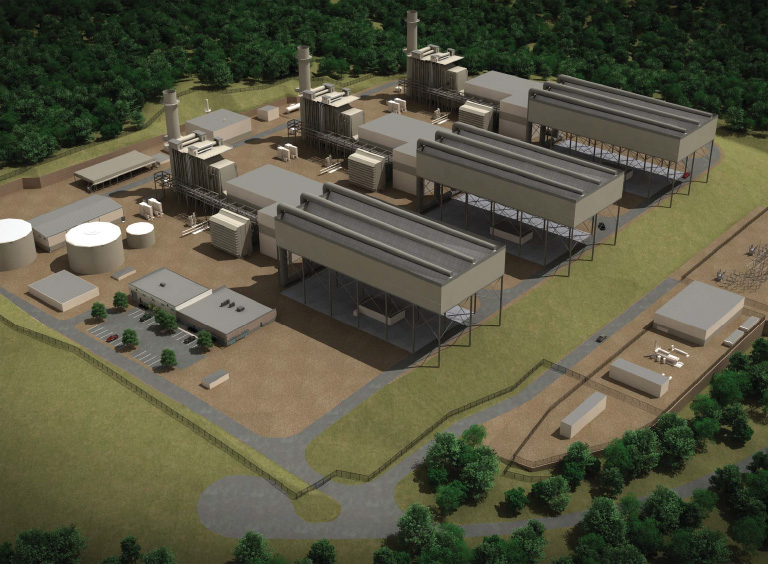
Tucked away in the comments made by Cabot Oil & Gas CEO Dan Dinges on an investor conference call last Friday, MDN picked up on what we consider big news: Both the Moxie Freedom (Luzerne County, Wilkes-Barre area) and Lackawanna Energy Center (Lackawanna County, Scranton area) Marcellus-fired power plants are about to go fully operational–sometime in May (by June 1). Both plants will exclusively use Marcellus gas extracted by Cabot in Susquehanna County, PA. For nearly a year the plan had been for Moxie Freedom to be built and online in May of this year, so that announcement isn’t so much a surprise as it is welcomed news (see NEPA Moxie Freedom Power Plant on Track for May 2018 Launch). However, in March we reported Lackawanna was going through a “short” commissioning stage and would be firing up at any time (see Gas-Fired Power Plant Near Scranton Nears Startup; Yellow Smoke). The Lackawanna project has faced fierce local resistance. A group of Democrats got themselves elected to the local town board in Jessup, taking office in January, trying their best to block startup of the Lackawanna project by employing a Big Green lawyer (who works for Riverkeeper) at a cost to taxpayers of $225/hour. Looks like it was wasted money as Dinges says Lackawanna will be operational, with large volumes of Cabot gas flowing to it, within weeks…
Read More “Cabot Says 2 NEPA Gas-Fired Plants Go Operational by June 1”
 Range Resources, the very first driller to sink a well in the Marcellus Shale, provided their first quarter 2018 update yesterday. And what an update it was! First thing that jumped out for us is that Range says they drilled “the two longest laterals to date by Range at 18,129 feet and 17,875 feet.” We checked, and the previous record holder for drilling the longest Marcellus well was EQT, which drilled a Marcellus well with a lateral of 17,400 feet long in Washington County last December (see
  EQT, now the largest natural gas-producing company operating in the United States (since its acquisition of Rice Energy in 2017) issued its first quarter 2018 update yesterday. Among the flood of news coming from the update: EQT lost $1.6 billion in 1Q18, versus making a $164 million profit in 1Q17. But the big loss was not money out of pocket–it was a paper loss, mostly due to “writing down” the value of assets in the Permian (Texas) and Huron (Kentucky) shale plays. EQT is ending its flirtation with the Texas Permian, selling its Permian assets for a minuscule $64 million. The company refused to talk about whether or not they plan to sell or keep the Huron assets. Most of EQT’s drilling remains Marcellus Shale-focused. In 1Q18 EQT drilled 24 Marcellus wells, 2 Upper Devonian wells, and 6 Ohio Utica wells. Kind of funny (for us) was the way acting CEO David Porges described the current situation he finds himself in. Porges was CEO of EQT until early 2017 when Steve Schlotterbeck took over as CEO (groomed by Porges for the job). Porges has been Executive Chairman of the board since that time. But Schlotterbeck suddenly resigned in March when the board refused to pay him what other top energy CEOs make (see
 Part of the rush of first quarter 2018 updates released this week included an update from one of the biggest Marcellus/Utica drillers–Antero Resources. Antero drills in WV, OH and PA–but their main focus is on drilling in WV (see
  As EQT gets ready to split the company into two companies later this year, the midstream (pipeline & processing plants) portion of the company yesterday announced a complicated “drop down” deal to streamline the midstream operation. The short version is this: EQT has midstream assets spread throughout three companies on paper–EQT Midstream Partners, EQT GP Holdings, and Rice Midstream Partners. Yesterday the company announced all three are being merged under one umbrella–EQT Midstream Partners. As you’ll read in the EQT announcement, the entire deal is complex–with various entities buying assets from the others. One of the more interesting aspects of the deal is that EQT Midstream is buying EQT’s (the driller’s) Olympus Gathering System and EQT’s 75% interest in the Strike Force Gathering System. EQT Midstream is also buying out Gulfport Energy’s 25% interest in Strike Force, meaning EQT Midstream will now own 100% of Strike Force–a gathering pipeline system in the dry gas Utica covering 98,000 acres in Belmont and Monroe counties, in Ohio. Here’s the news that EQT is getting its midstream ducks in a row…
 In February MDN told you that XTO Energy, the shale drilling arm of Exxon Mobil, has plans to begin drilling five new shale wells in Armstrong County, PA on a former golf course (see
 XTO Energy, the shale drilling arm of Exxon Mobil, wants to sell ~9,400 Ohio Utica Shale acres in Monroe and Washington counties. Have no fear, XTO isn’t going anywhere. According to XTO’s website, the company currently owns 82,000 acres of Utica Shale leases in Belmont and Monroe counties. The tiny 9,400-acre sale appears to us to be selling off acreage in areas that don’t fit with XTO’s future drilling plans. XTO maintains a regional office in Belmont County. According to the sale announcement appearing on Oil & Gas Asset Clearinghouse, there are potentially 40 drilling locations on the 9,400 acres. The acreage has dry gas potential. The sale is not exactly an auction, but it is timed and uses bids. XTO is accepting sealed bids on the property through May 17. Here’s a copy of the listing, along with a flyer…
 Three weeks ago Rex Energy filed a notice with the Securities and Exchange Commission to alert shareholders that the company has defaulted on an interest payment due on senior notes (see
  We’ve written a number of posts over the years about the ongoing, sometimes quiet sometimes not, civil war between Pennsylvania landowners and some (not all) drillers who use inflated post-production deductions to pad their own bottom lines, leaving landowners with peanuts–sometimes with no royalties at all (see
  The Penn State campus in Erie County (called Penn State Behrend) has been tapped by the PA Dept. of Community and Economic Development (DCED) to be the “lead partner” for developing business and market opportunities for the state related to the mighty $6 billion Shell ethane cracker–currently under construction in Beaver County. Erie County where Behrend is located is certainly not next door to the cracker, not nearly as close as some other Penn State campuses. So why was Behrend selected? In a word, plastics. “The strength of Erie’s plastics industry and the success of Penn State Behrend’s School of Engineering, which offers one of only six accredited U.S. plastics undergraduate programs, makes Erie of particular interest to DCED.” According to DCED’s Denise Brinley, senior energy adviser, “Penn State Behrend can provide critical connections to research support, materials testing and a talent pipeline that will add value to this large-scale petrochemical investment and associated growth in the plastics sector.” Penn State is kicking in a $250,000 grant to their Energy University Partnership for oil and gas strategies, to help prime the pump…
 As we have reported since last December, Cabot Oil & Gas, long-known for the incredible amount of Marcellus natural gas they produce out of a single northeastern Pennsylvania county (Susquehanna), is eyeing north central Ohio as a potential spot for “what’s next” after the Marcellus (see
  Yesterday Gulfport Energy released an initial look at the company’s first quarter operations (full copy below). The update does not include financial performance–only operational performance. Gulfport is an “independent” oil and gas driller with significant acreage positions in the Utica Shale of eastern Ohio and the SCOOP Woodford and SCOOP Springer plays in Oklahoma. Gulfport also owns acreage along the Louisiana Gulf Coast. Our primary interest is in Gulfport is their Ohio Utica Shale program. In 1Q18, when you role everything together (methane, NGLs and oil) converting it all to natural gas “equivalent,” Gulfport produced 92,772 million cubic feet equivalent (MMcfe), versus producing 67,559 MMcfe in 1Q17–a 37% increase year over year. However, what you can’t ignore in this update is that Gulfport has really turned up the activity in the Oklahoma SCOOP. In 1Q18 Gulfport brought online 3 Utica wells, but 7 SCOOP wells. In 1Q18 Gulfport produced 22,103 MMcfe in the SCOOP, versus producing just 7,398 MMcfe in the SCOOP a year ago in 1Q17–a 198% increase. The conclusion is inescapable: the SCOOP is ascending for Gulfport, occupying the company’s time, attention and money…
 Earlier this year the West Virginia legislature passed Senate Bill (SB) 360, which Gov. Jim Justice subsequently signed into law (see