
ECA Marcellus Trust I Gives Investors 2-Cent Dividend for 3Q25
 ECA Marcellus Trust I, the royalty interest holder in some of the wells drilled and maintained by Greylock Energy in Greene County, PA, announced yesterday that it will issue a 2-cent per unit dividend to unitholders for the third quarter of 2025. The company continues to hold back some profits ($90,000 in 3Q25) to build a cash reserve for “future known, anticipated or contingent expenses or liabilities.” ECA Marcellus Trust I, traded over-the-counter on the Pink Sheets, canceled distributions to investors for the first three quarters of 2020 due to the pandemic and the crash in oil and gas prices. The company restarted paying dividends in 4Q20. Since then, the Trust has paid out something in most quarters, floating from under a penny to as high as 18 cents/unit in 3Q22. Read More “ECA Marcellus Trust I Gives Investors 2-Cent Dividend for 3Q25”
 EOG Resources, one of the largest oil and gas drillers in the U.S. (with international operations in several other countries), issued its third quarter update last week. EOG closed on its purchase of Utica driller Encino Energy in August (see
  National Fuel Gas Company (NFG), headquartered in Buffalo, NY, is the parent company for Marcellus/Utica driller Seneca Resources and the parent of midstream company NFG Midstream (and subsidiary Empire Pipeline). Last week, NFG issued its latest quarterly update, which is the company’s fiscal year 4th quarter (but everyone else’s 3rd quarter). According to NFG CEO David Bauer, the company added 220 new Upper Utica locations during the quarter, extending the well inventory to “almost 20 years” that will be profitable at a NYMEX price under $2/MMBtu. Bauer also stated the company recently executed a new pipeline deal with an unnamed shipper to haul an extra 250 MMcf/d of Seneca’s molecules from Tioga County, PA, to premium markets, with an expected in-service date of late 2028.
  Venture Global’s Calcasieu Pass (CP) LNG export facility in Louisiana began operations in March 2022 (see
  We continue to be delighted with the number of new permits issued to drill shale wells in the Marcellus/Utica. Three weeks ago, that number soared to 37. Two weeks ago, it increased to 39. And last week the number remained high, down just two, back to 37 once again. Wow! We haven’t seen a sustained trend of high permit numbers like this in many moons. Pennsylvania issued 13 new permits last week, down from 23 the prior week. Ohio issued 8 new permits, down from 11 the prior week. It was West Virginia that was the breakout star, issuing 16 new permits, up from issuing 5 the preceding week.
  Ascent Resources, founded as American Energy Partners by Aubrey McClendon, a gas industry legend, is a privately held company that focuses 100% on the Ohio Utica Shale. Ascent, headquartered in Oklahoma City, OK, is Ohio’s largest natural gas producer and one of the largest natural gas producers in the U.S. The company issued its third quarter 2025 update yesterday. Net production for the quarter averaged 2,247 MMcfe/d (2.25 Bcfe/d), consisting of 1,900 MMcf/d of natural gas, 16,130 bbls/d of oil, and 41,652 bbls/d of natural gas liquids (NGLs), putting liquids at 15% of the overall production mix for the quarter.
 Gulfport Energy is the third-largest driller in the Ohio Utica Shale (by the number of wells drilled). Gulfport released its third quarter update yesterday. The company is going full steam ahead in its natgas drilling in the Ohio Marcellus. Gulfport is aggressively expanding its future drilling potential. The company nearly tripled its Marcellus inventory, adding roughly 125 gross locations. Concurrently, Gulfport successfully finished two Utica U-development test wells, a move that proves drilling feasibility and unlocks an additional 20 gross Utica dry gas locations.
 In October 2021, one of the Marcellus’ premier drillers, Cabot Oil & Gas, merged with/into Cimarex Energy, an oil driller focused on the Permian and Anadarko basins (see
  Coterra Energy, formed by the merger of Cabot Oil & Gas (drills for natural gas in the Marcellus) and Cimarex Energy (drills for oil in the Permian and Anadarko basins), issued its third quarter 2025 update yesterday. What stood out to us is just how little new drilling the company did in the Marcellus during 3Q. Coterra spud (began to drill) 15 new Marcellus wells during 3Q, while it spud 68 wells in the Permian and 11 in the Anadarko basins. The company brought online to sales (called turned-in-line, or TIL) 4 wells in the Marcellus, 64 TILs in the Permian, and 8 TILs in the Anadarko. That about says it all.
  In June, EQT Corp. agreed to pay $167.5 million to investors who claimed the company overstated the benefits of its $6.7 billion merger with Rice Energy (see
  Antero Resources, the largest Marcellus/Utica (M-U) driller in West Virginia, released its Q3 2025 update with two significant announcements. One is that newly appointed CEO Michael Kennedy is “excited” for the company to return to dry gas drilling after “more than a decade,” with the first new dry gas well specifically intended to service the data center market. Second, we can confirm our prior speculation to say that Antero is officially marketing its Ohio Utica assets for sale. We previously brought you that rumor in early September (see
  Last week, CNX Resources issued its third quarter 2025 update. Notably, the company did not drill, frack, or complete any new wells in 3Q25. The company reported a profit of $202.1 million for the quarter, compared to a profit of $65.5 million in 3Q24. The company generated $226 million in free cash flow, marking the 23rd consecutive quarter of FCF generation. Production was 161.3 Bcfe (billion cubic feet equivalent) in 3Q25 — which works out to 1.75 Bcfe/d — up from 134.5 Bcfe last year (a 20% increase). The reason for the sizeable increase was that CNX closed on the purchase of Apex Energy during the first quarter, and Apex’s production numbers were fully added to CNX’s numbers beginning in 2Q25.
 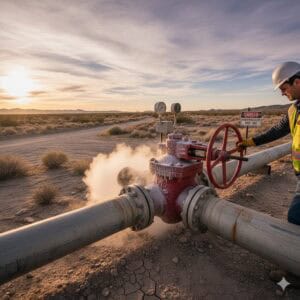 Marcellus/Utica natural gas production is rebounding in November, increasing by about 700 MMcf/d to an average of 35.5 Bcf/d recently, as drillers react to rising in-basin pricing and tightening regional fundamentals due to higher seasonal demand. This increase signifies an easing of the production shut-ins carried out during the third quarter when loose supply-demand dynamics pushed prices, which averaged $1.40-$2.97/MMBtu, to an average of below $2/MMBtu on more than a third of days.
  Pennsylvania’s Attorney General, Dave Sunday, pretends to be a Republican, but he’s really a Democrat. He’s also anti-shale, as evidenced by a wild attack against Seneca Resources launched on Friday. Sunday’s office filed three separate criminal complaints against Seneca, charging the company with 64 counts of criminal violations of the Solid Waste Management Act and 36 counts of criminal violations of the Clean Streams Law. Sunday, like his left-wing predecessors, is turning what should be regulatory enforcement actions into crimes. No wonder some drillers are saying “screw you” to Pennsylvania and moving their drilling operations to West Virginia and Ohio.