
Carroll County Commissioners Review EOG Well Pad Flash Fire Incident
 MDN previously reported news of an explosion and fire on Tuesday, December 16, 2025, at an EOG Resources shale well pad located on June Road in Malvern (Carroll County), Ohio (see EOG Shale Oil Pad in Carroll County, OH Explodes During Fracking). According to the scant news we could find, a well on the pad was actively being fracked at the time of the incident. Fortunately, there were no injuries. The fire was contained to a vapor tank on the pad and extinguished quickly. The wellheads themselves were not involved or damaged. During the Dec. 18 Carroll County Commissioners meeting, the commissioners were briefed “to clear up public misconceptions about the incident.” Read More “Carroll County Commissioners Review EOG Well Pad Flash Fire Incident”
 The combined number of new permits issued to drill shale wells across the Marcellus/Utica region was 12 for the week of Dec. 15 – 21. Pennsylvania issued 8 new permits, while Ohio issued 4. West Virginia issued no new permits for that period. Among the companies receiving new permits were Seneca Resources, CNX Resources, Gulfport Energy, and EOG Resources.
 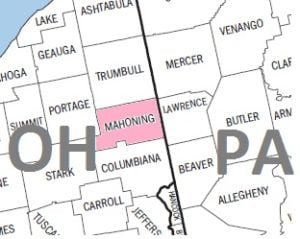 The EOG Resources-owned Wehr Spring Valley Farm well in Ellsworth may signal a resurgence in the oil and gas industry in Mahoning County, Ohio. Producing 40,489 barrels of oil in its first quarter, the well significantly outperformed neighboring sites, validating predictions that the Utica play would yield oil as it moves north. Regional leaders and attorneys attribute this success to advanced drilling technologies, specifically improved surfactant chemistry and closer fracturing stages. This production spike in the Wehr well has revitalized local interest in mineral rights and spurred infrastructure investments, such as Vallourec’s $48 million pipe mill expansion, highlighting the region’s growing economic potential.
  Two weeks ago, MDN brought you the news that Antero Resources, the country’s fifth-largest natural gas producer and largest producer in West Virginia, had cut a deal to buy WV driller and midstreamer HG Energy II for a combined (upstream & midstream) $3.9 billion (see
  In 2018, Equitrans Midstream, the builder of the 303-mile Mountain Valley Pipeline (MVP), proposed extending the MVP pipeline (after completion) by an additional 75 miles from the current terminus in Pittsylvania County, VA, to Alamance County, NC, to provide natural gas for heating and electric power generation. The 75-mile extension was called MVP Southgate. In December 2023, Equitrans announced it was significantly changing the project, cutting it by more than half and increasing the amount of gas flowing through it (see
  Volatility is the watchword for new permits in the Marcellus/Utica. Three weeks ago, the combined count between Pennsylvania, Ohio, and West Virginia was a measly 8 new permits (see
  This is sad and unexpected. Five weeks ago, MDN reported that Energy Transfer was holding off on a final investment decision (FID) for its Lake Charles LNG export project until 80% of the project had been sold to equity partners (see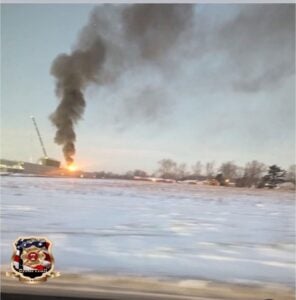
 The bidding war is heating up for those interested in buying Ascent Resources, a privately held company focused 100% on the Ohio Utica Shale. Ascent is Ohio’s largest natural gas producer and the 8th largest natural gas producer in the U.S. Kimmeridge Energy, a private investment firm focused on the energy sector (sometimes called an “activist investor” and/or corporate raider), has put an offer on the table to buy out and take over Ascent: $6 billion. This is the first hard number we’ve seen since the whole bidding war began last week.
  Earlier this year, Houston-based EOG Resources acquired Encino Acquisition Partners for $5.6 billion, establishing the Utica Shale as a “third foundational play” alongside its Permian and Eagle Ford assets (see
  Epsilon Energy, a relatively small company, used to concentrate most of its effort on developing Marcellus Shale wells. However, over the past few years, the company has expanded into other plays and now owns assets in the Anadarko (Oklahoma), the Permian (Texas), the Powder River Basin (Wyoming), and the Western Canadian Sedimentary Basin (in Alberta, Canada). Epsilon typically does not do its own drilling. It joint venture partners with (gives money to) other companies, like Expand Energy in the Marcellus, and the other company does the drilling. Epsilon announced yesterday that it has sold its subsidiary that owned the Oklahoma assets for $2.5 million to an undisclosed private buyer.
  We’ll open this post with this statement: There are no active rumors (that we are aware of) that Permian/Anadarko/Marcellus driller Coterra Energy is considering a merger with Permian/Anadarko/Monteny driller Ovintiv (formerly Encana). We did spot a post by Rystad Energy analysts who theorize that both companies (peers) would make a great combined company. The comments are part of a post titled “US shale braces for next consolidation wave as smaller players seek scale.” Rystad’s theory is that we will soon see smaller independents begin to merge to defend against the recent merger mania by larger companies, including ExxonMobil, Diamondback, Occidental, and ConocoPhillips.
  Antero Resources, the country’s fifth-largest natural gas producer and largest producer in West Virginia, is growing its WV operations. This morning, the company announced a deal to buy privately held WV driller and midstreamer HG Energy II for a combined (upstream & midstream) $3.9 billion. The deal will add a massive 385,000 net acres to Antero’s existing ~475,000 net core Marcellus acreage position, bringing with it another 850 MMcfe/d in production. The upstream part of the deal will fetch $2.8 billion, while the midstream will get $1.1 billion. HG Energy is a West Virginia corporation with its headquarters office located in Parkersburg.