
Antero Resources | Ascent Resources | CNX Resources | Energy Companies | EQT Corp | Greene County (PA) | Harrison County | HG Energy | Jefferson County (OH) | Lewis County | Lycoming County | Ohio | Pennsylvania | Repsol | Seneca Resources | Tioga County (PA) | Washington County | Weekly Permits | West Virginia
21 New Shale Well Permits Issued for PA-OH-WV Jan 5 – 11
 A return to normalcy last week for permits issued to drill new shale wells in the Marcellus/Utica. Two weeks ago, we reported that just one new permit was issued (see M-U Issues Just One New Permit Last Week, Dec 29 – Jan 4). As promised, we double-checked to be sure there wasn’t a lag in posting permits by the various environmental agencies. There were no new permits (except the one) for two weeks ago. As for last week, Jan. 5 – 11, Pennsylvania issued 12 new permits, Ohio issued 2, and West Virginia issued 7. Among the drillers receiving new permits last week: Antero, Ascent, CNX, EQT, HG Energy, Repsol, and Seneca Resources. Read More “21 New Shale Well Permits Issued for PA-OH-WV Jan 5 – 11”
 One of the significant stories of 2024 in the Ohio Utica was about Austin Master Services (AMS), a radiological waste management solutions company in Martins Ferry, Ohio, that processes and transports fracking waste for disposal. AMS ran into trouble when it ran out of money. The Martins Ferry facility in Belmont County, where waste is temporarily stored, had vastly exceeded its permitted limit of 600 tons (storing over 10,000 tons), resulting in a permit violation. The Ohio Attorney General’s office filed a lawsuit against the company in March 2024 to compel compliance and require the company to clean up the facility. After the company didn’t perform, the Ohio Department of Natural Resources (ODNR) stepped in to handle the cleanup (see
  In December, MDN brought you the news that Antero Resources, the country’s fifth-largest natural gas producer and largest producer in West Virginia, had cut a deal to buy WV driller and midstreamer HG Energy II for a combined (upstream & midstream) $3.9 billion (see
  In August, the parents of four children under the age of 18 (from three families) filed a lawsuit on their kids’ behalf against EQT subsidiaries EQT Production Company and EQT XL Midstream Operating, claiming that emissions from a nearby compressor station and nearby shale wells operated by EQT have led to severe health-related problems for the kids (see
 The bidding war for Ascent Resources continues and gets more complex. Law firm Kirkland & Ellis has been drawn into a dispute between Ascent Resources investors and the private equity firm Energy & Minerals Group (EMG). Mason Capital Management is questioning Kirkland & Ellis’s role representing the Ascent board while also advising EMG in its legal fight with the Abu Dhabi Investment Council. The dispute concerns EMG’s plan to put Ascent into a “continuation vehicle,” which Mason Capital and other investors have opposed. Other companies have since jumped in to make bids to take over Ascent.
  Yesterday, the Ohio Oil & Gas Land Management Commission (OGLMC) met in a public forum in Columbus and voted to open another 6,570 acres of state-owned wildlife land (in Belmont and Harrison counties) to allow bids to frack under (not on top of) those areas. The Commission also awarded a contract to Grenadier Energy to drill under another wildlife area in Carroll County, 172 acres of the Leesville Wildlife Area. The state is getting an amazing $6,000 signing bonus, equaling $1.03 million, plus big royalties!
  The current (until this week) Chief Operating Officer (COO) of major Marcellus/Utica driller Seneca Resources (a subsidiary of National Fuel Gas Company) is leaving not only Seneca but also the country to become the Chief Executive Officer (CEO) of Australian driller Tamboran Resources Corporation.
  In 2015, a group of landowners in northeastern Pennsylvania who had leased their land for fracking filed a lawsuit against Chesapeake Energy, Anadarko, Statoil (now Equinor), Mitsui E&P, and Access Midstream (later bought by Williams), alleging the companies had improperly deducted post-production costs (e.g., gas gathering and transportation expenses) from royalties owed to the landowners in breach of their respective leases. The lawsuit also alleged collusion and conspiracy to defraud the landowners (antitrust violations). The lawsuit was on hold for many years while other lawsuits played out. In 2024, a federal court in Scranton unpaused the lawsuit, and the judge ruled, tossing out the landowners’ royalty claims (see
  We spotted a short article alleging EQT has “abandoned” a shale well in Washington County, PA, and thought it would be a good opportunity to (once again) discuss the misnomer of “abandoned” oil and gas wells in Pennsylvania. Let’s begin with the news as reported…
 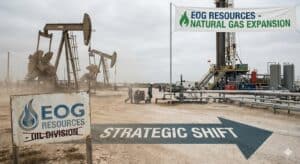 Last year, Houston-based EOG Resources acquired Encino Acquisition Partners for $5.6 billion, establishing the Utica Shale as a “third foundational play” alongside its Permian and Eagle Ford assets (see
  Vickery Energy Partners, LLC, a portfolio company of the private equity firm Quantum Capital Group, announced yesterday that it has closed on the acquisition of Tribune Resources. The transaction includes assets located primarily in Wetzel, Tyler, Harrison, and Doddridge counties, West Virginia, totaling approximately 38,000 net acres and more than 200 million cubic feet equivalent per day (MMcfe/d) of net production.
  Ascent Resources announced yesterday that its CEO, Jeffrey A. Fisher, who is both Chairman of the Board and Chief Executive Officer, will retire from his executive roles effective January 31, 2026. Following his retirement, he will serve as Special Advisor to executive management and the Board through December 31, 2026. The board has appointed Brooks M. Shughart, currently President & CFO, to succeed Fisher as CEO on January 31. While the official announcement does not refer to it, the company is currently in the middle of a bidding war to take it over.
  On December 17, 2025, a casing failure and loss of well control occurred at one of three wells during fracking operations at a Range Resources pad in Washington County, PA. After gas pressure spiked to 2,000 psi, the company stabilized the well and later installed two kill plugs. Despite Range sending an immediate email notification, the Pennsylvania Department of Environmental Protection (DEP) cited Range for failing to use the required website portal for instant alerts. Additionally, the company missed deadlines for a mandatory Area of Review report regarding potential “communication” with other O&G wells and/or water wells in the area.