
Columbiana County | Encino Energy | Energy Companies | Hilcorp Energy | Lease & Royalty Payments | Ohio | Pin Oak Energy Partners
Leasing in Columbiana County Picks Up; Bonuses & Royalties Down
 Once upon a time (roughly 12 years ago), Chesapeake Energy and other shale drillers were leasing property in Columbiana County, OH, in deals that often paid $6,000 per acre for a signing bonus and granted 20% royalties for any oil or gas produced. According to an analysis by the Youngstown Business Journal, those days are long gone. However, many of those original leases have expired, and there is a new push to re-lease in the county, says a Youngstown attorney specializing in oil and gas. Just don’t expect big signing bonuses and royalty rates.
Read More “Leasing in Columbiana County Picks Up; Bonuses & Royalties Down”
 In March, Chesapeake Energy announced a 15-year deal to provide natural gas for LNG exports to Gunvor Singapore Pte (see
  Diversified Energy (formerly Diversified Gas & Oil), with major assets in the Marcellus/Utica region (and other regions, too), owns approximately 8 million acres of leases with 67,000 (mostly) conventional oil and gas wells. The company’s business model is to buy lower-producing wells on the cheap and find ways to make them more productive. For years, we have highlighted Diversified’s “contrarian” business model (
 New shale permits issued for Sep 18 – 24 in the Marcellus/Utica were roughly the same as the prior week. There were 21 new permits issued last week, down 1 from permits issued two weeks ago. Last week’s permit tally included 11 new permits in Pennsylvania, 4 new permits in Ohio, and 6 new permits in West Virginia. Three companies tied for top permittee last week: PennEnergy Resources with 5 permits in Butler County, PA; CNX Resources with 5 permits in Washington County, PA; and Southwestern Energy with 5 permits spread between Wetzel and Ohio counties in WV.
 According to an analysis by S&P Global Commodity Insights, large U.S. shale gas drillers (namely Marcellus/Utica drillers) have hedged (pre-sold at a specific price) an average of 50% of anticipated shale gas production for the second half of 2023. The average price of the hedges is $3.35/Mcf, far above the average NYMEX Henry Hub price that has been bumping along between $2.25 and $2.75. CNX Resources is the top hedger, hedging 80% of its production in 2H23 at $3.04/Mcf.
 An important decision was recently issued in a federal court case (in Ohio) that has the potential to affect landowners and drillers with shale leases throughout the Marcellus/Utica. At least, we believe it has broader implications. The case is known as Grissoms et al. v. Antero Resources Corporation. The case revolves around the issue of a “market enhancement” royalty clause (MEC), which is common in many shale leases throughout the M-U. An MEC lease typically prohibits the deduction of any post-production costs incurred in transforming raw gas into a marketable product. The question is, when is the gas marketable? At the wellhead or later on, after it has been cleaned up? The judge in the Grissoms case ruled in favor of the landowner and said the gas is NOT “marketable” in its raw form at the wellhead.
 Going back at least 10 years, MDN has referred to the way Coterra Energy (then Cabot Oil & Gas) was seemingly able to spin golden profits from the straw of low gas prices in the northeastern PA Marcellus (see
  In August, the Executive Director of the Susquehanna River Basin Commission (SRBC) approved 34 water-use permits for individual shale gas well drilling pads in Bradford, Lycoming, Sullivan, Susquehanna, and Tioga counties. We’re just learning of the action via an official notice published in the Sept. 23 edition of the Pennsylvania Bulletin. The approvals, which are NOT subject to public review according to SRBC regulations, are general water permits. Each site will be required to receive a specific water withdrawal approval at a later date.
 Last week, the Pennsylvania Board of Game Commissioners announced it had cut two different deals with Pennsylvania General Energy (PGE). Both deals involve land swaps with the prospect of new shale drilling by PGE on the way in both Lycoming County and Sullivan County. The Game Commission’s remit is “to protect, propagate, manage and preserve the game or wildlife of Pennsylvania.” Money from shale drilling helps the Game Commission accomplish its objectives. Both deals with PGE will provide the Game Commission with a 16% royalty for any natural gas produced.
 The highly functional and responsible Susquehanna River Basin Commission (SRBC), unlike its completely dysfunctional and irresponsible cousin, the Delaware River Basin Commission (DRBC), continues to support the shale energy industry by approving water withdrawals for responsible and safe shale drilling. Last week, the SRBC approved 22 new water withdrawal requests within the basin, eight of which are for water used in drilling and fracking shale wells in Pennsylvania. The Marcellus/Utica shale drillers receiving a green light from SRBC included BKV (Banpu), Coterra Energy, EQT, Inflection Energy, Repsol (2 requests), Seneca Resources, and S.T.L. Resources.
 Investors in shale oil and gas companies suffered for years with little or no returns for the money they invested. Five of eight large Marcellus/Utica drillers saw their share prices decrease by an astonishing 85% or more from 2008 to 2019 (see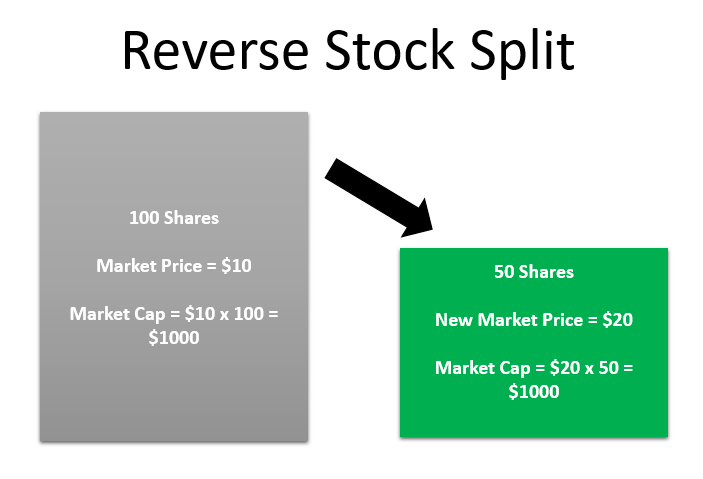

 In early August, MDN told you about trouble brewing along the Gulf Coast between Venture Global LNG and its biggest customers: BP, Shell, Edison International (an Italian utility company), Repsol, and GALP Energia (see