
International LNG Prices Rise Amid Strait of Hormuz Closure
 Following the February 28 closure of the Strait of Hormuz, global and U.S. natural gas prices have sharply diverged. The shutdown halted roughly 20% of global LNG supplies, primarily from Qatar, forcing Asian and European buyers to scramble for replacement cargoes. Consequently, European TTF and Asian JKM benchmark prices surged 35% ($14.80/MMBtu) and 51% ($16.02/MMBtu), respectively. In stark contrast, U.S. Henry Hub prices fell 9%. Because U.S. LNG export terminals are already operating at near-maximum capacity, producers cannot significantly increase exports to capture these high global prices. This leaves ample gas domestically, insulating the U.S. market from international price volatility. Read More “International LNG Prices Rise Amid Strait of Hormuz Closure”
 You’ve seen the headlines and maybe read the news that “Qatar supplies 20 percent of the world’s LNG.” Iran bombed Qatar’s LNG export facility in early March and took it offline. The world press had a stroke, predicting a natural gas Armageddon without 20% of LNG coming from Qatar. But what’s this? U.S. LNG exporters “have so far offset the drop in shipments from Qatar following Iranian attacks on its facilities” and the closure of Hormuz. We’ve been able to make up for the lost exports from Qatar.
  On Monday, President Donald Trump invoked the Defense Production Act (DPA) to channel federal funding toward domestic energy projects, specifically targeting liquefied natural gas (LNG), petroleum, coal power, and grid infrastructure. Empowering the Energy Department to bypass regulatory and financial hurdles, the move aims to curb rising electricity and gasoline costs ahead of the midterm elections while meeting surging power demands from the AI industry.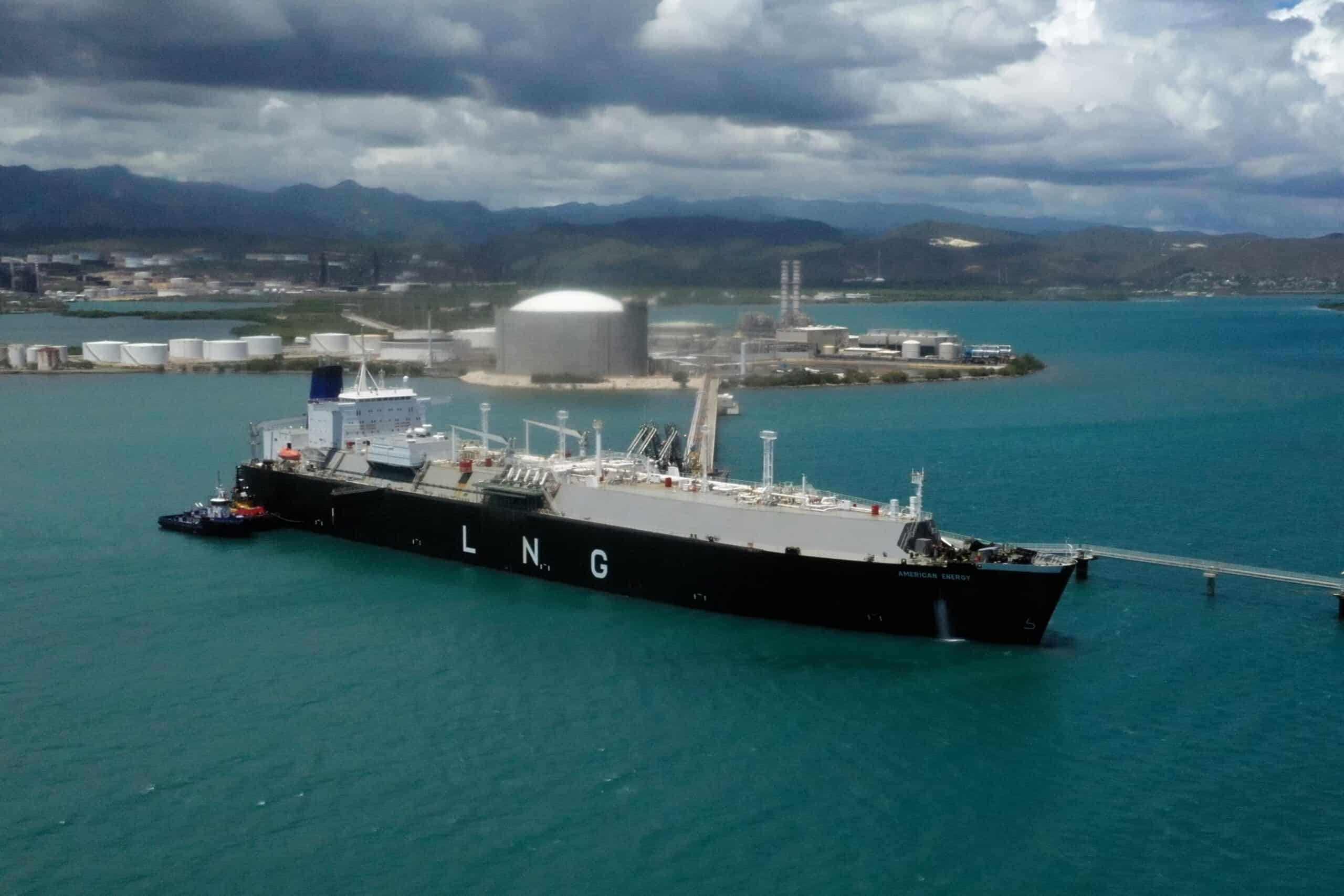
 The U.S. Energy Information Administration (EIA) forecasts U.S. natural gas net exports will keep rising through 2027, driven by expanding LNG capacity and stronger pipeline shipments to Mexico. Net exports are projected to reach 18.7 Bcf/d in 2026 and 20.5 Bcf/d in 2027. LNG exports should average 17.0 Bcf/d in 2026, then climb again in 2027 as new projects, including Corpus Christi, Golden Pass, Port Arthur, and Rio Grande, ramp up. Europe remains the leading destination, while Mexico’s power and LNG growth support pipeline demand. Imports stay minimal, and reduced Canadian imports reflect new Canadian LNG projects and rising Appalachian production serving Northeast markets.
  The Philadelphia Gas Commission postponed a vote on Philadelphia Gas Works’ (PGW) $182 million proposal to replace and expand its natural gas liquefier (LNG plant) in Port Richmond. The commission’s staff and the Public Advocate recommended rejecting the project, arguing it was oversized and could burden customers with unnecessary debt. They also cited incomplete plant and project designs. PGW argued the upgrade is crucial for safety and affordability, preventing potential harm to customers during cold winters and avoiding the need to truck in liquefied natural gas.
 Venture Global (VG) and Edison S.p.A., an Italian electric utility company headquartered in Milan, have signed a commercial agreement to fully resolve their pending arbitration regarding the Calcasieu Pass LNG project. Expected to conclude by the end of Q2 2026, the settlement terminates all legal disputes between the companies. As part of the deal, VG will deliver additional LNG cargoes to Europe, specifically targeting the Italian market through the Adriatic LNG Terminal starting in May 2026. This agreement strengthens their long-term partnership and enhances Italy’s energy security amidst global geopolitical disruptions.
  Morningstar DBRS has published an interesting commentary that will be of interest to MDN readers and those with an interest in LNG: “From Risk to Relevance: Middle East Disruption Elevates North American LNG.” The escalating conflict in the Middle East has disrupted global LNG supply, damaged infrastructure in Qatar, and constrained shipping. These developments have heightened buyer concerns around supply security and transit risk, prompting a reassessment of LNG sourcing strategies. As a result, North American LNG has gained strategic relevance (preference), supported by jurisdictional stability and expanding export capacity.
  In December, representatives from Chesapeake Utilities and BHE GT&S, a subsidiary of Berkshire Hathaway Energy, presented a proposal to the Port Canaveral Authority to construct a new LNG liquefaction facility in Brevard County, FL (see
  This one makes us white-hot with anger. Our “cousins” to the north, who have bashed fossil energy repeatedly and have disrespected the Trump administration on numerous occasions, now want to export more of their natural gas to the U.S. so we can use it in our LNG exports to other countries. NO THANKS. You can keep your gas and stick it where the sun doesn’t shine. We have PLENTY of our own gas, and we could extract even more (from the Marcellus/Utica, other plays, too) if we had available pipelines to flow it. We don’t need or want Canadian gas that would displace existing molecules in our limited pipelines.