Over $100B and 12 AI Data Centers Announced – Find Out Where Oct 16
 MDN is pleased to be a media sponsor for the upcoming AI Energy 2 Conference being held in Pittsburgh on October 16th. Over $100 billion and 12 AI data centers have been announced to date. Attend this event to find out where. The AI Energy 2 Conference will answer these four critical questions: (1) What AI data centers are active, moving dirt? (2) What companies are involved in active data centers? (3) How does my company become involved in these active data centers? (4) Where and how do my employees get training so my company can take advantage of these opportunities? AI data centers and natural gas are tied together. Data centers are huge new customers for Marcellus/Utica gas. This conference will help you understand the connection and how to leverage it. Read More “Over $100B and 12 AI Data Centers Announced – Find Out Where Oct 16”
 Patrick Morrisey served as the 34th attorney general of West Virginia from 2013 to 2025. Last November, he was elected as the state’s 37th governor, assuming office in January. Morrisey has been an unabashed champion for fossil fuels since taking office. He’s a visionary, charting out the future of the state’s economy. Gov. Morrisey cast a vision for the future of the state earlier this month at the West Virginia Chamber of Commerce Annual Meeting and Business Summit (see
  Pennsylvania Governor Josh Shapiro was one of the speakers at yesterday’s AI Horizons Pittsburgh Summit in Pittsburgh. He was there speaking out of both sides of his mouth, as he so often does. Out of one side of his mouth, he claimed he wants PA to use “as much clean energy as possible,” meaning unreliable renewables. Out of the other side, he said converting old coal plants to use natural gas “is environmentally sustainable.” Yet he continues to seek to levy a carbon tax on natural gas-fired power plants via the Regional Greenhouse Gas Initiative (RGGI).
  Yesterday, the U.S. Environmental Protection Agency (EPA) announced new guidance (a relaxation of regulations) to streamline its New Source Review (NSR) permitting process. The relaxed regs are designed to accelerate the construction of essential power generation and manufacturing facilities. EPA’s action provides flexibility to begin certain building activities that are NOT related to air emissions, such as installing cement pads, before obtaining a Clean Air Act (CAA) construction permit. More common-sense solutions from the Trump administration to address a completely screwed up regulatory state.
  There is a disagreement brewing between those who operate the PJM Interconnection power grid and Big Tech, including Amazon, Google, Microsoft, and others, regarding the issue of adding data centers to the PJM grid. PJM recently proposed a fast-track stakeholder process to develop rules by the end of the year for interconnecting data centers to its system while ensuring the region has enough power supplies. The proposal would treat new data centers over 50 megawatts (MW) as “non-capacity-backed load” (or NCBL). Under the proposal, PJM could curtail (reduce or cut off) power deliveries to data centers with NCBL status before the grid operator moves to pre-emergency load curtailments for other electricity users. Big Tech doesn’t like it one little bit.
  We’re still waiting for the Federal Energy Regulatory Commission (FERC) to gain two new members, which would give the commission its full complement of five members (with three of them Republicans). In June, President Trump nominated Laura Swett of Vison & Elkins to replace Republican Mark Christie, who had been elevated to Chairman under Trump (see
  We’re not sure how to feel about this story. Outrage. Relief. Sarcasm. Befuddlement. All of those emotions swirl in our heads. For years, we have chronicled the radical/left position of former Attorney General (and now Governor) Maura Healey in Massachusetts with her opposition to pipelines and natural gas energy (here’s one of many examples:
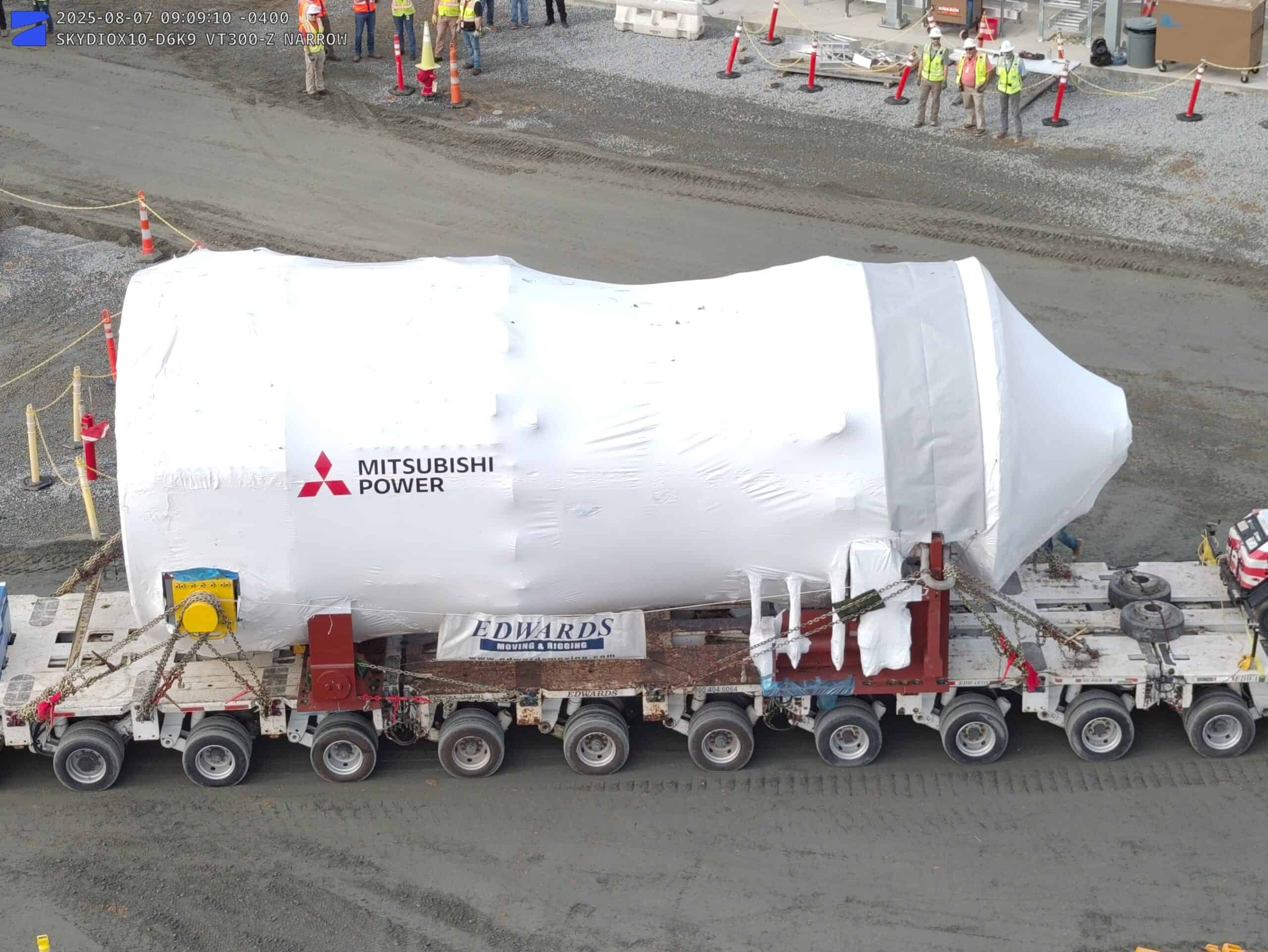
  Hardly a day goes by without a story about AI data centers here on MDN. Why? Data centers use electricity either from the local grid or generate it themselves on-site. Either way, the electricity almost always comes from gas-fired power plants. Increasingly, the data centers themselves are opting to host their own gas-fired power plants on-site. Whether the power is coming from the grid or on-site, M-U molecules power it. But there’s a problem for data centers with on-site gas needs: Either there isn’t a pipeline (yet) to the site, or if there is a pipeline, it’s not big enough to flow the gas required. A company in Houston, Texas, has developed a brilliant solution for data centers that require gas and are ready to build now…
 New life is being breathed into old, shuttered coal-fired power plants. That’s the focus of an article appearing on the Fortune magazine website. The poster child for converting old coal-fired plants is none other than the former Homer City Generating Station in Indiana County, PA. It will be transformed into a more than 3,200-acre natural gas-powered data center campus, designed to meet the growing demand for artificial intelligence (AI) and high-performance computing (HPC). The new gas-fired plant in Homer City will be THE LARGEST gas-fired power plant in the country, capable of producing up to 4.5 gigawatts (4,500 MW) of electricity (see
  Over the past year, gas utilities have increasingly targeted data centers as customers for on-site power generation, driven by rising demand from hyperscale, leased, and crypto-mining facilities, particularly in Ohio, Pennsylvania, and Texas. Companies, including Atmos Energy, Chesapeake Utilities, National Fuel Gas, and Enbridge, have signed agreements to supply gas or build pipelines to co-located gas-fired or converted coal-to-gas plants. Utilities view medium-sized data centers as a “sweet spot,” but face hurdles such as limited pipeline capacity, equipment backlogs, and coordination challenges across the gas value chain. Smaller turbines and fuel cells are increasingly used, though supply constraints remain a concern.
 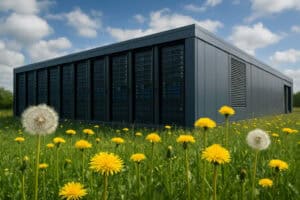 Data center projects are sprouting like dandelions in Pennsylvania. Along with these data centers come work and business opportunities for the oil and gas industry and related industries, such as utilities. Here’s an example. Essential Utilities yesterday announced its subsidiaries will invest $26 million in a major data center project in Greene County, PA. Essential is one of the largest publicly traded water, wastewater, and natural gas providers in the U.S., serving approximately 5 million people across 9 states under the Aqua and Peoples brands. Both brands are involved in this announcement.
  It’s hard to believe we’re still talking about (and waiting for) the Pennsylvania Supreme Court to weigh in on whether or not it was legal for former Governor Tom Wolf to unilaterally sentence all Pennsylvanians to the Regional Greenhouse Gas Initiative (RGGI) carbon tax scheme—with no vote by the legislature. The Supremes collected briefs on RGGI a whole year ago (see
  A Reuters reporter/commentator published an article that chronicles (with lots of facts, statistics, and charts) the coming rapid buildout of both gas-fired power generation and LNG exports in the U.S. He pitches the situation as a coming “clash of the Titans” (our words, but his sentiment). The author believes that the buildout of new gas-fired plants will sop up molecules that would have gone to LNG export plants, setting up a price war for those molecules. (One could only hope!) We have a different perspective.