
PA Radicals Sue to Stop $1.1B in DCNR Funding from Gas Leases
 In June, radical anti-drillers from the Pennsylvania Environmental Defense Foundation won a case at the PA Supreme Court by the skin of their teeth (PA Supreme Court Hands Antis Partial Victory re State Land Drilling). The case dealt with the narrow issue of how PA can spend revenue raised by leasing and allowing drilling for oil and gas under state-owned land. A divided court ruled that money from royalties must be used only for Big Green causes, and cannot be used even to fund operations at the Dept. of Conservation and Natural Resources (DCNR). The decision was based, in part, on PA’s so-called Environmental Rights Amendment, “guaranteeing” the “right” to “clean air, pure water, and to the preservation of the natural, scenic, historic and esthetic values of the environment”–without defining how those “rights” are to be administered. The radical lawyer who won the case then attempted to use that narrow decision–in a case about funding the DCNR–to make the preposterous claim that PA’s state budget, as drafted, is “unconstitutional” (see Lawyer Says PA Budget Unconstitutional Based on Enviro Rights Law). The same radicals are back making the same wild claims–putting $1.1 billion in DCNR funding at risk…
Read More “PA Radicals Sue to Stop $1.1B in DCNR Funding from Gas Leases”
 Summit Midstream Partners was drilling underneath a road and a creek in Belmont County, OH on Oct. 19 to install a pipeline when they experienced an “inadvertent return” (i.e. leak) of drilling mud into the creek. If you’ve read MDN for any length of time, you will have read about other such instances by other companies. Because we constantly have new readers, we post the following explanation, which will sound like a broken record for long-time readers: Drilling mud is bentonite, a form of non-toxic clay also used to make kitty litter, cosmetics and toothpaste–among many, many other consumer products. The only threat posed by a spill of bentonite is that enough of it spills to clog the gills of fish or smother little critters like salamanders. That’s it. Think about taking half a dozen bags of kitty litter to a creek nearby and dumping them all in. It’s nothing. No pollution. We’d certainly rather not have any such accidents–but the reality is, they sometimes happen. That’s why non-toxic bentonite is used. The Ohio EPA stepped in and cited/fined Summit for the spill. Fair enough. But that’s not what this story is about. This story is about a family that lives near the spill. They hated Summit’s “loud” drilling before the spill, and now are using Summit’s spill and cleanup work (some of it happening in their front yard) as an excuse to sue Summit, hoping to score big bucks. Good luck with that…
 Lancaster Farmland Trust, a leftist group that seeks to stop all development of land in and around Lancaster County, PA, sued a farmer and Atlantic Sunrise Pipeline after the Lancaster farmer signed an easement on a piddly 1.5 acres of land. The Trust claimed according to the terms of the deed the landowner didn’t have the right to sign the easement (see
 The United States Supreme Court has refused to hear an appeal of an important West Virginia case, which means the current ruling stands that allows EQT and other drillers to deduct “reasonable” post-production expenses from landowner royalty checks. It is a victory for drillers and a blow to some landowners. How did we get here? A brief history: Last December MDN reported on the huge WV Supreme Court decision against EQT that disallows EQT from deducting post-production expenses from royalty checks, even with signed contracts in place (see
  PennEast Pipeline is a $1 billion, 120-mile primarily 36-inch natural gas pipeline that will stretch from Dallas (Luzerne County), PA to Transco’s pipeline interconnection near Pennington (Mercer County), NJ. The pipeline is an important conduit to move gas from the prolific gas fields of northeastern PA to markets in southeast PA and New Jersey. From the beginning of the project there have been a collection of so-called environmental organizations opposing it–including THE Delaware Riverkeeper, NJ Sierra Club, and the NJ Conservation Foundation. All radical groups, far far out of the mainstream. They also share something else besides an irrational hatred of fossil fuels–they’re part of a conspiracy to defeat PennEast funded by the William Penn Foundation. William Penn funds the aforementioned groups, as well as buying their own “media” in news outlets by funding StateImpact Pennsylvania and a news site called NJ Spotlight. William Penn sits in the background, pretending to be apart and aloof (to protect their IRS non-profit status) while pulling the strings and directing the opposition. Why the IRS turns a blind eye, we can’t say. At any rate, William Penn pulled another string this week–prompting their serfs at the NJ Conservation Foundation to file a lawsuit against the Federal Energy Regulatory Commission (FERC). The cockamamie claim is that IF FERC approves PennEast, the pipeline will then be able to invoke eminent domain to allow it to enter properties and complete route mapping for the pipeline. Right now some hardened antis who live along the route refuse to allow PennEast to step one foot on their property. So NJ Conservation Foundation has filed a lawsuit (copy below) to prevent FERC from issuing a final certificate for PennEast because PennEast will then gain the right of eminent domain. The lawsuit claims PennEast using eminent domain to build the pipeline would be an improper “taking” of private property under the Constitution. The only problem (for the William Penn-backed NJ Conservation Foundation) is that no “taking” has actually happened until FERC approves the project. That is, the lawsuit anticipates a harm that hasn’t happened. We expect that little fact will not escape the judge’s notice and that the lawsuit will be tossed in short order…
 A month ago MDN brought you the news that the U.S. District Court in Akron, OH had made a major ruling that affects all Utica landowners and drillers (see
  Who says you can’t buy a court decision–at least a temporary one? Back in May MDN told you about the antis running the City of Green, Ohio hellbent on stopping the NEXUS Pipeline, all of it (see
  This is getting pretty old, fast. Two weeks ago MDN told you about a lawsuit that finally got it’s day in court–a case brought by a Wayne County, PA landowner against the Delaware River Basin Commission (DRBC) over its ongoing, 10+ year ban on fracking in the Delaware River Basin (see
 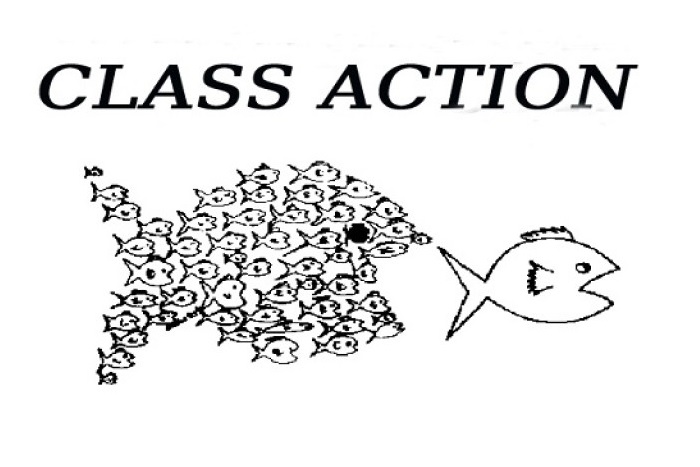 A class action lawsuit was filed last week by 12 New England power customers who claim that two New England utility companies–Eversource and Avangrid–intentionally manipulated the flow of gas along the Algonquin natural gas pipeline by placing and later withdrawing orders, in order to spike the cost of gas which then spiked the cost of electricity generated by the resulting higher cost gas. It is a convoluted, cockamamie charge first brought by the radical antis at the Environmental Defense Fund (see
  Last week lawyers for National Fuel Gas Company and the New York Dept. of Environmental Conservation (DEC) were in federal court doing battle over the DEC’s arbitrary and capricious rejection of an important Marcellus pipeline project. Three years ago NFG proposed and filed to build the Northern Access Pipeline project–a $455 million project includes building 97 miles of new pipeline along a power line corridor from northwestern Pennsylvania up to Erie County, NY. The project also calls for 3 miles of new pipeline further up, in Niagara County, along with a new compressor station in the Town of Pendleton. The Federal Energy Regulatory Commission (FERC) granted final approval for the project in February of this year (see
  Sunoco Logistics Partners (part of and owned by Energy Transfer Partners) has had its fair share of “inadvertent returns” (i.e. leaks of drilling mud) while drilling underground for the Mariner East 2 pipeline project that stretches across the width of Pennsylvania. Some would say Sunoco has had more than its fair share of mud spills. Bear in mind that drilling mud is otherwise known as bentonite–the nontoxic clay mixture used to cool the drill bit as it chews away underground. Bentonite is the same chemical compound used to make kitty litter, toothpaste and all sorts of cosmetics. It’s totally safe for the environment–unless you spill a lot of it and smother little critters like salamanders and fishies. When installing a pipeline, you don’t just dig a trench across a roadway or dam up a creek or river. Instead, you use horizontal directional drilling (HDD) to dig under it. ME2 is some 350 miles long, so there are a number of places where HDD must be used. There are always small drilling mud spills, or inadvertent returns, associated with HDD work. However, Sunoco has had, at last count, 96 such instances (see the list below). Antis seek to make the most of each and everyone spill episode. The most recent such spill is associated with a sink hole believe caused by HDD drilling in Delaware County last week (see
  The uber-litigious Sierra Club and it’s vaunted stable of attorneys have been caught with their pants down–legally speaking. One of the (many) pipelines the Clubbers oppose is NEXUS, a $2 billion, 255-mile interstate pipeline that will run from Ohio through Michigan and eventually to the Dawn Hub in Ontario, Canada. NEXUS got final approval for the project from FERC in August (see
  A journey which began for Pennsylvania landowners in Butler County, PA in July 2015 is nearing an end. Two Butler County, PA landowners with a combined 245.7 acres of land leased to XTO Energy sued XTO in 2015 claiming that XTO is breaking the lease agreement by paying royalties below 1/8 of what XTO receives in revenue for the gas (see
  It’s “game on” between the Federal Energy Regulatory Commission (FERC) and the New York Dept. of Environmental Conservation (DEC). The DEC had arbitrarily, after more than one year of review, ruled against issuing a federal water crossing permit for a tiny 7.8 mile pipeline Millennium needs to build from its main pipeline to an electric generating plant under construction in Orange County. The power plant is due to be completed in early 2018, and needs a fuel supply. In a historic decision, FERC overruled NY DEC in September (see