
NextEra Energy Buying Shale Investor Caliber Resource Partners
 NextEra Energy, headquartered in Juno Beach, Florida, is gobbling up companies left and right. Earlier this week, NextEra announced it is buying out and merging with a fellow utility giant, Dominion Energy (see NextEra Energy Buying, Merging with Dominion Energy for $66 Billion). That deal is largely about supplying data centers with power from gas-fired power plants. And now, according to sources whispering to Reuters, NextEra is buying out and merging with oil and gas investment firm Caliber Resource Partners for $1.3 billion. Read More “NextEra Energy Buying Shale Investor Caliber Resource Partners”
 AlphaGen (Alpha Generation LLC) is one of the largest independent power producers in the United States, majority-owned by ArcLight Capital Partners. It owns and operates a massive portfolio of critical power infrastructure—including natural gas-fired and floating power stations—to meet rising energy demand driven by grid electrification and data centers. Yesterday, AlphaGen and ArcLight announced they have acquired Brandywine Power, a 250 MW natural gas combined-cycle generating facility in Prince George’s County, Maryland, from Onward Energy Holdings. The plant is fed by Marcellus/Utica molecules.
  This is HUGE and breaking news… NextEra Energy and Dominion Energy announced this morning that they will combine in an all-stock transaction, creating the world’s largest regulated electric utility business serving approximately 10 million customer accounts across Florida, Virginia, North Carolina, and South Carolina. The combined entity, operating under the NextEra Energy name, will be over 80% regulated and benefit from enhanced scale, efficiency, and diversified growth. How much is NextEra paying for Dominion?
  The Rover Pipeline is a 711-mile, $6.3 billion natural gas transmission pipeline operated by Energy Transfer, transporting up to 3.25 billion cubic feet per day (Bcf/d) of Marcellus and Utica Shale gas. It connects supply areas in West Virginia, Pennsylvania, and Ohio to markets in the Midwest, Great Lakes, and Canada. As of April 29, 2026, Blackstone (via its Energy Transition Partners funds) has sold its entire 32.4% ownership stake in Rover to Ares Management. Blackstone originally acquired its ownership stake in 2017 to fund the construction of the pipeline.
  In March, Hull Street Energy (HSE) entered an agreement to acquire two peaking power plants from Rockland Capital, LP, significantly expanding its Milepost Power portfolio (see
 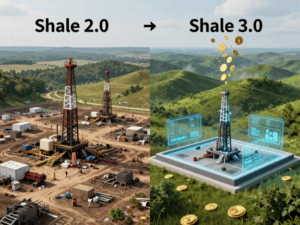 On February 2, 2026, Devon Energy and Coterra Energy announced a landmark $58 billion all-stock merger, creating a “Super-Independent” energy producer targeting the AI-driven surge in power demand (see
  In July 2024, EQT Corporation closed on a $5.4 billion deal to buy back the midstream division it had spun off in 2018 (see
  Norway’s Equinor (formerly Statoil) is expanding its U.S. shale gas footprint, specifically targeting the Marcellus Shale to increase “portfolio longevity.” This strategic move is part of a broader global reshuffling in which Equinor is divesting from mature assets in regions such as Azerbaijan and Nigeria to reinvest in high-growth areas. The U.S. remains Equinor’s largest international development hub, and the company aims to boost non-Norwegian production to 900,000 barrels per day by 2030. By focusing on non-operated positions in Appalachia and the Gulf of Mexico, Equinor is “high-grading” its portfolio to relocate capital toward more sustainable, long-term production assets.