
The Future of Ethane Exports from Marcus Hook, PA
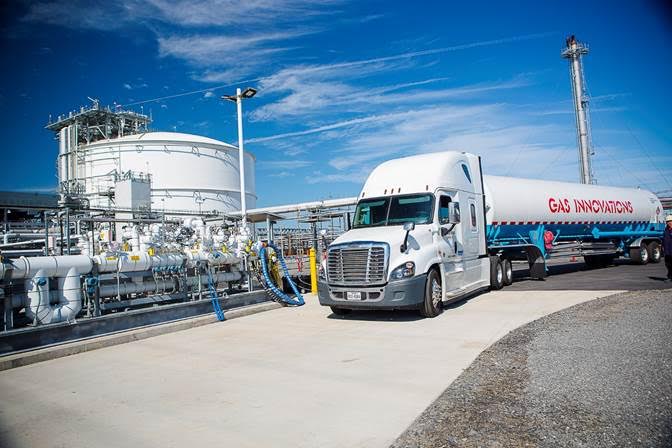 Ethane exports came from nowhere, dead zero, three years ago and took off like gangbusters until mid-last year, in no small part because of Marcellus/Utica ethane exports coming from the Marcus Hook refinery near Philadelphia. But part of the way through last year those exports began to decline–and not because of lack of ethane flowing through the Mariner East pipelines. Nope. They declined due to lack of demand.
Read More “The Future of Ethane Exports from Marcus Hook, PA”
 The U.S. Energy Information Administration recently published its Annual Energy Outlook for 2019. Among the numbers EIA released are predictions about how much natural gas liquids (NGLs) the U.S. will produce between 2018 and 2050. EIA says production will go up 32% over that period, to 5.8 million barrels per day (b/d). Guess where most of that increase will come?
 A couple of developments to share with you about the Mariner East 1 NGL pipeline which has been completely shut down since Jan. 21 when a new sinkhole appeared in Chester County exposing a few feet of the bare pipe (see
  The Independent Oil & Gas Association of West Virginia (IOGAWV) held its annual winter meeting on Tuesday and Wednesday. There was a LOT of talk of WV nabbing the much-talked-about multi-billion dollar NGL storage hub project.
 According to RBN Energy, “U.S. production of natural gas liquids is projected to increase by 17% this year, and by another 10% in 2020.” NGLs cover a variety of hydrocarbons. Two NGLs, propane and butane, are further classified as LPG–or liquefied petroleum gas. Of the four “smaller” LPG export facilities here in the U.S., two-thirds of all exported LPGs last year came from one–Energy Transfer’s Marcus Hook refinery near Philadelphia.
 West Virginia is in desperate need of jobs following decades of job losses in the coal industry (from 70,000 jobs in the 1970s to 13,000 today). WV has another great natural resource: natural gas. As coal was to WV, natgas now is.
 The Mariner East 1 pipeline sprung a small leak and spilled 20 barrels (~840 gallons) of ethane and propane in Berks County, near Philadelphia, on April 1 (see
  Last week MDN friend and ace reporter Rick Stouffer from Kallanish Energy hosted a one-day event in Pittsburgh called “Kallanish New Horizons: Appalachin Basin.” One of the speakers was Denise Brinley, senior energy advisor for the Pennsylvania Department of Community & Economic Development. She addressed the topic of an NGL (ethane) storage hub. We’ve written a number of posts on what was originally billed as a $10 billion project, to be located somewhere in the Marcellus/Utica region–most likely West Virginia (see
  Continuing on the topic of the NGL storage hub that is today’s lead story (see Appalachian NGL Storage Hub Enters Phase 2 – Built in 2-3 Years?), a number of politicians previously lobbied the U.S. Department of Energy to study the issue of if, and where, a natural gas liquids (NGL) storage hub should be located. Namely, West Virginia’s two U.S. Senators, Shelly Moore Capito and Joe Manchin, were behind the request for a DOE study (see
  We spotted a notice from Energy Transfer, the company building (via its Sunoco Logistics Partners unit) the Mariner East pipeline projects, that seemed odd to us. It was an open season announcement, a time when companies can “sign on the dotted line” to reserve capacity along any of the three pipelines–Mariner East 1 (ME1), Mariner East 2 (ME2), or Mariner East 2X (ME2X). ME1, a repurposed gasoline pipeline built in the 1930s, has been up and running since 2016. ME2 & 2X are due to go online any day now. ME2 and 2X (built side-by-side) are about two years behind schedule. Normally a pipeline company won’t dig one shovelful of dirt or lay an inch of pipeline until/unless customers have already signed up during an open season. And yes, all three pipelines have had open seasons and have signed-up customers eager to use them. So what’s with this new open season? We think we know.
 We pride ourselves on keeping close tabs on the market. Yet somehow the construction of a smallish NGL (natural gas liquids) pipeline gathering system in western PA slipped by us. The pipeline is now built and the builder, Stonehenge Energy Resources, is putting the “finishing touches” on the Stonehenge Laurel – Clarion Pipeline System before it goes live. The pipeline will connect to Laurel Mountain Energy’s wells in Clarion County and collect up the NGLs (things like ethane and propane) from those wells and flow it neighboring Butler County where the NGLs will hitch a ride via Energy Transfer’s Revolution Pipeline system to Washington County, PA where they will get cleaned up and separated.
 Yesterday the muckety-mucks from Energy Transfer (ET) held a conference call with Wall Street analysts to discuss the company’s third quarter 2018 update. Inevitably on such calls there’s talk about what’s coming up in addition to what happened in the previous quarter. ET is a big midstream (pipeline) company. Among their projects are the mighty Rover Pipeline, which reaches from Pennsylvania, West Virgina, and eastern Ohio all the way into Michigan, and the Mariner East 2 Pipeline, which runs from eastern Ohio all the way through Pennsylvania to the Philadelphia area. Rover flows natural gas, ME2 (and ME2X) will flow NGLs, mainly ethane and propane. According to Tom Long, ET’s Chief Financial Officer, ME2 will be up and running sometime this quarter. Since the end of this quarter is around Christmastime, we prefer to think of ME2 as a Christmas present for Marcellus/Utica drillers.
 Once again it seems environmentalists in Kentucky have won–stopping yet another NGL (natural gas liquids) pipeline. On Wednesday Kinder Morgan, one of (perhaps the) largest pipeline companies in North America, announced it is canceling plans to convert part of its Tennessee Gas Pipeline (TGP) that currently flows natural gas from the Gulf Coast to the northeast, to reverse the pipeline and flow natural gas liquids (NGLs) from the Marcellus/Utica region to the Gulf Coast. The project, called Utica Marcellus Texas Pipeline (UMTP), would have cost $4 billion. Instead, Kinder says it will still seek to reverse a big portion of TGP, but will instead flow M-U natgas south, instead of NGLs.
 On numerous occasions we’ve pointed out the lunacy of the “keep it in the ground” gang–those who believe we should end the use of all fossil fuels as soon as possible. Why can’t we do it? For many reasons. Here’s just one: petrochemicals. Did you know that all sorts of products you use every day–things like plastics, fertilizers, packaging, clothing, digital devices, medical equipment, detergents and tires–come from oil and gas? Without oil and gas, we’d quickly descend back into the Stone Age, living short, brutish lives. That point was driven home in a new report titled “The Future of Petrochemicals” (full copy below), part of an International Energy Agency (IEA) series that shines a light on “blind spots” in the global energy system.
 Without natural gas, modern life as humans know it would cease. And no, that’s not hyperbole or bluster. And yet, non-thinking anti-fossil fuel protesters refuse to acknowledge that basic truth. We spotted an excellent article in Forbes that outlines the vital importance of shale gas (specifically the ethane that comes as part of shale gas extraction). We love the straightforward simplicity of the article in describing how the shale ecosystem works–and how it touches on virtually every aspect of our modern existence.