
PA DEP Signals Recommendation on Shale Drilling Setbacks by Year End
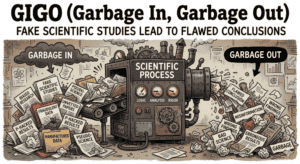 It’s time to make a LOT of noise with the Pennsylvania Department of Environmental Protection (DEP) if you care about Marcellus drilling continuing in the Keystone State. In December, the Pennsylvania Environmental Quality Board (EQB) accepted a petition by radical green groups, including the Clean Air Council and Environmental Integrity Project, to “study” the issue of increasing setbacks for shale drilling so far that it would ban ALL new Marcellus/Utica drilling in the Keystone State, which is no exaggeration (see EQB Votes to Consider Ban on Marcellus Drilling Via Crazy Setbacks). Yesterday, the Shapiro DEP told the EQB it is actively reviewing the rulemaking petition and will have a recommendation on setbacks for the board by the end of this year. Read More “PA DEP Signals Recommendation on Shale Drilling Setbacks by Year End”
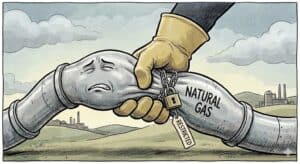 We’ve recently begun to highlight flow restrictions along pipelines that carry Marcellus/Utica molecules. When flows slow or stop (because they can’t reach other markets), the price typically falls because local supply exceeds local demand. In the middle of Winter Storm Fern in January, outages and freeze-offs led to significant stress with production dropping 10-12% due to pipeline and well issues (see
  Wastewater injection wells are an essential, safe, and highly regulated component of Southeast Ohio’s fracking industry. Banning these wells would trigger an economic catastrophe, leading to job losses and reduced public funding, without providing any actual environmental benefits. Yet that’s exactly what the political leaders of Marietta, OH, in collusion with virulent anti-fossil fuel groups, are attempting to do. Opposing injection wells while supporting fracking (as Marietta’s “leaders” are doing) is contradictory, as the two are inseparable for regional energy production and the area’s continued economic stability.
  Wow! What a difference a month makes. The U.S. Energy Information Administration (EIA) issued its latest monthly Short-Term Energy Outlook (STEO) yesterday. The STEO is the agency’s monthly best estimate of where energy prices and production will head over the next 12 months. There was a major revision to the agency’s prediction about the spot price (at the Henry Hub) for natural gas in 2026. Just last month, EIA predicted the HH spot price would average $4.31 per million British thermal units (see
  Yesterday, President Donald Trump announced the construction of a new 168,000 barrels-per-day oil refinery at the Port of Brownsville, Texas, backed by India’s Reliance Industries. Developed by startup America First Refining, this facility marks the first new U.S. refinery in half a century and is specifically designed to process American “light sweet” crude oil from shale plays. Reliance has committed to a 20-year offtake agreement, helping to reduce the U.S. trade deficit with India. While Trump emphasizes the project’s role in boosting energy production and national security amid rising gasoline prices, some industry analysts remain skeptical of the need for additional Gulf Coast capacity.
  Here’s a lawsuit that had (until now) escaped our radar screen. It’s a lawsuit dealing with the issue of post-production deductions. The case is Kirkbride v. Antero Resources Corp. and is being litigated in the U.S. District Court for the Southern District of Ohio. On March 6, 2026, Magistrate Judge Elizabeth Preston Deavers denied a motion to certify the case as a class action. This is a significant development in the ongoing legal friction between Ohio landowners and energy companies over how royalties are calculated.
  Even a leftist liberal putz like Pennsylvania Governor Josh Shapiro can have a good idea every now and again. (Credit where credit is due.) Shapiro is introducing what he calls GRID (Governor’s Responsible Infrastructure Development) standards to incentivize Pennsylvania data center developers to voluntarily adopt higher environmental and transparency benchmarks. In exchange for committing to water conservation, local hiring, and independent power generation, projects can access “Fast Track” permitting to accelerate construction.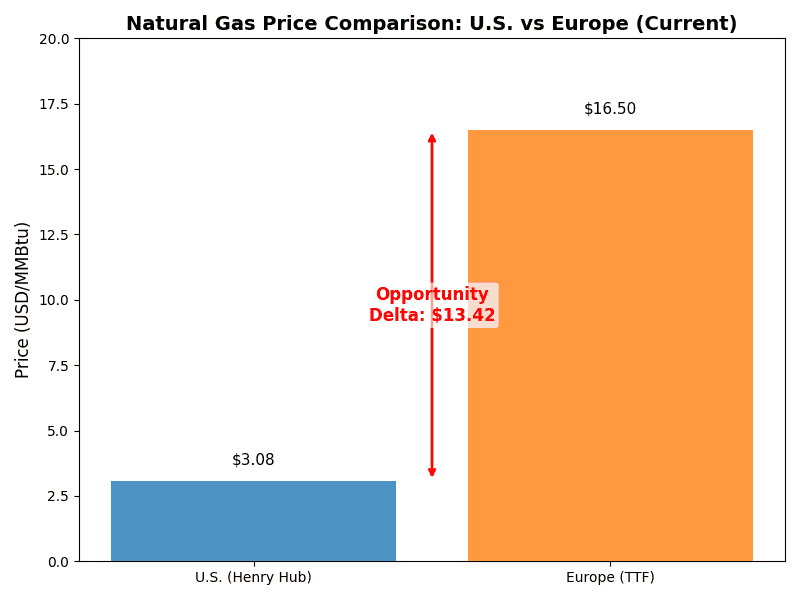

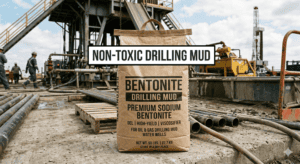 If a tree falls in a forest and no one is around to hear it, does it make a sound? Similarly, if a pipeline being drilled loses 28,500 barrels (1.2 million gallons) of nontoxic drilling mud into an abandoned coal mine void, does it matter? The environmental left is attempting to make a big deal out of MarkWest Liberty Midstream’s drilling project in Washington County, PA, in which the company has, over a series of 19 different episodes, lost a cumulative 28,500 barrels of nontoxic bentonite drilling mud into an old coal mine void as it drilled the Chiarelli to Imperial Pipeline Project, between October 2025 and January 2026. Bentonite is the same stuff used to make kitty litter and toothpaste.
  Thanks to the work of David Hess at the PA Environment Digest Blog in tracking Department of Environmental Protection (DEP) notices published in the Pennsylvania Bulletin, we spotted three new water pipeline projects related to drilling new shale wells in three different northeastern PA counties: Lycoming, Bradford, and Wyoming. Water is used for fracking. New water pipelines mean new fracking is on the way in those locations.
  Just coming to light now, more than a month after it happened, the Pennsylvania Department of Environmental Protection (DEP) is investigating whether there is any connection between a low-level earthquake (“seismic event”) near Murrysville in Westmoreland County, PA, and the Penneco Environmental Solutions LLC Sedat 3A injection well in Plum Borough in Allegheny County. Operators of injection wells in PA are (usually) required to maintain on-site seismometers. On Feb. 7, the seismometer at the Penneco Sedat 3A site registered a “seismic event” about six miles away near Murrysville.
 Hope Gas is a Local Distribution Company (LDC, i.e., utility company) that provides gas service to approximately 140,000 residential, industrial, and commercial customers in 39 West Virginia counties. The company monitors and maintains over 7,000 miles of pipelines that safely deliver West Virginia natural gas to many homes and commercial and industrial sites. In September 2023, Hope Gas asked the West Virginia Public Service Commission for permission to build a new 30-mile pipeline in Monongalia County (see
  A Syracuse University study (full copy below) reveals that conventional oil and gas extraction in Pennsylvania poses a greater long-term threat to stream biodiversity than modern shale fracking. By analyzing over 6,800 aquatic samples, researchers found that legacy infrastructure (old conventional oil and gas wells) is more strongly linked to declining ecosystem health and the loss of sensitive species. While public concern often centers on newer fracking methods, these findings highlight the persistent impact of older, conventional wells. The study, titled “
 Big Solar, as in big solar farms (which are ugly and eat up farmland), can’t exist in a fair and open energy market. It’s too expensive. Big Solar fails unless there are massive taxpayer subsidies—you supporting it with your tax dollars. Nowhere is that more evident than what just happened in Centre County, Pennsylvania. The Centre County government agencies that had worked together for years on plans to buy solar energy are ending the initiative after the company they were working with sought to end the current contract amid a “changing financial landscape.” Taxpayer subsidies disappeared, and so, too, has this project.