
VG & Cheniere Seek to Expand LNG Exports to Leverage War Pricing
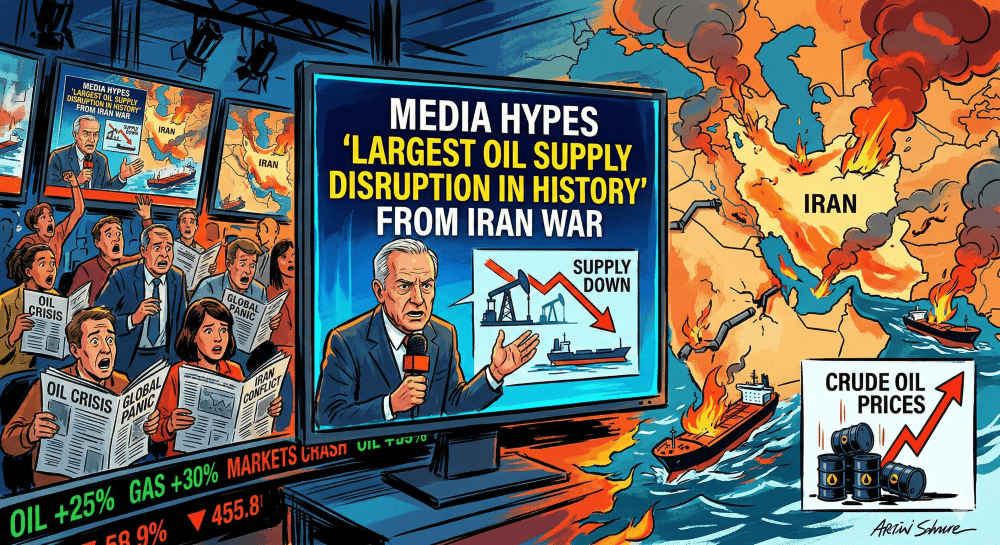
 U.S. LNG exporters are scrambling to capitalize on a 50+ percent price surge in European and Asian markets following an Iranian drone attack that halted production at Qatar’s massive Ras Laffan plant. Leading U.S. exporters like Venture Global and Cheniere Energy are maximizing output (squeezing every extra molecule out they can from existing plants) and rerouting cargoes to meet global shortages. While the U.S.’s flexible export contracts provide critical market stability, experts warn that American capacity cannot fully replace Qatar’s lost volumes, which account for 20% of global supply. Unless production resumes shortly, the world faces a more severe energy crisis than the 2022 Russian gas shock. Read More “VG & Cheniere Seek to Expand LNG Exports to Leverage War Pricing”

 Quantum Pleasants has successfully completed a year-long validation of its Omnis Quantum Reformer (OQR) technology at the Pleasants Power Station in West Virginia. This breakthrough ultra-high-temperature pyrolysis technology produces hydrogen on-site at half the cost of existing methods by utilizing the state’s coal and natural gas resources. Independent evaluations confirmed the system’s safety and economic viability, paving the way for the 1,300 MW facility to become the world’s first large power plant to operate on 100% hydrogen fuel. Right here in the heart of the Marcellus/Utica!
  Marking the tenth anniversary of U.S. liquefied natural gas (LNG) exports, European Union (EU) and American officials convened in Pittsburgh on Friday for an all-day conference, “EU-U.S. LNG Cooperation 2.0,” which was held at the Heinz History Center. The purpose of the meeting was to reinforce a critical strategic energy partnership. Since the first shipment in 2016, and accelerated by Russia’s invasion of Ukraine, U.S. LNG has transformed European energy security by enabling a dramatic shift away from dependence on Russian gas. As Europe seeks to eliminate Russian gas entirely, the U.S. has become the world’s leading exporter.
  The proposed $58 billion merger between Devon Energy and Coterra Energy is under scrutiny by the U.S. Department of Justice (DOJ) over “shale market dominance.” The key problem is: how does the DOJ define a “market” that may be dominated? What, exactly, is a market? Critics argue that the DOJ’s narrow market definitions—mirrored in its antitrust case against Visa—ignore broader competitive realities and existing regulations, such as the Durbin Amendment. While the Devon/Coterra merger increases shale concentration, natural gas remains a singular, competitive (much broader) market regardless of extraction methods. By applying outdated antitrust frameworks, the government risks stifling innovation and weakening companies’ ability to compete globally. Ultimately, rational policy must reflect modern market dynamics to avoid economic stagnation and the fragmentation of viable industries. So says author (and lawyer) Daniel Markind.
 PJM Interconnection recently proposed reforms to its retail BTM (behind-the-meter) generation rules to support data center colocation. The filing, responding to a FERC mandate, introduces a 50-MW threshold for BTM facilities and three new transmission service categories. Under the plan, new loads exceeding 50 MW would be ineligible for “netting,” a process that currently lowers grid charges by balancing on-site generation against consumption. While existing contracts are grandfathered, industrial trade groups warn that removing netting rules threatens the economic viability of combined heat and power facilities, potentially discouraging manufacturing investments while aiming to address regional grid reliability and grid cost-shifting concerns.
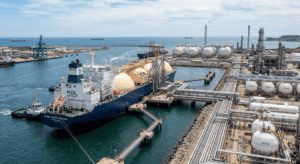 In December, we brought you the sad and unexpected news that Energy Transfer (ET) had suspended development of its Lake Charles LNG project to “focus on allocating capital to its significant backlog of natural gas pipeline infrastructure projects that Energy Transfer believes provide superior risk/return profiles” (see
  Yesterday, the Pennsylvania Independent Fiscal Office (IFO) released its latest quarterly Natural Gas Production Report for October through December 2025 (full copy below). There were 129 new horizontal wells spud (drilled) in 4Q25, a big increase of 46 wells (+55%) compared to 4Q24. Natural gas production volume was 1,934 billion cubic feet (Bcf) in 4Q25 (same as 3Q25), up 63 Bcf (+3.4%) from 1,871 Bcf produced in 4Q24. The average Pennsylvania spot hub price was $3.08, an increase of $1.07 (+53%) from the prior year’s $2.01. All in all, it was a great fourth quarter for the PA Marcellus. The numbers are going in the right direction. However, the big news is annual production.
 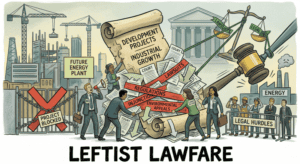 Several Big Green groups, including the Sierra Club, Wild Virginia, Appalachian Voices, and the Center for Biological Diversity, have filed a legal challenge against a permit issued by Virginia for the Mountain Valley Pipeline (MVP) Southgate extension. The Virginia Department of Environmental Quality (DEQ) approved a water permit for the project in January 2026. Big Green radicals argue that the pipeline “threatens” 138 streams, wetlands, and regional drinking water supplies. It’s the typical lawfare tactic used by the left to stall work on projects, hoping to delay them long enough that the builder (EQT in this case) gives up. Or if the builder won’t give up, they have to pay double or triple the price to construct it. That’s the game the radicals are playing.
  METLEN (Greek energy company) and Shell have signed a memorandum of understanding to cooperate on liquefied natural gas (LNG) supply and trading between 2027 and 2031. This partnership allows the Greek company to secure up to one billion cubic meters of LNG annually, leveraging domestic terminals and the Vertical Gas Corridor to supply Central Europe and Ukraine. The agreement highlights Greece’s growing importance as a strategic energy hub designed to replace Russian gas with U.S.-produced alternatives. This shift is further reinforced by increased Mediterranean exploration by major U.S. firms such as Chevron and ExxonMobil, solidifying the region’s role in European energy security. Believe it or not, there are implications for the Marcellus/Utica region.
  West Virginia Attorney General JB McCuskey is leading a 21-state coalition urging the U.S. Supreme Court to overturn Department of Energy efficiency standards adopted during the dark Biden years that effectively ban many natural gas furnaces and water heaters. Challenging a D.C. Circuit ruling, the states argue the mandate violates federal law by eliminating appliances with protected performance characteristics. McCuskey emphasizes that the rule would disproportionately burden low-income and rural families, forcing expensive structural renovations in older homes incompatible with new condensing technology.
  Yesterday, Expand Energy and Evolution Well Services announced a new agreement to deploy Evolution’s 100% electric hydraulic fracturing technology (e-fracking) in Expand’s Northeast Appalachia (northeast Pennsylvania) drilling program. Evolution, headquartered in Houston with a regional office in Pittsburgh, specializes in “electric” fracking — using natural gas from the well pad (instead of diesel) to power turbines that generate electricity to drive fracking pumps. We’ve written about Evolution’s e-fracking work in the Marcellus/Utica for years (