
Ohio’s ‘Bad Faith’ Bar for Mineral Trespass a Win for Drillers
 Ohio’s Revised Code Section 5303.34 (part of House Bill 96, recently passed and signed into law) significantly shifts mineral trespass law, favoring oil and gas operators over landowners. Replacing common-law precedent, the new statute limits default damages to net revenue minus production costs, ensuring industry expense credits. Crucially, it creates a high bar for “bad faith,” requiring plaintiffs (landowners and rights owners) to prove an operator’s specific intent to steal minerals or actual knowledge of illegality. Since a “reasonable belief” in a lease or permit now negates bad faith, landowners face a difficult path to full revenue recovery. Read More “Ohio’s ‘Bad Faith’ Bar for Mineral Trespass a Win for Drillers”
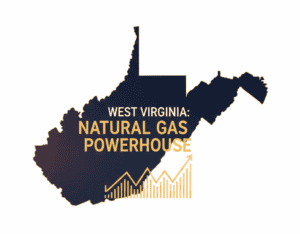 West Virginia continues to cement its status as a national energy powerhouse, ranking as the fifth-largest natural gas producer in the U.S. and providing 10% of the country’s total natgas supply. The 2025 “Gas Facts” report (copy below) from the Gas and Oil Association of WV (GO-WV) highlights a record production of 3.27 trillion cubic feet, fueling an industry that supports 73,000 jobs and contributes $14.7 billion to the state economy. The sector generates hundreds of millions in tax revenue for schools and infrastructure, alongside $1 billion in landowner royalties. Driven by counties like Wetzel and Tyler, the state remains vital to national energy security.
  The far-left Southern Environmental Law Center, representing three radical nonprofits, has appealed the Virginia State Corporation Commission’s (SCC) approval of Dominion Energy’s $1.47 billion natural gas plant in Chesterfield County. The challenge is the first under both the Virginia Environmental Justice Act and the Virginia Clean Economy Act. Antis argue the 1,000-megawatt facility would disproportionately “harm” marginalized communities through increased pollution and significant health risks, including premature deaths. Critics maintain that Dominion failed to prioritize renewable alternatives or demonstrate a genuine threat to grid reliability, potentially placing unnecessary financial and health burdens on the public.
  Enbridge has announced a non-binding open season inviting existing and potential shippers to bid on firm natural gas transportation services. The offer includes up to 300,000 GJ/day (~285 MMcf/d) of capacity for its M12, M12-X, or M17 services. Available paths connect the strategic Dawn Hub to Parkway, Kirkwall, and Dornoch, facilitating efficient gas movement across Ontario to major North American markets. Shippers of Marcellus and Utica molecules will be interested in this open season.
  Enbridge Inc. is a major North American energy infrastructure (primarily pipeline) company based in Calgary, Canada, specializing in the transportation, distribution, and generation of energy. It operates the world’s longest crude oil/liquids pipeline system, transporting 25% of North America’s crude oil, alongside significant natural gas, renewable power, and natural gas utility operations. Enbridge’s fourth quarter 2025 update highlights significant developments impacting the Marcellus/Utica region, primarily driven by surging demand for natural gas to support data centers and power generation, as well as continued infrastructure modernization.
  In December, Antero Resources announced a deal to sell its Ohio Utica assets to a partnership of Northern Oil & Gas (NOG) and Infinity Natural Resources (INR) for $1.2 billion in cash (see
  This seems kind of….odd. We’ve been tracking and reporting on what will be the country’s (and possibly the world’s) largest gas-fired power plant, coming to Portsmouth (Scioto County), Ohio. Last week, President Trump unveiled the first projects under a $550 billion trade deal with Japan, including a $36 billion investment in U.S. energy and minerals (see
  The environmental left in Rhode Island is all hot and bothered over a plan to replace or add a total of 12.3 miles of pipeline for the Algonquin natural gas pipeline network. Enbridge Inc. is proposing a $300 million expansion of the Algonquin natural gas pipeline (the Algonquin Reliable Affordable Resilient Enhancement project), scheduled for 2029, that involves replacing and extending small segments across Rhode Island and Massachusetts. Radical antis in Rhode Island argue the expansion contradicts Rhode Island’s “Act on Climate” goals and promotes reliance on fossil fuels. They have, in our humble opinion, gone clinically insane over the continued use of fossil energy—including clean-burning natural gas. It’s bizarre.
  The United States is developing its first large-scale commercial Enhanced Geothermal System (EGS) in Utah, set for 2026. Unlike conventional geothermal energy, restricted to rare natural reservoirs, EGS uses fracking and horizontal drilling to create man-made hydrothermal wells anywhere. That’s right. Fracking provides reliable, “carbon-free,” weather-independent power anywhere via EGS. And nutty environmentalists are eating it up! If you sprinkle EGS dust over a conversation, magically gone are all of the claims that fracking contaminates the water table. That nasty chemicals are used to frack. That fracking is loud. That it uses too many trucks. That is uses way too much water. That fracking carves up forests and habitats. That it is literally destroying the earth. All of those arguments (lies) are magically gone with EGS dust sprinkled on them, revealing the hypocrisy of the environmental left.
  DT Midstream is an owner, operator, and developer of natural gas interstate and intrastate pipelines, storage and gathering systems, compression, treatment, and surface facilities, including major assets that are in (or flow molecules from) the Marcellus/Utica. Last week, the company issued its fourth quarter and full-year 2025 update. The update showed the Marcellus and Utica (Northeast) regions remain a core growth engine for the company, particularly as a supply source for the Upper Midwest and LNG demand corridors. Driven by a spike in natural gas demand, DTM has expanded its five-year organic project backlog by 50%, bringing the total to $3.4 billion.
  The Texas Eastern Transmission Pipeline (TETCO), operated by Enbridge, is a major 8,580-mile interstate natural gas system connecting Gulf Coast/Texas supplies to the Northeast US. Originally designed for northbound flow, it now heavily supports bidirectional, southbound, and regional supply, including Marcellus/Utica gas. A short 5.3-mile section of TETCO (actually four separate pipelines that make up TETCO) running through Greene County, PA, needs a fix to protect it from coal mining activities set to begin directly underneath the pipeline in that area.
  Last Tuesday, President Trump unveiled the first projects under a $550 billion trade deal with Japan, including a $36 billion investment in U.S. energy and minerals (see
  In January 2026, New England experienced record-high natural gas prices triggered by an intense cold snap. On January 27, wholesale electricity costs reached $441.8/MWh, a significant jump from the previous January’s average of $135.08/MWh. The problem is not enough natural gas pipelines. But that’s not what the dunderheads who run the blue states of New England believe. They think natgas is the problem and that more unreliable renewables are the solution. You can’t fix stupid, but you can vote it out of office.
 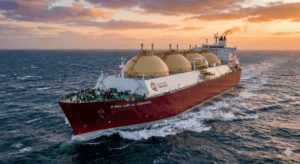 A recent article by David Blackmon (writing for Forbes) argues that critics unfairly blame rising U.S. liquefied natural gas (LNG) exports for high domestic energy costs. While narratives suggest exports drain supply and spike prices, Blackmon highlights data showing that inflation-adjusted natural gas prices have trended lower or remained stable as the LNG industry has grown. He attributes regional price hikes not to exports but to infrastructure roadblocks (a lack of pipelines) in specific states. Furthermore, he contends that gas price volatility is a long-standing market characteristic unrelated to LNG.
  It’s not often MDN gets to report on something happening in our own (relative) back yard. This is a treat! Construction has begun on an eight-megawatt natural gas fuel cell system at the Huron Campus in Endicott, NY, to support future redevelopment. Developed by Bloom Energy and managed by Phoenix Investors, the facility will supplement existing power from the local utility substation to meet the energy needs of upcoming tenants. The project is located on a site recently cleared of former IBM buildings and is expected to be operational by April or May. This infrastructure investment aligns with ongoing efforts to attract new business to the campus, ensuring reliable utility capacity for the modernized industrial space. Natural gas to the rescue!
  The bidding war for Ascent Resources continues to bubble. Ascent, formerly American Energy Partners, is a privately held company focused 100% on the Ohio Utica Shale. Ascent, headquartered in Oklahoma City, is Ohio’s largest natural gas producer and the 8th largest natural gas producer in the U.S. The largest shareholder in the privately owned company is the private equity firm Energy & Minerals Group (EMG), with an “over 30% stake.” EMG wants to sell that stake in one of its portfolio companies to another EMG company. That action set off a firestorm with one major investor (the Abu Dhabi Investment Council) suing to block the transfer, and several other investors, including Mason Capital Management, making offers to buy the company lock, stock, and barrel. Mason issued a press release yesterday, “demanding” answers from Ascent, accusing the board of stonewalling.