
NOG & INR Adjust Ownership Split of Antero’s Ohio Utica Assets
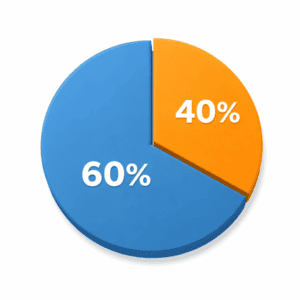 In December, Antero Resources announced a deal to sell its Ohio Utica assets to a partnership of Northern Oil & Gas (NOG) and Infinity Natural Resources (INR) for $1.2 billion in cash (see NOG & INR Partner to Buy Antero Resources’ Ohio Utica for $1.2B). The deal includes 71,000 net acres concentrated in Ohio’s Guernsey, Belmont, and Harrison counties, producing 133 MMcfe/d (81% gas, 19% liquids) from 255 laterals. The midstream (pipeline) part of the deal includes approximately 141 miles of wholly owned midstream gathering lines and approximately 90 miles of water lines. Yesterday, NOG and INR announced that they are tweaking the arrangement, with INR boosting its ownership share in the deal from 51% to 60%. Read More “NOG & INR Adjust Ownership Split of Antero’s Ohio Utica Assets”
 Hedging is the practice of locking in a price now to sell gas you will produce in the future. We’ve written a fair bit about hedging (
 One of the environmental left’s favorite tactics to defeat fossil fuel projects is to challenge every single infrastructure project (pipeline or otherwise) connected to fossil energy at the Federal Energy Regulatory Commission (FERC). As soon as a company files an application to build a new project and FERC approves it, Big Green will challenge it first at FERC and eventually in court. FERC had an internal rule, called Order No. 871, that states a company cannot begin construction (even though FERC has approved the certificate) until all such legal challenges are resolved, which can take YEARS. Which is the point—delay, and eventually, some of the projects will give up and won’t be built. Run out the clock. In October, FERC issued a new rule eliminating the Order No. 871 rule, meaning construction can now begin months and years sooner, even while appeals continue (see
  President Donald Trump’s proposal for a $33 billion, 9.2-gigawatt gas power plant in Ohio—funded by Japanese investment, including SoftBank—aims to address soaring energy demands from data centers (see
  Today, we revisit a topic that (at first glance) is a bit complex: a federal EPA regulation called Subpart OOOOc (“Quad O”), which addresses methane emissions from existing sources. Under the Biden administration, Quad O was twisted and used in an attempt to force oil and gas drillers, especially small conventional drillers, out of business. The policy was set, and the individual states were instructed to bring their own regulations and policies into compliance. But then the Democrats lost the White House. No worries…the Dems running the Pennsylvania Department of Environmental Protection (DEP) eagerly developed onerous regs to comply with the Biden EPA’s Quad O standards. The DEP’s regs are ready to go and could be adopted at any time. However, the Trump EPA delayed implementation of Quad O until 2027 while it works to revise or scrap it.
  Despite political rhetoric scapegoating data centers for rising electricity costs, EIA data reveals that electricity price hikes began long before the data center industry’s expansion. States with high concentrations of data centers, such as Virginia and Texas, maintain residential electric rates below the national average, while Vermont has the fewest facilities but significantly higher costs. An excellent article appearing on RealClearEnergy identifies systemic issues—including aging infrastructure and regulatory inertia—as the true drivers of rising bills. Rather than blaming data centers, the article argues for modernizing the grid and aggressively increasing energy production to meet growing demand. Technology can actually create a more efficient, lower-cost electrical system.
  Natural gas markets are currently facing significant storage deficits for the first time in a year, following the severe disruptions caused by Winter Storm Fern. Record-breaking withdrawals, including a weekly high of 360 Bcf, have pushed inventories 130 Bcf *below* the five-year average due to spiked heating demand and production freeze-offs. This supply-demand imbalance triggered a 300% surge in Henry Hub prices, which peaked at nearly $14.00. However, as production recovers and forecasts predict warmer late-February temperatures, analysts expect market volatility to stabilize and cash prices to gradually converge with front-month contracts as supply concerns ease.
  J.P. Morgan recently facilitated a $5 billion financing package for VoltaGrid, a U.S. energy company specializing in advanced natural gas and behind-the-meter microgrid solutions (think small gas-fired power generators). This funding, comprising $2 billion in senior secured notes and a $3 billion asset-based loan, supports VoltaGrid’s goal to deploy 4 gigawatts of power by 2028. These decentralized energy systems address surging electricity demands from AI and data centers by providing resilient, on-site generation that reduces grid strain. And yes, there is a connection to the Marcellus/Utica region.
  Yeah, well, you knew this was coming. Last week, President Trump and EPA Administrator Lee Zeldin announced the “largest deregulatory action in American history” by officially revoking the Obama EPA’s 2009 “endangerment finding” (see
  President Donald Trump unveiled the first projects under a $550 billion trade deal with Japan yesterday, including a $36 billion investment in U.S. energy and minerals. In exchange for a 15% reduction in tariffs on imports, Tokyo will fund initiatives in Texas, Ohio, and Georgia to revitalize the industrial base. The centerpiece is a record-breaking $33 billion natural gas power plant in Piketon (Pike County), Ohio, operated by SoftBank’s SB Energy. This 9.2-gigawatt facility—the largest in U.S. history—is designed to create thousands of jobs and support the surging energy needs of data centers and artificial intelligence applications. It will produce enough electricity to power every single home in Ohio! It’s massive.
  Energy Transfer LP (ET) owns and operates one of the largest and most diversified portfolios of energy assets in the U.S., with approximately 140,000 miles of pipeline and associated energy infrastructure. ET’s strategic network spans 44 states, with assets in all major U.S. production basins, including the Marcellus/Utica. The company issued its fourth quarter 2025 update yesterday. Based on the 4Q earnings call transcript and presentation, ET continues to view the M-U (Appalachian) region as a “great business” and remains the “dominating player” in natural gas liquids (NGL) in the M-U (and nationwide).
  In early 2024, we reported that Penn America Energy CEO Franc James, the potential builder of the proposed Penn LNG export facility in the Philadelphia area, said that he “pumped the brakes” on the project but that it wasn’t dead yet (see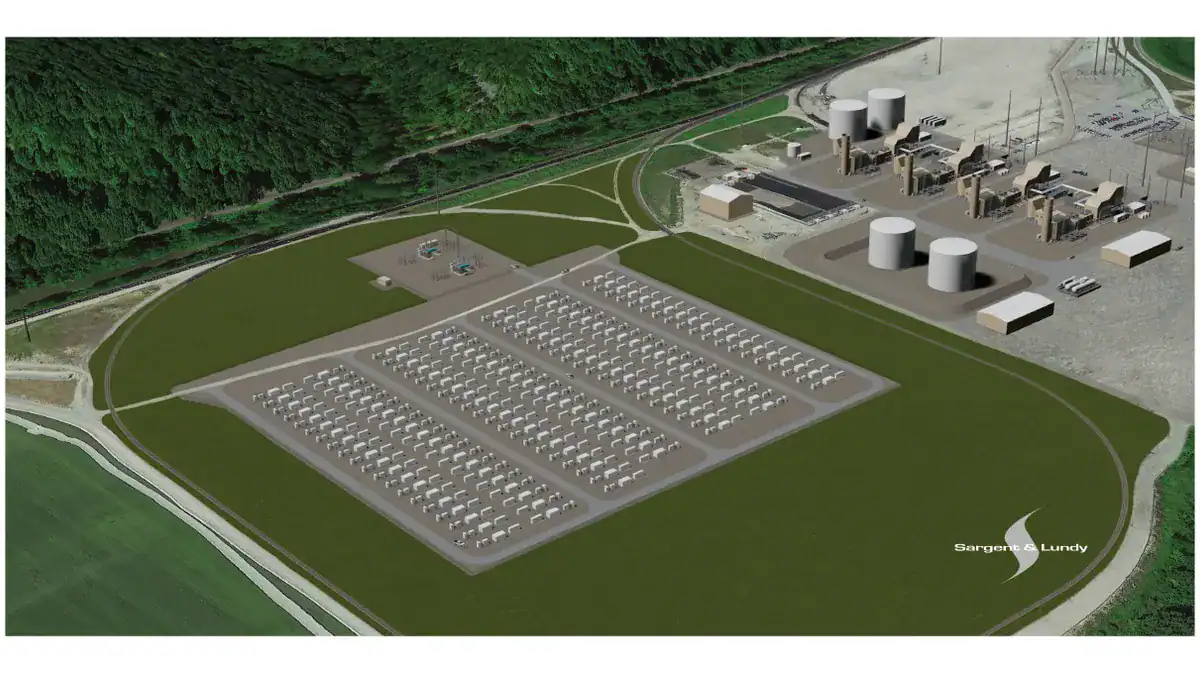
 This is disappointing. The United Mine Workers of America (UMWA) held a press conference yesterday in Charleston, WV, to oppose new natural gas power plants in West Virginia, citing concerns over coal job losses and community instability. UMW International President Brian Sanson criticized proposed projects by Mon Power and FirstEnergy, arguing that these gas-fired facilities threaten thousands of mining careers while providing only “temporary” construction jobs and minimal permanent staffing. He is urging state and federal lawmakers to enact codified legal protections for the coal industry.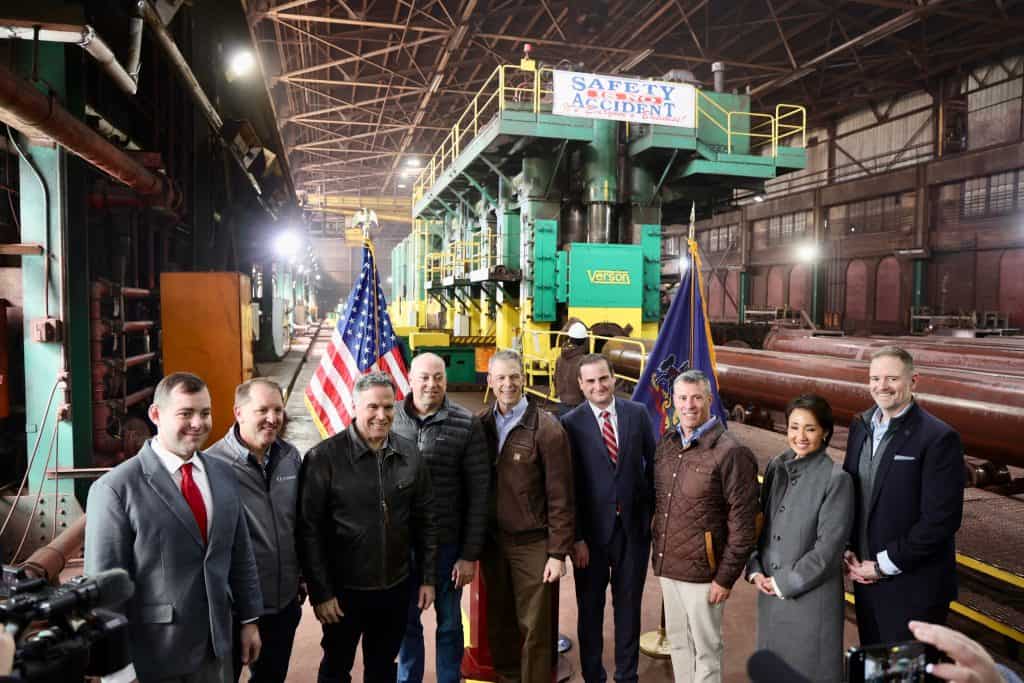
 TC Energy (formerly TransCanada) is a major North American energy infrastructure company based in Calgary, Alberta, specializing in natural gas pipelines, power generation, and storage. The company transports over 30% of the daily natural gas consumed in Canada, the U.S., and Mexico. The company owns major assets in the Marcellus/Utica, including Columbia Gas Transmission and the Millennium Pipeline. The company issued its fourth quarter and full-year update for 2025 last week. Based on the company’s earnings call and associated reports, there is a significant focus on leveraging existing infrastructure to move M-U gas to growing demand centers, particularly in the U.S. Midwest and Mid-Atlantic regions.