
2 Gas-Fired Plants in NY, Mass. File Bankruptcy for Third Time
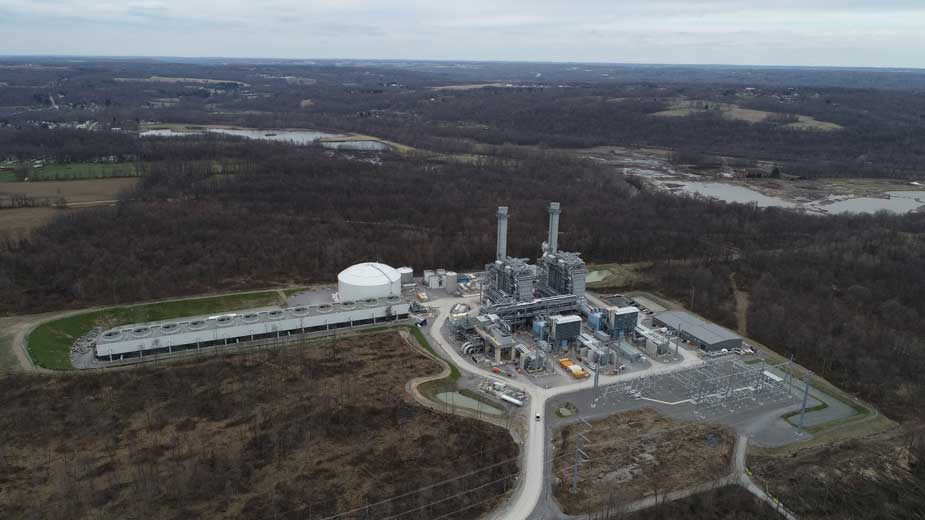
 Talen Energy Corp. subsidiary NorthEast Gas Generation owns two natural gas-fired electric generation plants–one in Athens (Greene County), NY, and one in Charlton (Worcester County), MA. Yesterday Talen/NorthEast filed for Chapter 11 bankruptcy, the third time NorthEast has filed since 2014. The current plan is to hand over ownership to the company’s debtholders.
Read More “2 Gas-Fired Plants in NY, Mass. File Bankruptcy for Third Time”
 There’s no getting around the fact that the Marcellus/Utica region, collectively called Appalachia, is THE 800-pound gorilla when it comes to natural gas production. We produce more natgas than any other region of the country–more than twice as much as the next highest producer, the oily Permian Basin. Yet the Haynesville Shale, a gas-focused play located in Louisiana, also produces a lot of natgas (about 36% of what the M-U produces). According to recent research by the U.S. Energy Information Administration (EIA), new wells in the Haynesville are more productive (producing more gas on average) than new wells drilled in the M-U. Huh.
 On Monday Dominion Energy’s 600-mile Atlantic Coast Pipeline (ACP) scored a major victory at the U.S. Supreme Court with a decision that allows the project to drill and install pipe underneath the Appalachian Trail (see
  Earlier this week Pennsylvania Attorney General Josh Shapiro announced an indictment of Cabot Oil & Gas for allegations of methane migration going back more than a decade (see
 Equitrans, formerly EQT Midstream, separated from EQT in November 2018. Equitrans, via its EQM Midstream affiliate, gathers, processes, and flows most of EQT’s natural gas production, getting it to market. In February Equitrans announced it will absorb EQM, a limited partnership, into the fold (see
  Vallourec, headquartered in Boulogne-Billancourt, France, manufactures steel pipes used in the oil and gas industry. The company employs some 19,000 people in 20 countries, including the U.S. In fact, Vallourec employed (at least at one time, prior to recent layoffs) more than 750 at three Youngstown, Ohio units: Vallourec Star, VAM USA and Vallourec USA Corp. The company has just announced a new high torque connection for shale drill pipes, something they call “a technological breakthrough for the industry.”
 We finally have a major court victory over the forces of anti-fossil fuel evil, so let’s sit back and soak in the warmth and sunshine of this moment. Yesterday the U.S. Supreme Court delivered a decision we expected, a decision that allows Dominion’s Atlantic Coast Pipeline (ACP), a 600-mile project from West Virginia through Virginia and into North Carolina, to cross under the Appalachian Trail. The decision is not only a victory for ACP, which is only about 6% built, but also a victory for the 303-mile Mountain Valley Pipeline, which is 92% built. MVP also needs to pass under the Trail.
 The door has been closed on “Dimock” (in Susquehanna County, PA) for years. Dimock, you may recall, was made famous by Josh Fox’s so-called documentaries Gasland and Gasland 2, aired endlessly on HBO. His allegations about fracking malfeasance by Cabot Oil & Gas were completely debunked in a real documentary called
  Yesterday our favorite government agency, the U.S. Energy Information Administration (EIA), issued our favorite monthly report, the Drilling Productivity Report (DPR). The DPR estimates how much oil and natural gas each of the country’s seven largest shale plays produced in the previous (current) month, and how much each will produce in the coming (next) month. The June report, which predicts production for the coming month of July, estimates natural gas production in the Permian basin has just about stabilized (will go down just a little). However, natgas production in the Marcellus/Utica will continue to drop like a rock in the coming month.
 The ne’er-do-wells from Big Green groups including THE Delaware Riverkeeper, Sierra Club, Food & Water Watch and a mish-mash of other loudmouths are attempting to bully the Delaware River Basin Commission (DRBC) into overturning their previous decision to allow a simple ship dock to get built along the shore of the Delaware River in New Jersey so ships can load LNG already liquefied and waiting. Given the DRBC’s weak leadership, we wonder if the DRBC will (again) cave to the demands of the radicals.
 After spending years and hundreds of thousands of dollars to investigate Range Resources over a simple regulatory matter settled years ago by the Pennsylvania Dept. of Environmental Protection, PA’s leftist Attorney General, Josh Shapiro, announced on Friday he had finally bullied Range into pleading “no contest” to so-called environmental crimes (misdemeanors), forcing the company to pay $50,000 in fines and $100,000 to Shapiro’s favorite Big Green charities. Does that sound like a success to you? Shapiro spent multiple hundreds of thousands of taxpayer dollars to force the company to pay $150K. Sounds like Shapiro is The Biggest Loser to us.
 In early May MDN reported Elba Island LNG, a Marcellus Shale gas export facility located near Savannah, Georgia, was in the process of firing up train #8 of the 10 mini-trains being built (see