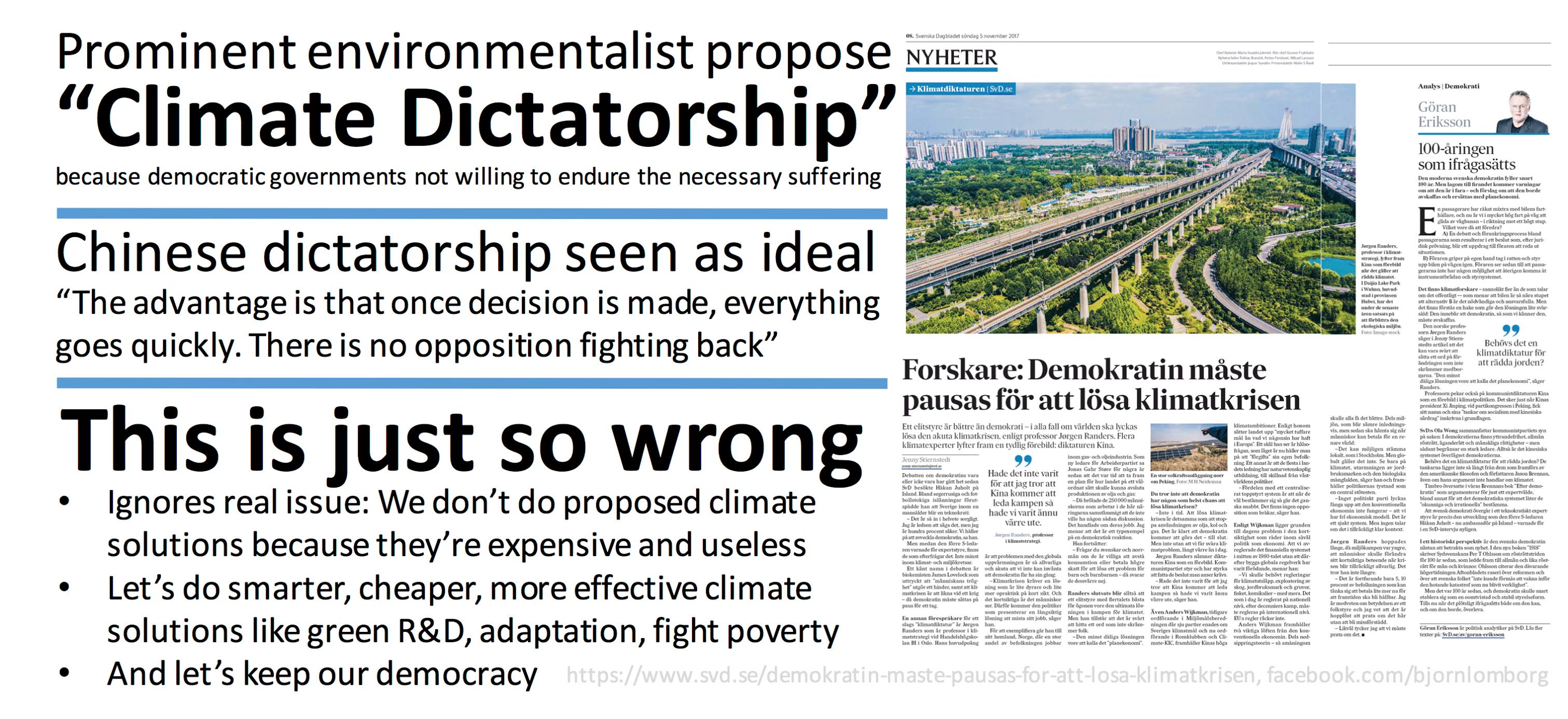
 You often read on MDN of our disdain for “radical” environmentalists and the “Big Green” organizations that do so much harm to our economy, our liberties and our way of life. Occasionally we’ll get an email asking, “What do you mean by radicals?” or “Who is Big Green?” On a regional scale we’re talking about THE Delaware Riverkeeper, various Mountain Keeper organizations, [fill in the blank] organizations against pipelines. On a national scale it’s the odious and evil Sierra Club, Food & Water Watch, National Resources Defense Council (NRDC) and a variety of others. Behind the curtain, pulling strings by donating large sums of money, are people like Mamma Teresa Heinz Kerry (Heinz Endowment), billionaire leftie Tom Styer, the Rockefellers, etc. What interests us is most is that at their core–whether local flakes or California billionaires–is an irrational hatred of fossil fuels. The mythology that mankind is catastrophically causing the earth to warm is their rallying cry–and their “righteous” cause is to stop it, by any means necessary. Since their pathetic ideology cannot and will not gain traction with enough people in a free society to enforce the changes they want on the entire population, these people often tip over into fascism and/or Communism. In their heart of hearts they seek to overthrow free democracies. How do we know? One of them, a European, has just admitted it–for all the world to see. Jørgen Randers, professor of “climate strategy” at BI Norwegian Business School–a mainstream climate guy–is calling for a “climate dictatorship,” along the lines of the Chinese government. You know, do it right–like the people responsible for the Tiananmen Square massacre. That’s how professor Randers wants to handle those of us who are “climate deniers”…
Read More “Prominent Enviro Proposes “Climate Dictatorship” based on China”

 Even OPEC–the Organization of the Petroleum Exporting Countries–now admits that U.S. shale energy is here to stay. At least for the foreseeable future. For OPEC, the foreseeable future is until 2025. Yesterday OPEC released its annual “World Oil Outlook 2040” (copy below). The massive 364-page report predicts that U.S. shale oil will continue to grow, and dominate the oil markets–until 2025 (eight years from now). At that point OPEC says shale oil will peak and following that, OPEC will once again be in the driver’s seat–ready, willing and able to screw Americans and everyone else who buys their oil. We think OPEC is smoking some good stuff…
 The “best of the rest” – stories that caught MDN’s eye that you may be interested in reading. In today’s lineup: Chesapeake gets 3 permits in Carroll County, OH; WV tax receipts up 5.3% thx to shale; top exec leaving CONSOL Energy; NY virtual pipeline would power local economy; Carrizo’s final divestiture of Marcellus/Utica assets complete later this month; recap of NARO Appalachia conf; CNG buses come to Portage County, OH; EIA cuts Henry Hub price estimates; US LNG companies join Trump on China trade mission; unrest in Saudi Arabia; and more!
 The arrogance of Big Green was on full display yesterday as they rushed to stop the Atlantic Sunrise Pipeline project project and silence lawfully permitted work. In response to a lawsuit filed by the worst of the worst (the Sierra Club) on Oct. 30th, a liberal court in the District of Columbia yesterday slapped the Atlantic Sunrise project with an emergency stop work order–for the entire project. Work had already begun to lay pipe on the property of Catholic nuns in Lancaster County, PA. The nuns call themselves Adorers of the Blood of Christ. We call them Sisters of the Corn (
 The lawsuit filed by a Wayne County, PA landowner against the egregious overreach by the Delaware River Basin Commission (DRBC) to stall/delay/block any shale drilling within the Basin takes a very important step forward today. It’s a step feared by the DRBC and radical groups like THE Delaware Riverkeeper–because this case has the real potential to neuter the DRBC’s claim it can block shale drilling in the watershed. In March, MDN reported that U.S. District Judge Robert Mariani ruled against the Wayne Land and Mineral Group in a lawsuit that challenged the right of the DRBC to stop fracking in the Delaware River Basin (see
  In June, MDN brought you the news that the very first application to drill a shale well in Illinois had been made (see
  In August MDN told you the West Virginia Oil & Natural Gas Association (WVONGA) plans to push, once again, for what MDN calls forced pooling lite in the next session of the legislature scheduled for early 2018 (see
  Last week midstream powerhouse Williams issued their third quarter 2017 update. CEO Alan Armstrong said this about the Transco Pipeline–a key pipeline in the Marcellus/Utica region: “So far in 2017, we’ve placed four of our ‘Big 5’ Transco expansion projects into service including Gulf Trace, Hillabee Phase 1, Dalton Expansion and New York Bay Expansion with the fifth of the ‘Big 5’ expansions – the Virginia Southside II project – expected to be placed in service during fourth-quarter 2017. The incremental capacity from the fully-contracted Transco expansion projects going in service so far this year reflects a 25 percent increase in Transco’s design capacity.” All five of those projects to one degree or another flow Marcellus/Utica Shale gas. Williams is in a multi-year program to reverse the flow of the Transco. Traditionally it has flowed gas from the Gulf to the northeast. The pipeline is in the process of getting turned around, to flow our gas southward, some of it all the way to the Gulf Coast. With respect to the Atlantic Sunrise project–a part of the Transco system–Armstrong reminded listeners on the analyst phone call that some of that project is already up and running: “And on Atlantic Sunrise, we started construction and have already placed a portion of Atlantic Sunrise into early service on September 1 of this year, providing about 400,000 dekatherms a day of firm transportation service on Transco’s existing mainline facilities, and of course that serve delivery points as far south as Choctaw County, Alabama. So we’re really excited to be starting to see the Transco system turn around and be able to deliver volumes to the south. And I can tell you, that’s very much needed as we’re seeing a lot of demand growth occur in the southeast on our system.” As for the stalled Constitution Pipeline in New York State, Armstrong said to “stay tuned” and that there is “plenty of fight left in this dog.” Armstrong sounded encouraged about the prospects of the Constitution. Below is the full 3Q17 update complete with financials, excerpts from the analyst phone call of interest for MDN readers, and the newest slide deck…
 As we do every month (and have for more than two years), MDN tracks how many rigs oilfield services company Patterson-UTI Energy reports operating–as a proxy for rig count health in general and rig count health in the Marcellus/Utica in particular. Patterson recently bought out and merged in Seventy Seven Energy (see
  MDN is pleased to bring you another guest post from our very good friend Chris Acker. Chris is MDN editor Jim Willis’ right arm when it comes to scanning for stories, something Jim is profoundly grateful for. Chris is a geological engineer with an MBA. He grew up in the oil fields of Venezuela where his father, a petroleum engineer, was a drilling contractor for all the major players, onshore and off. Chris’ interest in energy economics and policy found him working for Exxon, Petroleum Industry Research Associates and Petroleos de Venezuela. He bought a parcel of land in the PA countryside twenty-five years ago and later semi-retired to work on antique pianos (see
  Today is election day across the U.S. It is an “off-year” election, meaning no national elections on the ticket–only state and local elections. Last week, in advance of today, the Consumer Energy Alliance (CEA) launched a non-partisan “Campaign for America’s Energy” across 12 key states, including Pennsylvania. The campaign aims to educate families, businesses, and state and local lawmakers about the benefits of energy production and delivery, without getting bogged down in contentious politics–IF that’s even possible! CEA is making a good-faith effort at it. MDN editor Jim Willis interviewed CEA’s president, David Holt, back in 2014. You can
 The director of the Ohio Environmental Protection Agency (EPA), Craig Butler, continues to go off the rails with a major grudge against Rover Pipeline (see
  We find this story amusing. A group of left-leaning Catholic nuns in Lancaster County, PA, whipped up by radical environmentalists with ties to Big Green organizations, got it into their heads to try and block a very-safe natural gas pipeline from crossing their property–the Atlantic Sunrise Pipeline being built by Williams. The Sisters call themselves Adorers of the Blood of Christ. We call them Sisters of the Corn, because they put a couple of wooden park benches in a cornfield on their property (leased to a local farmer), christening it a “chapel” and claiming because the pipeline would run through the middle of their so-called chapel, building a pipeline is a violation of freedom of religion. In September a federal judge tossed the lawsuit (see
  An off-hand comment by a Pennsylvania Gov. Wolf staffer has landowners in northeast PA hopping mad–and with good reason. Speaking on the topic of PA landowners getting screwed out of royalty payments by drillers deducting inflated post-production costs (sometimes sending royalty statements where landowners OWE the drillers money!), Wolf deputy policy director Sam Robinson said this: “I think there was a crescendo of that kind of claim in 2015 to 2016…There’s been real movement in a positive direction on that issue.” Really? Not according to Bradford County Commissioner Doug McLinko and National Association of Royalty Owners (NARO) PA president Jackie Root. Not only is the issue not resolved, but the industry, under the prompting of EQT, snuck through an “environmental rider” in the recently passed-and-signed-into-law Fiscal Code bill (called Section 1610) that gives drillers a back door to reactivate old, non-producing wells after they have not been producing (and the lease considered terminated) under certain conditions (see
  The guy who runs the investment firm Jana Partners, Barry Rosenstein, is a corporate raider. He invests millions in a company he’s targeted in order to get one or two people elected to the board of directors. Those people then agitate and force the company to lay off hundreds or thousands of employees, and sell off assets, in a bid to make the stock price jump. When the price does jump, corporate raiders like Rosenstein then sell their shares, making a profit on the new/higher price (buy low sell high). It may be legal, but we consider it immoral. In June, EQT, one of the biggest drillers in the Marcellus/Utica, announced a deal to buyout and merge in Rice Energy, another sizable M-U driller (see