
Radical Enviros Now the Tail Wagging the PA DCNR Dog re Funding
 As they so often do, radical environmentalists are creating chaos and confusion–this time in Pennsylvania. As MDN reported, earlier this week the Pennsylvania Supreme Court of Appeals, in a sharply divided 3-2 decision, sided with a virulent anti-drilling group, the Pennsylvania Environmental Defense Foundation, against the state in saying that any revenue generated from leasing and drilling on state-owned land MUST be used solely for conservation and the environment (see PA Supreme Court Hands Antis Partial Victory re State Land Drilling). The aim of the PA EDF is to disrupt Marcellus Shale drilling by any means necessary. This is one of those means. The three liberal justices who rendered the decision say the law is clear on intent–that money raised from leasing state-owned lands for drilling must be used for environmental purposes. Now the PA EDF is arrogantly telling the State of Pennsylvania that the money raised from drilling can’t be used for general operating expenses of the Dept. of Conservation and Natural Resources (DCNR)–the very organization that oversees the state lands and is in charge of said leasing. In the upcoming budget, due to be ratified by June 30th, PA Gov. Tom Wolf and the legislature had planned to use $100 million from the lease and royalty fund to “pay for DCNR’s daily operations or be transferred to another fund for statewide environmental and infrastructure projects.” But in an ominous threat, the EDF lawyer said spending money on DCNR operations “doesn’t comply with the court opinion on how the funds can be used.” Which begs the question: What in the world CAN you spend the $100 million raised from royalties and lease fees on?…
Read More “Radical Enviros Now the Tail Wagging the PA DCNR Dog re Funding”
 Nearly five years ago, in July 2012, then-PA Gov. Tom Corbett announced that some of the Sunoco Marcus Hook Refinery assets had been purchased by Braskem America (see
  Green and Washington counties, south of Pittsburgh (Allegheny County), have long been considered the “core” of Marcellus Shale play in southwestern PA. The wells there get GREAT results–a mix of dry and wet gas (wet gas being natural gas liquids, like ethane, propane and butane). But one company, PennEnergy Resources, says the data shows that the same great Marcellus deposits are located underneath the great City of Pittsburgh itself, and in the towns north of the city (Allegheny County). And PennEnergy can prove it, with their own well results. Does that mean Pittsburgh itself may one day get drilled under?! Don’t hold your breath on drilling under Pittsburgh any time soon. However, according to Greg Muse, chief operating officer for PennEnergy, there’s plenty of gas to be drilled just north of the city–and the deposits are just as good as those south of the city. Muse also said PennEnergy is looking to either take the company public, merge with another company, or sell…
 The Mountain Valley Pipeline (MVP) is a $3.5 billion, 303-mile pipeline that will run from Wetzel County, WV to the Transco Pipeline in Pittsylvania County, VA. The project, which filed an official application with the Federal Energy Regulatory Commission in October 2015, is being built by EQT, NextEra Energy and several other partners. The project has faced stiff opposition from landowners in both West Virginia and Virginia. Although the project is not yet fully approved by the Federal Energy Regulatory Commission (FERC), the project did get a favorable Draft Environmental Impact Statement from FERC last September (see
  EXCO Resources was once a sizable player in the Marcellus. They still have 145,000 net acres in the Marcellus, with 124 horizontal Marcellus wells drilled and in production. However, EXCO, as we pointed out a year ago, has abandoned the Marcellus at this point (see
  The Trump Dept. of Energy (DOE) wants to make better frackers. What does being a “better” fracker mean, and how is the DOE further that cause? The DOE is doling out $20 million, of which $18 million will be used on research to “address critical gaps in the understanding of reservoir behavior and optimal completion, stimulation, and recovery strategies for unconventional oil and gas.” That is, figure out how to frack cheaper, faster and in a way that impacts the environment less. And the government is willing to spend some coin to help figure it out…
 Anti-frackers like Josh Fox (maker of the propaganda film Gasland) have long relied on a single, flawed research “study” that purported to make the case that the entire country could, if it wanted to, switch over to using 100% renewable energy sources by 2050. The study, titled “100% clean and renewable wind, water, and sunlight (WWS) all-sector energy roadmaps for the 50 United States” (full copy below), presents “roadmaps for each of the 50 United States to convert their all-purpose energy systems (for electricity, transportation, heating/cooling, and industry) to ones powered entirely by wind, water, and sunlight (WWS).” This week a group of 21 independent experts, including the former associate director at Lawrence Livermore National Laboratory and a NOAA researcher who specializes in renewables, issued a devastating rebuttal of the earlier “renewable roadmap” study–saying it has “significant shortcomings,” using “invalid modeling tools” with “modeling errors” and makes “implausible and inadequately supported assumptions.” In the rebuttal study, titled “Evaluation of a proposal for reliable low-cost grid power with 100% wind, water, and solar” (full copy below), the authors rip the earlier “renewable roadmap” study to shreds, exposing the lie that fossil fuels can be phased out within our lifetimes. It’s simply not possible. And it’s time that lie is debunked in the public square. But don’t look for mainstream media to give one drop of ink to this study. It doesn’t fit their renewables-are-nirvana-and-fossil-fuels-are-evil narrative…
 A group of creaking, tottering old RINO (Republican in Name Only) dinosaurs (i.e. RINOsaurs) left the golf course long enough to lobby President Trump on the insane idea of a so-called “carbon tax” back in February (see
  The “best of the rest” – stories that caught MDN’s eye that you may be interested in reading. In today’s lineup: Ohio anti-fracking ‘digital disruption powerhour’ a huge disappointment; FirstEnergy executive vice president James H. Lash to retire; EQT/Rice merger could make more office space available at Southpointe; Environmentalists bring PA closer to financial ruin; U.S. Secretary of Energy Perry to visit W.Va.; Clean coal power plant ordered to run on natural gas instead; Frackers collide with traditional oil drillers – “frack hits”; USA: new LNG act to remove export restrictions; Cheniere offers better terms to attract LNG customers; and more!
 In March of this year, the Team Pennsylvania Foundation released a report called “Prospects to Enhance Pennsylvania’s Opportunities in Petrochemical Manufacturing” (see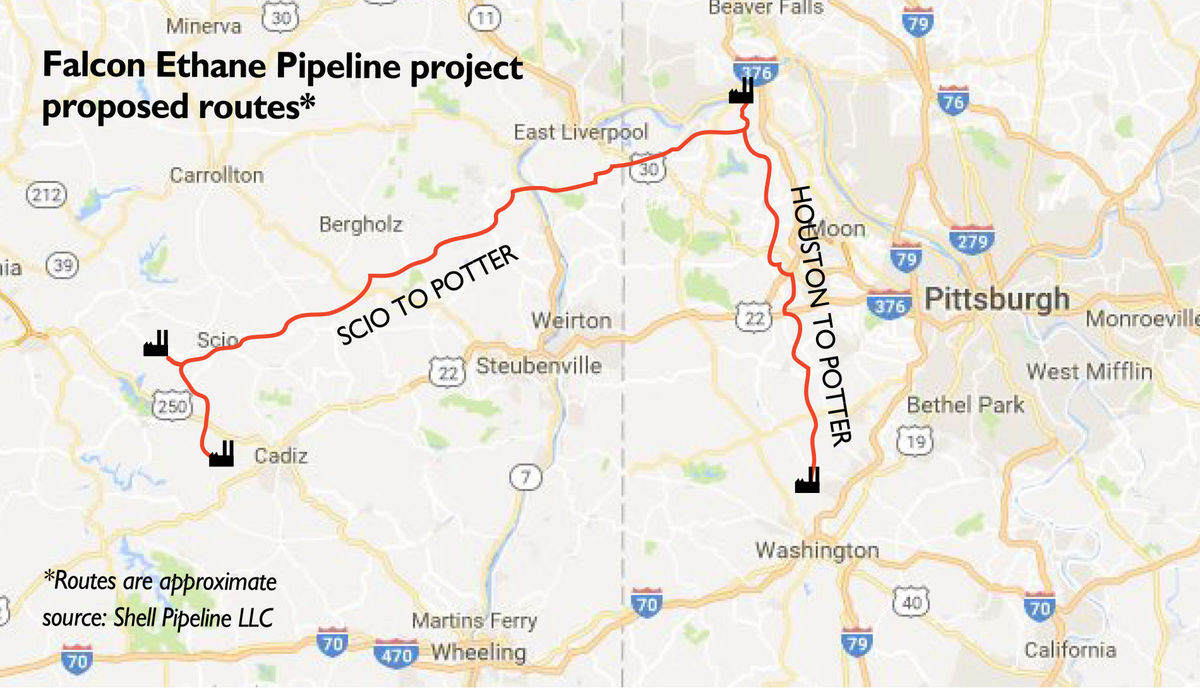
 The petrochemical conference in Pittsburgh earlier this week wasn’t the only event in town. The DUG (Developing Unconventional Gas) East conference and exposition took place at the David L. Lawrence Convention Center, several blocks from the petchem event. The reporting from one session in particular caught our attention. A panel of drillers and service companies (upstream focus) talked about the prices that service companies (that is, oilfield service companies, like Halliburton and Baker Hughes) charge has gone up 10-15% over rates from last year, when service companies had to slash prices. While that’s good for service companies, but not so good for drillers and may, yet again, lead to a decline in active rig counts. The panel also discussed the increasingly critical shortage of workers in the Marcellus/Utica industry…
 It’s kind of humorous when a small group of insane anti-fossil fuelers participate in a march that they call “Stop the Madness.” Kind of meta, dontcha think? An anti reporter from the Pittsburgh Post-Gazette tagged along (who could tell the difference?) to “report” on a group of “about 100 protesters from 11 organizations” who rallied and marched from one Marcellus event to another being held in Pittsburgh on Tuesday. The protesters, dressed in clothes made from petrochemicals, wearing sneakers made from petrochemicals, and holding signs made from petrochemicals (after arriving at the “rally” and “march” in fossil fuel-powered transportation), rallied outside of the Northeast U.S. Petrochemical Construction conference–to protest petrochemicals, and then marched across town to the convention center to protest fracking outside of the DUG (Developing Unconventional Gas) East event. The group was a mish mash of the usual suspects–hard left nutters who pop up again and again to grab a headline bashing fossil fuels, before scarpering home using the fossil fuels they just bashed, going to houses and apartments heated and cooled using fossil fuels. Typical…
 Primoris Services Corporation, a pipeline building company based in Dallas, TX, has built a number of gathering pipelines in the Marcellus region. We’ve been covering some of the projects Primoris has been involved with since 2013 (
 The federal Environmental Protection Agency has been a rogue agency for years under the previous Obama administration. To be fair, the agency has been a problem long before that–pretty much since its inception. Now that President Trump is attempting to reign in the EPA by trimming its budget and focusing it on its original intent–to clean up America’s air and water–leftists are having a cow. In a devastating column published by Dr. Jack Rafuse, a former White House energy adviser, Rafuse exposes some of the egregious collusion and criminal cover-ups perpetrated by the EPA. Rafuse lays bare the swamp that needs draining at the EPA, providing justification for Trump’s actions in reigning in this rogue agency. This is the real news that fake newsers in mainstream media won’t tell you…
 It’s hard to overestimate the damage to the fossil fuel industry in general, and the natural gas industry in particular, from the propaganda film Gasland, created by Josh Fox. The movie is full of lies and misinformation, but it’s good entertainment and in a culture that disdains the use of logic and reason, someone else’s lies quickly become some unthinking people’s “truth.” Fox has repeatedly proven he’s a charlatan and liar. No one exposes his lies better than Phelim McAleer, a real filmmaker who made the counter-documentary