
Lying Letter from Anti Mayors in NJ Seeks to Stop PennEast Pipe
 A total of 31 anti-drilling, leftist (almost all Democrat) mayors, council members and county freeholders (not freeloaders, but freeholders) from a dozen New Jersey townships begged and pleaded with the NJ Department of Environmental Protection to kill the PennEast Pipeline project. The antis sent a letter to DEP Commissioner Robert Martin claiming PennEast will have “unacceptable” impacts in their towns if it gets built. We wonder, will they find it “unacceptable” to have their gas and electric turned off, because of lack of natural gas coming in via pipeline? It is yet another list of, frankly, nobodies who are desperately attempting to grab a headline from a sympathetic anti reporter (which they did, NJ.com), to try and create the impression that masses of people are against the project. Fortunately, it will fail…
Read More “Lying Letter from Anti Mayors in NJ Seeks to Stop PennEast Pipe”
 Kudos to West Virginia and its Attorney General, Patrick Morrisey, for leading the charge (along with 10 other states) to stop the Environmental Protection Agency’s implementation of the Obama methane rule. Earlier this month the Trump EPA filed paperwork to stop implementation of the egregious and illegal rule (see
  We suppose it had to happen eventually. The Trump White House is backing a Washington insider, a swamp dweller, to become Deputy Administrator (#2 person) at the Environmental Protection Agency. Jeff Holmstead, a former top EPA official under President George W. Bush, is as inside Washington as inside gets. He’s a Washington lobbyist and a lawyer (already two strikes against him). His appointment is not yet official, but the rumor mill is working overtime. We find it disappointing that Scott Pruitt, the consummate outsider, is promoting Holmstead, the consummate insider, for the position…
 The “best of the rest” – stories that caught MDN’s eye that you may be interested in reading. In today’s lineup: NY Supreme Court justice to AG Schneiderman: “You are wasting my time”; Rover pipeline fine will be used for work at Ashland County Courthouse; Bailout of 2 Ohio nuclear plants stalls in Statehouse; Shell project manager says cracker plant ‘will change forever Pittsburgh’; Trillium CNG opens CNG station in York, Pa.; Need for natural gas supply growing in New England; Haynesville slowdown highlights bearish natural gas outlook; Exxon’s shale drilling unit XTO shifting 1,600 jobs to Houston; Are Russia and the Saudis planning a natural gas cartel?; U.S. drillers are hammering OPEC’s plans; and more!
 Eclipse can’t help it–they keep setting new world records for the longest lateral (horizontal) wells drilled–in the entire world! It began last year when Eclipse drilled what they call their first “super lateral” Utica well in Guernsey County, OH–the Purple Hayes, at 18,500 feet long (see
 Rover Pipeline (i.e. Energy Transfer) has settled an ongoing dispute with the Ohio State Historic Preservation Office (a PRIVATE organization) to pay them $1.5 million in what MDN views as shakedown money. Which is far less than the “asking” price of $1.5 million PER YEAR over the next five years ($7.5 million total). The payment comes after Rover paid the same organization $2.3 million for knocking down a dilapidated old house that was under consideration to be added to the National Register of Historic Places. In addition to the $2.3 million paid for This Old House, the Ohio State Historic Preservation Office said they had worked out a deal with Rover to pay the organization $1.5 million as compensation for something they haven’t even done yet but presumably will do–disturbing other “historic sites” as the pipeline cuts across the state. Apparently the history buffs felt the agreement was for $1.5 million per year over the next five years. Rover said (in so many words), “in your dreams.” No way. So the matter was referred to the Federal Energy Regulatory Commission (FERC) for dispute resolution. Before FERC could render a decision, the history buffs settled with Rover for a one-time additional payment of $1.5 million (a $1.5M bird in the hand is worth more than a $7.5M bird in the bush). Here’s the background for this shakedown, and a copy of the signed agreement stipulating a one-time payment of $1.5 million to the PRIVATE Ohio State Historic Preservation Office…
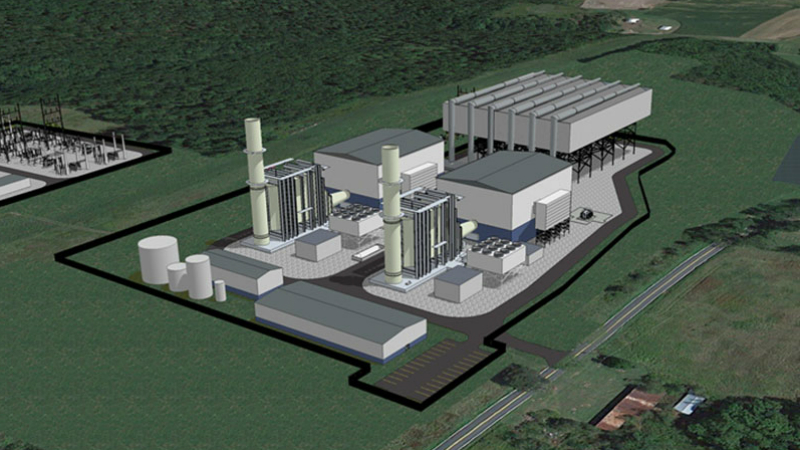
 Marcellus Shale gas is now powering a Panda Power Funds electric generation plant supplying electricity for 778,000 homes in the Washington, DC metro area. Panda announced that its 778-megawatt “Stonewall” generating station in Loudoun County, Virginia is now online producing electricity for Northern Virginia/District of Columbia customers. MDN first had its eye on this project in November 2014 when we brought you the news that South Jersey Gas had won the contract to provide Marcellus Shale gas to the plant when built (see
 In May, MDN conveyed the news that it appears Mountaineer NGL Storage, which wants to build a new underground NGL storage facility in Monroe County, Ohio, near Clarington, along the Ohio River (see
  Duke Energy needs to replace an aging pipeline, built in the 1950s, near Cincinnati, OH–or some people in Cincy will have to go without natural gas. Last Thursday the Ohio Power Siting Board (OPSB) held the first of two public hearings, to grant anti-pipeliners the opportunity to vent (see
  Events related (or of interest) to the Marcellus and Utica Shale, primarily pro-drilling events.
 Rover Pipeline, Energy Transfer’s $3.7 billion, 711-mile Marcellus/Utica natural gas pipeline that will run from PA, WV and eastern OH through OH into Michigan and eventually into Canada, will almost certainly not go online in July as originally planned–at least according to an article on The Street evaluating the project and its builder, Energy Transfer. At the heart of the delay is a series of spills that have occurred while drilling underground, horizontally, under rivers and creeks (and other structures) in which drilling mud has spilled. The largest such spill, to date, happened on April 13 when around 2 million gallons of drilling mud spilled close to the Tuscarawas River (see