Kinder Morgan 4Q25 Update: Projects Impacting the M-U Advance
 Based on the fourth quarter 2025 earnings call transcript and the accompanying press release, Kinder Morgan (KMI) reported record financial results driven largely by its natural gas business. While much of the growth came from the Gulf Coast and Southeast, several updates were specifically relevant to the Marcellus and Utica shale regions and the pipeline projects that transport Marcellus/Utica molecules. We’ve sifted through the release and earnings call to bring you the latest updates that impact the M-U region. Read More “Kinder Morgan 4Q25 Update: Projects Impacting the M-U Advance”
 Gulf South Pipeline Company, a subsidiary of Boardwalk Pipelines, announced the launch of an open season for new natural gas storage capacity at its flagship Petal Gas Storage complex in Mississippi. In addition to the Petal open season, Boardwalk also highlighted significant expansion potential across two cornerstone assets: Choctaw Storage in Louisiana and the Midland Storage Complex in Kentucky. All three storage facilities are used to store Marcellus/Utica molecules.
  Last Friday, the Trump administration officials joined several governors from the 13 states that are part of the PJM Interconnect grid to outline a broad plan they say will ensure customers of the grid will not face skyrocketing electric prices due to new AI data centers getting built in the region (see
  There are two universal, unavoidable truths of life: (1) death, and (2) Democrats love to tax anything and everything. Pennsylvania Democrats are urging state lawmakers to tax data centers to shield residents from rising energy bills. During a hearing held by PA House Democrats on January 20, so-called experts argued that data centers must “pay their own way” for grid upgrades necessitated by their high demand, rather than passing those costs to households. With grid operator PJM Interconnection warning that surging demand could cause blackouts, Democrats proposed legislation to protect ratepayers from price spikes. Although some officials value the industry’s job creation, tax proponents insist that ordinary consumers should not subsidize the infrastructure needed to support the state’s expanding and energy-intensive digital industry.
 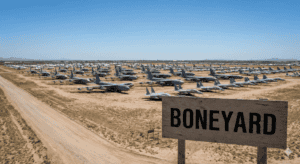 As data center operators have sought rapidly deployable power sources for their facilities, some have turned to companies that modify jet engines for commercial power generation. Data center facilities in Texas have recently deployed modified jet engines as generators, each with 48 megawatts (MW) of generating capacity. There’s a whole “graveyard” of retired military aircraft at the U.S. Air Force’s facility on Davis-Monthan Air Force Base in Arizona, called the Boneyard. Could the old/retired jets at the Boneyard be repurposed to power data centers? Quite possibly!
  Global LNG markets are entering a transitional phase in 2026, characterized by a projected 10% supply surge as major U.S. and Qatari projects come online. This influx ends post-Ukraine war tightness of supply in the LNG market and will likely depress global prices to under $10 per mmBtu. Lower prices are expected to stimulate demand recovery in price-sensitive markets like China and India, while Europe increases imports to phase out Russian gas and replenish inventories. Although supply abundance benefits consumers, narrowing price spreads will likely squeeze U.S. export margins. Consequently, the industry is shifting toward ample availability and reshuffled trade flows through 2029.
  OTHER U.S. REGIONS: Wyoming should ditch green hydrogen boondoggles; NATIONAL: Offshore wind lawsuit confusion abounds; Devon Energy – a Coterra deal is the good move; US propane reaches 14-month low against WTI amid supply surplus; Money to ‘decarbonize’ more useless than gym memberships, extended warranties; INTERNATIONAL: Crude gains as IEA lifts demand outlook; EU hydrogen matchmaking platform opens for buyer expressions of interest; A young Canadian helping shape the future of energy; Mexico’s planned gas-fired plants, LNG export capacity driving pipeline projects; British climate crusade creates economic disaster.
  Old Man Winter has proven once again that he is the one in charge of natural gas prices. A cold blast now entering the Midwest and Northeast, which is moving in until early February (at least), is the reason for a dramatic jump in the NYMEX front-month futures contract price, rising 80.4 cents per MMBtu (26%) in one day, yesterday, to a closing price of $3.9070 MMBtu. It is the largest one-day percentage gain in four years, since January 2022. The price continued climbing this morning (Wednesday) and looks like it might flirt with $5.00!
  The Mahoning Valley is entering a “Utica 2.0” era as advanced drilling technologies revitalize oil production in previously dismissed regions of Ohio. While energy companies once abandoned Mahoning and Trumbull counties, record-breaking yields from new wells in Columbiana and Mahoning counties have triggered a surge in leasing and permits. Improvements in horizontal drilling and fracking fluids now allow operators like EOG Resources and Hilcorp to extract significant oil from formations once considered unprofitable. This industrial renaissance, punctuated by EOG’s $5.6 billion acquisition of Encino Acquisition Partners, signals a transformative phase of exploration poised to expand further north in the Utica.
  Infinity Natural Resources, Inc. announced yesterday that it has acquired Chase Oil Corporation’s working interest in Infinity’s South Bend field in Pennsylvania in an all-stock transaction valued at approximately $36 million. The assets are located in Armstrong and Indiana counties. The transaction has an effective date of January 1, 2026, and represents the company’s first use of stock currency to execute its post-IPO growth strategy. Infinity is in the process of buying Antero Resources’ Ohio Utica assets (see
  On Friday, the White House joined with the 13 governors whose states in whole or in part are served by the PJM Interconnection electric grid, the largest grid in the country, to propose a solution that “protects consumers” from soaring electric rates due to the addition of new AI data centers (see
  As MDN reported, on Friday, the Trump administration officials joined several governors from states that are part of the PJM Interconnect grid to outline a broad plan they say will ensure customers of the grid (the country’s largest grid), will not face skyrocketing electric prices due to new AI data centers getting built in the region (see
 The Marcellus/Utica rig count gained 1 rig six weeks ago in the Ohio Utica, bringing the total to 39 rigs. For the past six reports in a row, the M-U has maintained that count—the most rigs it has operated in more than a year. Pennsylvania has held at 18 active rigs for nine consecutive weeks. Ohio has operated 14 rigs for six straight weeks (its highest in over a year). And West Virginia maintained 7 rigs, which it has operated since May 30, 2025. There were 24 rigs targeting the Marcellus and 15 targeting the Utica. The national count lost 1 rig last week, bringing the total down to 543 active rigs.