
Devon Shopping Eagle Ford, Powder River; Marcellus Not on the List
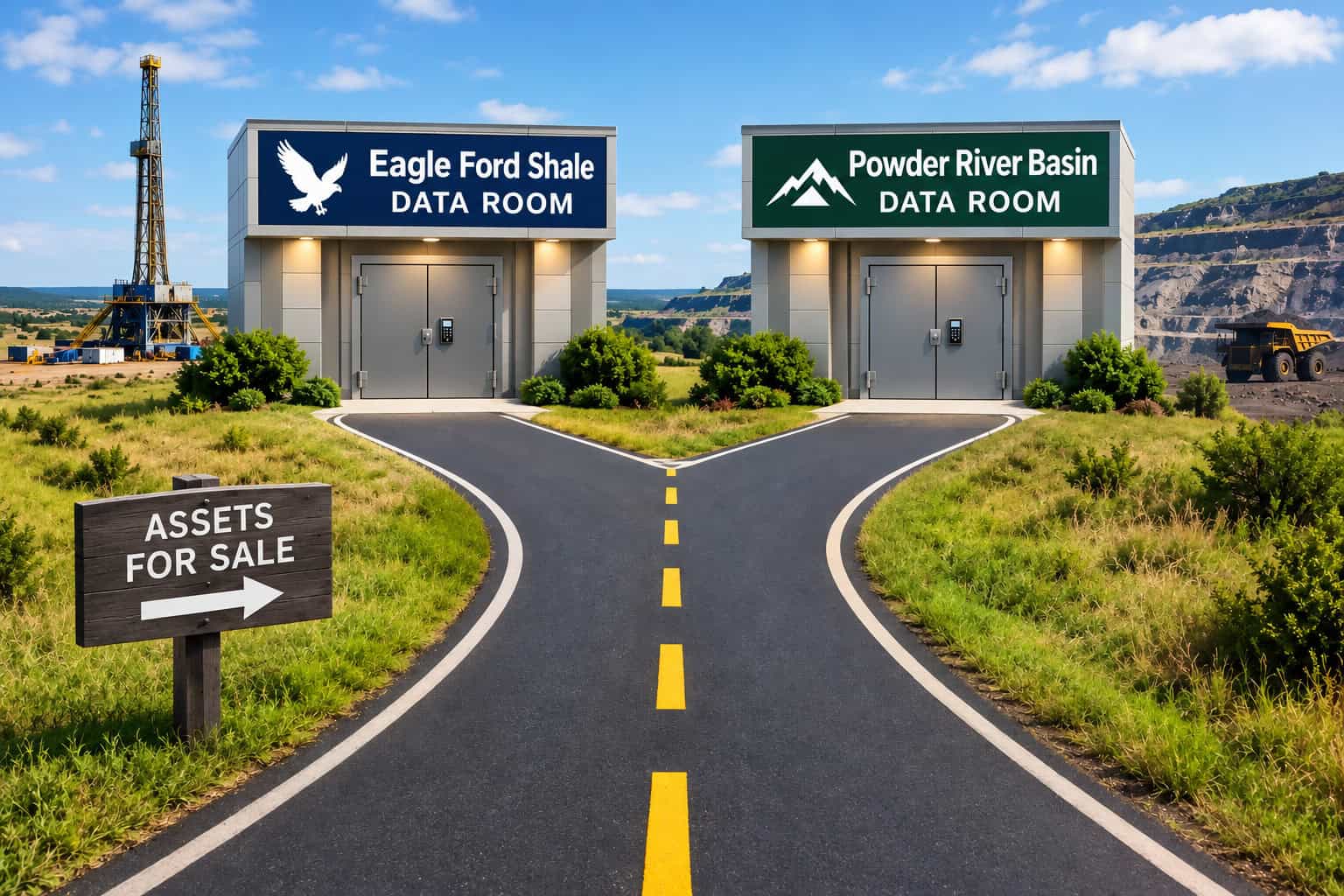 Yesterday we told you that activist hedge fund Toms Capital wants Devon Energy to sell the whole company rather than a few pieces (see Activist Toms Capital Pushes Devon to Sell Itself; Marcellus in Play). It turns out Devon is already selling pieces. Reuters reported yesterday (Sept. 24) that Devon has put both its Eagle Ford asset in South Texas and its Powder River Basin acreage in Wyoming up for sale, and that British supermajor BP is looking closely at the Eagle Ford. What isn’t on the list is the old Cabot Oil & Gas Marcellus position in Susquehanna County that Devon picked up when it bought Coterra Energy in May. For NEPA landowners, that’s the most interesting part of the story. Read More “Devon Shopping Eagle Ford, Powder River; Marcellus Not on the List”
 Kinder Morgan has a new pipeline project in the works, one MDN has not told you about before, because until yesterday nobody outside the company had heard of it. It’s called the Southeast Connector, and it would run north to south across Middle Tennessee through 10 counties, stitching together two of Kinder’s biggest interstate systems: Tennessee Gas Pipeline (TGP) and Southern Natural Gas (SNG). Kinder VP Allen Fore made the rounds in DeKalb County on Thursday, meeting the county mayor, the Chamber of Commerce, and local media. Land agents may start knocking on doors as early as next week. Target in-service: 2029.
  The Pennsylvania Farm Bureau (PFB) is one of the good guys. Probably 99% of the time, MDN is right there cheering PFB on — for private property rights, for sensible regulation, for keeping Harrisburg off the farmer’s back. But yesterday PFB released a 23-page paper making the case for a “temporary, limited moratorium” on large-scale data center development in Pennsylvania. This is the other 1%. We think PFB is wrong on this one, and we’ll tell you why. Politely. Friends are allowed to disagree.
  MARCELLUS/UTICA REGION: WhiteHawk closes $111M of acquisitions, credit line rises to $175M; OTHER U.S. REGIONS: Renewable advocates worried about influencers and “misinformation” misinform themselves; Hochul to issue $200 energy rebate checks; Is climate activism dead? We went looking for it in New York City; NATIONAL: U.S. natural gas futures rise sharply on pipeline outage; Shale tycoon says Exxon CEO betrayed him in $60 billion deal; Stop Climate Shakedowns Act of 2026; INTERNATIONAL: Crude gains on tight supply signals; Qatar ramps up LNG shipping via Hormuz; A new technology launched for LNG transport.
  When Appalachian gas prices fall into the basement, EQT turns down the valves, and CEO Toby Rice says the strategy is paying off. In an interview with Reuters on Tuesday, Rice put a dollar figure on it for the first time: a little over $200 million a year in benefit from selling less gas when prices are low and more when they’re high. He also said EQT, the country’s No. 2 gas producer, will pump more gas in 2026 than last year while spending less to do it. Rice talked up the company’s proposed POWER Pipeline to Ohio, its Mountain Valley Pipeline expansions, and a new 10-year LNG supply deal with Lithuania. His outlook for global gas demand is, let’s say, very bullish.
  An activist hedge fund that has been quietly leaning on Devon Energy since June has now put its demands in writing, and it’s asking for a lot more. Toms Capital Management sent Devon a letter earlier this month urging the company to explore “strategic alternatives, including a sale.” In other words, sell the whole company, not just a few pieces. Toms says it’s now one of Devon’s five largest shareholders. Why do we care here in Appalachia? When Devon swallowed Coterra Energy in May, it got the old Cabot Oil & Gas Marcellus position in Susquehanna County along with it. If Devon itself gets sold, the future of that NEPA gas acreage (and the royalty checks it generates) is up for grabs.
  Shovels, meet dirt. The Federal Energy Regulatory Commission (FERC) yesterday gave Iroquois Gas Transmission System the green light to begin construction on its Enhancement by Compression (ExC) project — well, most of it. FERC signed off on new compression and gas cooling equipment at Iroquois’ Athens and Dover compressor stations in New York and its Milford station in Connecticut. The fourth site, in Brookfield, Connecticut, is still stuck in state air permit purgatory. But three out of four ain’t bad. It means real work can finally start on pushing more Marcellus/Utica gas into New York City and New England, two of the most gas-starved (and highest-priced) energy markets in the country.
  The Trump administration has formally sided with a pipeline company in a U.S. Supreme Court case that could change how much money landowners get when a pipeline takes their land by eminent domain. On Sept. 21, the U.S. Solicitor General filed a brief backing WBI Energy Transmission in Hoffmann v. WBI Energy Transmission (No. 25-159). The feds want to argue alongside WBI when the case is heard on Nov. 9. The case began in North Dakota’s Bakken, but the ruling will reach all shale plays, including Pennsylvania, where landowners currently enjoy more generous rules.
  A power company from Thailand just bought a big chunk of a natural gas-fired power plant sitting in Queens, New York — about two miles from LaGuardia Airport. Why should you care? Because the reason that plant is worth so much money is the very thing New York politicians keep telling us is a dead end. The Empire State has spent a decade banning fracking, killing pipelines, and lecturing the rest of us about the evils of methane. And yet: the single most valuable thing about Astoria Energy II is that nobody will ever be allowed to build another one like it. Scarcity, it turns out, pays very well. Somebody in Bangkok did the math.
  New York’s so-called leaders banned natural gas hookups in new homes (see
 Back in March, a delegation of European heavyweights came to Pittsburgh with their shopping bags, looking to buy more U.S. LNG. Leading the charge was Jovita Neliupšiene, a Lithuanian who now serves as the EU’s ambassador to the U.S. Looks like they found what they were shopping for — in Pittsburgh. Lithuanian state-owned energy company Ignitis has picked a subsidiary of Pittsburgh-based EQT Corporation, one of the largest U.S. natural gas producers, to supply it with 10 cargoes of liquefied natural gas (LNG) — one per year from 2027 through 2036. EQT beat out other bidders in a competitive tender. It’s the first long-term gas supply contract between Ignitis and a U.S. company. Small deal? Yes. Symbolic deal? Very much so.
  Another big data center is heading to western Pennsylvania, and this one plans to make its own power with a natural gas-fired plant, right next door to a shale gas well pad. A Florida LLC and a Coraopolis microgrid company have filed preliminary plans for the Misty Hollow Energy & Data Campus: a 1-million-square-foot data center and a 300-megawatt power generation facility on a former dairy farm along Prospect Road (PA Route 528) in Forward Township, Butler County. The site sits next to a PennEnergy Resources well pad, and the township engineer wants a letter from PennEnergy signing off on the plan’s revised access to that pad. The developer now confirms the 300 MW plant will run on natural gas, and it will power the campus “behind the meter,” off the grid.
 Expand Energy — America’s #1 gas producer, which drills in Pennsylvania under the name Expand Oper LLC — just picked up a fresh batch of Notices of Violation from DEP. Pressure tests witnessed by DEP inspectors on Aug. 6 and Aug. 13 confirmed new casing/cementing defects in four wells across three pads in Susquehanna and Wyoming counties, while two more pads remain under watch for older, unresolved issues.
  Alpha Compute Corp. (Nasdaq: ALP), the tiny AI outfit that wants to build a 200 MW gas-fired data center in Tioga County (see