
Anti-Drilling/Fossil Fuel | Energy Services | Industrywide Issues | Kinder Morgan | Pipelines | Regulation | Tennessee Gas Pipeline
Vernon, NJ Votes to Block More NatGas Supplies to NYC
 Antis and leftwing environmentalists in New Jersey continue their mission to block more natural gas from flowing to New York City, threatening the residents of the city, by attacking two compressor stations in the NJ suburbs. The latest conscripts to the holy mission of defeating “fossil fuels” can be found among the weaklings who sit on the Vernon Township (NJ) Council, who voted 4-1 to oppose a proposed expansion of Tennessee Gas Pipeline Company’s compressor station in Wantage (Sussex County).
Read More “Vernon, NJ Votes to Block More NatGas Supplies to NYC”
 Seneca Resources Company, the exploration and production subsidiary of National Fuel Gas Company (NFG), is the latest company to jump on the ESG (environmental, social, governance) bandwagon. Seneca is partnering with NexTier Oilfield Solutions, an oilfield services company that fracks and completes wells for companies like Seneca, to study the carbon emissions that come from fracking shale wells.
 One year ago, in July 2020, we brought you the bombshell news that Dominion Energy was calling it quits in the pipeline business, abandoning the Atlantic Coast Pipeline project (on which they had already spent billions of dollars) and selling its existing (extensive) pipeline network to Warren Buffett for $9.7 billion (see
  How can anyone say, with a straight face, that Biden has been “better for fossil fuel companies” than Trump? Some very short-sighted individuals say we should look at the price of oil and gas, and the stock price of oil and gas companies, and pronounce that Biden has actually been better for our industry than four years of Donald Trump. Yet Biden’s own Treasury Secretary, Janet Yellen, is warning Big Banks to quit funding fossil fuel companies…or else. She is threatening them! This isn’t Stalin’s Soviet Union!! It’s the land of the free and the home of the brave. Or at least it used to be.
 OTHER U.S. REGIONS: TotalEnergies terminates $700M deal with Tellurian for Driftwood LNG; NATIONAL: U.S. oil mergers surge as energy, share prices recover from pandemic; Biden tax increases show higher energy costs are a goal, not a glitch; Natural gas prices still have room to run; INTERNATIONAL: North sea rig used for Marvel Black Widow movie; Supply struggles, not just demand, are fuelling LNG’s price surge.
 According to an analysis done by S&P Global Market Intelligence, the five largest drillers in the Pennsylvania Marcellus Shale resumed their drilling in June in a big way. S&P’s analysis shows those five drillers were responsible for 51% of the new drilling permits issued last month, up from 28% of new permits issued in May. Perhaps we know why. The price of natgas at regional hubs in PA rocketed over the past month. At the Leidy Hub in the northeast’s dry gas window (centered on Susquehanna County, PA), cash prices went from a low of 93.7 cents/MMBtu on May 3 to $3.07/MMBtu at the end of June.
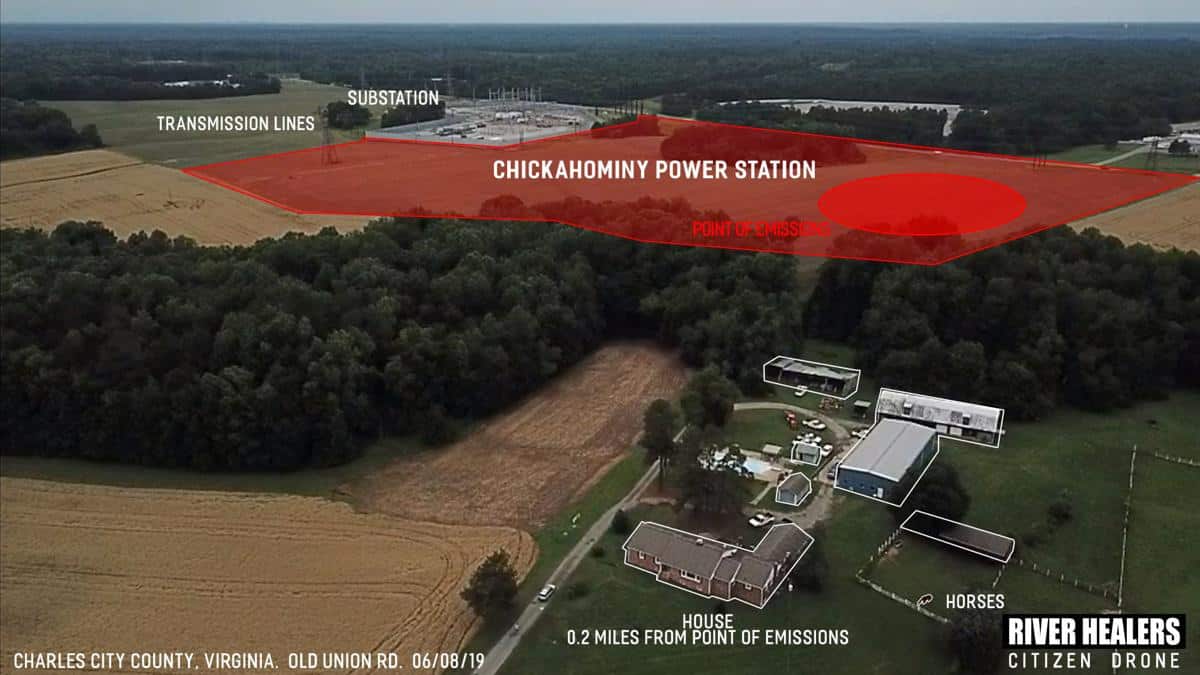
 A natural gas-fired electric power plant planned for Charles City County (near Richmond, Va.) by NOVI Energy known as C4GT (Charles City Combined-Cycle Gas Turbine) is now officially dead. NOVI has been working on the 1,100-megawatt project for over six years. An even larger plant planned for the same general area, the 1,650 MW Chickahominy Power Station (a project of Balico) is still in the works (see
  Charlie Melançon is a former U.S. Congressman from Louisiana who played an integral role in rebuilding Louisiana’s infrastructure following the devastation caused by Hurricanes Katrina and Rita. Melançon served on the House Committee on Energy and Commerce, which oversaw energy policy and environmental quality among other issues. He sees a lot of parallels between his home state of Louisiana and Pennsylvania. Melançon has written an editorial appearing in a major PA newspaper hoping to inform and encourage Pennsylvanians to wake up to the fact that pipelines are the key to PA becoming the energy hub of the northeast. Conversely, without (more) pipelines, PA will not realize its potential. Pipelines are the key. Melançon is uniquely qualified to know.
 What’s taking the shale oil industry so long to restart drilling in a big way? Shale oil production remains some 1.4 million barrels per day (15%) below pre-COVID pandemic levels despite oil prices reaching near three-year highs of $77 per barrel since the start of this year. When you dig into the numbers it becomes apparent what’s happening. A lot of shale drilling is now done by big, integrated major oil companies–the Exxons and Chevrons and BPs of the world. Shale production from the majors is 68% below pre-pandemic levels. If you look at the output of smaller independent, non-publicly traded oil drillers, their production is only 2% below pre-pandemic levels.
 A few weeks ago MDN brought you the news that three far-left Democrat judges on the U.S. Court of Appeals for the D.C. Circuit overturned a Federal Energy Regulatory Commission (FERC) approval for a long-completed and flowing natural gas pipeline in the St. Louis, MO area–a pipeline that flows Marcellus/Utica gas to residents, businesses, and electric generating plants throughout the region (see
  The Tennessee Valley Authority (TVA) is a federally-owned electric utility corporation in the U.S. TVA’s service area covers all of Tennessee, portions of Alabama, Mississippi, and Kentucky, and small areas of Georgia, North Carolina, and Virginia. TVA is the sixth-largest power supplier and the largest public utility in the country. We have some GREAT news: TVA is spending over $1 billion to replace six coal-fired plants with natgas-fired turbines.
 An analyst writing on the Seeking Alpha investors website confirms our concerns over the potential merger between Marcellus driller Cabot Oil & Gas and Permian driller Cimarex Energy (see
  According to S&P Global Platts, a widening gas storage deficit in the Eastern U.S. is “raising alarm in the Northeast downstream market area” where winter 2021-22 forwards prices are up sharply since the start of injection season beginning April 1st. In particular, the forward contracts (prices negotiated now for future delivery of natural gas) for January 2022 in Boston and New York City are through the roof. It’s pretty plain why this is happening–no new pipelines.