
PA Gov. Shapiro’s SPEED Permitting Program Moves Like Molasses
 Governor Josh Shapiro’s Streamlining Permits for Economic Expansion and Development (SPEED) program, launched in August 2024, aimed to expedite Pennsylvania’s permitting process (see 2 More Programs Introduced to SPEED Up Broken PA DEP Permitting). However, business leaders report minimal improvements. The Department of Environmental Protection (DEP) only began accepting applications nearly a year later (see PA DEP Starts Pay-More-and-Get-Your-Permit-on-Time Service). The state’s PAyback program, promising refunds for missed approval deadlines, had not issued any refunds as of September. Read More “PA Gov. Shapiro’s SPEED Permitting Program Moves Like Molasses”
 MARCELLUS/UTICA REGION: White powder found in envelope at Peoples Natural Gas; Hazleton buses now all run on compressed natural gas; OTHER U.S. REGIONS: Deadly grid battery fallacy exposed in Massachusetts; NATIONAL: U.S. natural gas futures snap losing streak; Companies paying record sums to develop geothermal energy; Electricity use is becoming more common for residential heating; Trump wants more natural-gas exports and lower energy prices; INTERNATIONAL: Oil rebounds amid tariff jitters; OPEC keeps oil outlook unchanged; Nestle quits global alliance on reducing dairy methane emissions; Climate Cult fantasy and duplicity precede COP30; ‘Green’ Antoinettes preaching austerity from private jets; Yes Virginia, David can slay Goliath; US threatens visa restrictions, sanctions against UN members that back IMO emissions plan.
  For the week of September 29 to October 5, the number of permits issued to drill new wells in the Marcellus/Utica increased from the previous week. There were 32 new permits issued across the three M-U states last week, up five from 27 issued two weeks ago. Last week, Pennsylvania issued 27 drilling permits across six counties—the highest weekly total the state has recorded in months, possibly even over a year. Ohio issued five permits in two counties. West Virginia was skunked last week, issuing no new permits for the second consecutive week. What’s up with WV?
  We’ve been critical of the Regional Greenhouse Gas Initiative (RGGI), a tax on carbon dioxide assessed on power-generating plants in the northeastern U.S., since Pennsylvania’s then-Governor, Tom Wolf, unilaterally tried to force his state into the plan in 2019 via Executive Order (see
 In September, a blaming and bullying “summit” was convened by one of the biggest bullies on the political scene today, Pennsylvania Governor Josh Shapiro, to complain about high electricity prices in the PJM Interconnection grid (see
  One of the environmental left’s favorite tactics to defeat fossil fuel projects is to challenge every single infrastructure project (pipeline or otherwise) connected to fossil energy at the Federal Energy Regulatory Commission (FERC). As soon as a company files an application to build a new project, and FERC approves it, Big Green will challenge it, first at FERC, and eventually via the courts. FERC has an internal rule, called Order No. 871, that states a company cannot begin construction (even though FERC has approved the certificate) until all such legal challenges are resolved, which can take YEARS. Which is the point—delay, and eventually, some of the projects will give up and won’t build. Run out the clock. Two days ago, FERC issued a new rule eliminating Order No. 871 rule, meaning construction can now begin months and years sooner, even while appeals continue. The enviro-left just lost one of its most potent weapons.
 MDN will not publish stories on Friday, Oct. 10, and Monday, Oct. 13, in observance of Columbus Day. Have no fear; we will be back on Tuesday with a full lineup. Please take a moment to celebrate the world’s most famous Italian, the guy who started it all, and the guy who discovered the Americas and what would one day become the greatest country on earth: The United States of America!
 The U.S. Energy Information Administration (EIA) issued its latest monthly Short-Term Energy Outlook (STEO) yesterday. The STEO is the agency’s monthly best guess about where energy prices and production will head in the next 12 months. In this latest assessment, EIA dropped its estimates for the Henry Hub spot price for 2025, again, as it has for months. The agency expects the HH spot price to average $3.40 per million British thermal units (MMBtu) in 2025, $0.10 lower than last month’s forecast (and $0.30 below the prediction from three months ago). EIA also dropped its 2026 forecast, quite radically, lowering it by $0.40 to $3.90/MMBtu. Hence, our suspicion that sometimes the data crunchers haul out the breakroom dartboard to help with forecasts.
 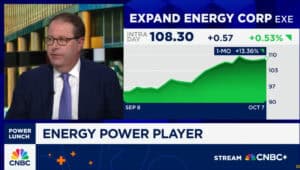 Expand Energy, formed by the merger of Chesapeake Energy and Southwestern Energy, is the largest natural gas producer in the U.S. with approximately 1.9 million leased net acres. The company operates in three distinct regions: Northeast Appalachia (Pennsylvania), Southwest Appalachia (primarily West Virginia, with additional presence in Pennsylvania and Ohio), and the Haynesville (Louisiana). Expand CEO Nick Dell’Osso appeared yesterday on CNBC’s “Power Lunch” segment to share his insights on the supply-demand dynamic for natural gas, pipelines, and more. He had some VERY interesting things to say.
  PJM Interconnection, the U.S.’s largest regional transmission operator, has proposed an Expedited Interconnection Track (EIT) to let large power generation projects over 500 MW bypass the grid’s traditional interconnection queue. Open to any fuel type, the EIT requires projects to be state-sponsored, seek Capacity Interconnection Rights, and achieve operational readiness within three years. Any fuel type that can meet those criteria, including natural gas, nuclear, renewables, and even battery storage, will qualify for the program. However, the reality is that natural gas is the most likely source to be built and brought online.
 Commonwealth LNG is developing a 9.5 MTPA (million tonnes per annum) liquefied natural gas (LNG) export terminal project located near Cameron, Louisiana. In September, Commonwealth announced it had signed a deal with EQT Corporation to provide 1.0 MTPA of LNG for EQT to resell (see
 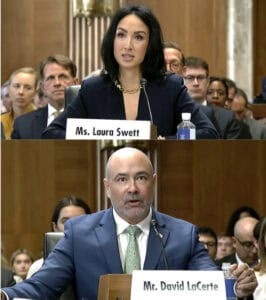 We finally have all five members in place for the Federal Energy Regulatory Commission (FERC). Yesterday, the U.S. Senate, despite the best efforts of Democrats to further delay confirmation votes for *any* Trump appointments, voted to confirm a slate of over 100 new appointments, including two new members of FERC, on a party-line vote of 51-47. In June, President Trump nominated Laura Swett of Vison & Elkins to replace Republican Mark Christie, who had been elevated to Chairman under Trump (see