
CNX Scores $31.5M Grant for Coal Mine Methane Recovery in SWPA
 Yesterday, Pennsylvania Gov. Josh Shapiro announced $267 million in state funding for energy projects, including $31.5 million for CNX Green Ventures to capture coal mine methane at the Enlow Fork mine in Greene County. Funded through EPA Climate Pollution Reduction Grants, the RISE PA program supports industrial decarbonization. CNX plans to drill boreholes, capture methane from mine ventilation, and pipe it for processing and sale as remediated mine gas. Read More “CNX Scores $31.5M Grant for Coal Mine Methane Recovery in SWPA”
 The Pennsylvania Department of Environmental Protection (DEP) has extended three temporary air permits for the Shell ethane cracker plant in Monaca, PA, which would have expired on April 28, 2026. The DEP did the same thing in May 2024 (see
  The highly functional and responsible Susquehanna River Basin Commission (SRBC), unlike its dysfunctional and irresponsible counterpart, the Delaware River Basin Commission (DRBC), continues to support the shale energy industry by approving water withdrawals and consumptive use requests for responsible, safe shale drilling. The SRBC published a notice in the April 25th Pennsylvania Bulletin that the Executive Director of the SRBC approved and/or renewed 46 general water use permits in March for individual shale gas well drilling pads in Bradford, Clinton, Elk, Lycoming, Sullivan, Susquehanna, Tioga, and Wyoming counties.
  The Marcellus/Utica region received 22 new drilling permits last week, Apr. 13 – 19, down 15 from the 37 issued two weeks ago. Pennsylvania issued 11 of last week’s permits. Ohio issued no new permits. And West Virginia issued the other 11 new permits last week. The drillers who received new permits last week included: Antero Resources, Arsenal Resources, CNX Resources, EQT, Expand Energy, JKLM Energy, Range Resources, Repsol Oil & Gas, and Seneca Resources.
  CNX Resources Corporation issued a press release yesterday to highlight its 2025 sustainability achievements, marking the first full year (2025) of “dynamic ESG reporting,” moving from annual reports to quarterly scorecards and continuous website updates. This approach, rooted in the company’s “Radical Transparency” philosophy and “Appalachia First” strategy, provides timely, transparent disclosures on environmental stewardship, including emissions data, expanded public notice of violations, and community investments.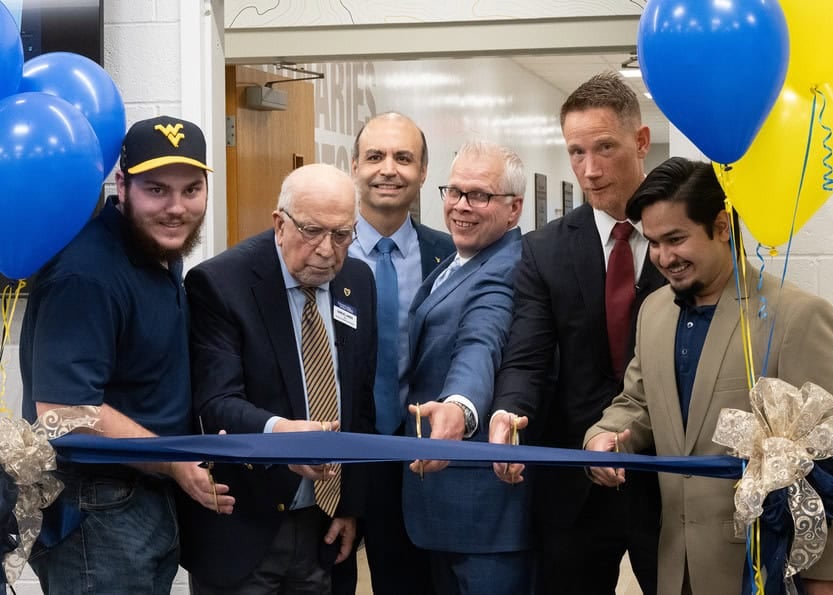
 EQT Corporation delivered its latest quarterly update yesterday for the first quarter of 2026. EQT sees the materialization of “in-basin demand growth” improving Appalachian market conditions through the end of the decade. The company says it is positioned as a preferred partner for large-scale power, midstream, and data center projects in the region. EQT plans to continue drilling and completing a significant number of wells throughout 2026, indicating ongoing development in the Marcellus and Utica regions. However, the company is curtailing (restricting) 10-15 Bcf (billion cubic feet) of production during the second quarter due to current low prices.
  Range Resources issued its first quarter 2026 update yesterday. Range’s production averaged 2.21 Bcfe/d in 1Q, approximately 32% liquids and 68% natural gas. Range used one rig and one completion crew to drill ~143,000 lateral feet across 9 wells, while turning to sales ~267,000 feet across 17 wells. 1Q26 drilling and completion expenditures were $130 million. In addition, Range spent approximately $5 million in acreage and $4 million in infrastructure, pneumatic upgrades, and other investments. The company maintains it will push production to 2.5 Bcfe/d by the end of this year, even though it’s only using a single rig and frac crew.
  The rumor mill is chattering once again. Bloomberg reports that Arsenal Resources, a private natural gas producer focused on the Marcellus Shale, is considering a potential sale of itself valued at approximately $1.5 billion. The company, owned by its creditors since emerging from bankruptcy in late 2019 (see
  Olympus Energy (now owned by EQT) drills in the Greater Pittsburgh region, in Allegheny and Westmoreland counties. In 2021, Olympus applied to build a new well pad in a rural part of Allegheny County, in West Deer Township. So-called Concerned Residents of West Deer (CROWD) got amped up to oppose the project. They succeeded when town supervisors rejected the Dionysus well pad (see
  On April 5 (Easter Sunday), Coterra Energy reported that approximately 400,000 to 704,000 gallons of freshwater were released from an impoundment at the Brooks shale gas well pad in Susquehanna County, Pennsylvania. The release began at 8:02 a.m. when all six stanchion valves opened simultaneously, flowing by gravity into a pasture and reaching Meshoppen Creek before being discovered by a landowner’s relative that evening. Coterra attributed the incident to a corrupted software configuration file, which also prevented remote valve closure and disabled electronic notifications.
  EOG Resources, one of the largest crude oil and natural gas exploration and production companies in the U.S., is shifting its focus from simply drilling more wells to improving well completion techniques to boost recovery rates in U.S. shale assets such as the Eagle Ford, Delaware Basin, and Utica. The company anticipates achieving reductions in average well costs and enhanced recovery through longer laterals and refined completion methods, such as higher-density fracture stages and optimized fracture spacing. This strategy, developed initially in South Texas, enables EOG to increase production while controlling costs, aiming for incremental yet significant productivity gains across its projects, including gas-focused opportunities in the Utica shale.
  Infinity Natural Resources (INR), a pureplay driller focused on Appalachian shale—the Utica in eastern Ohio and the Marcellus (and Utica) in southwestern Pennsylvania—has appointed Scott McNeill to its Board of Directors. McNeill brings over two decades of experience in energy investment banking, capital markets, and operating leadership, having served as a CEO, CFO, and board member for both public and private energy companies. His background includes roles at Raymond James, RSP Permian, Switchback, and Black Mountain Sand. Infinity’s President and CEO, Zack Arnold, stated that McNeill’s expertise will be valuable as the company executes its strategy in the Appalachian Basin, focusing on the Utica and Marcellus Shales.